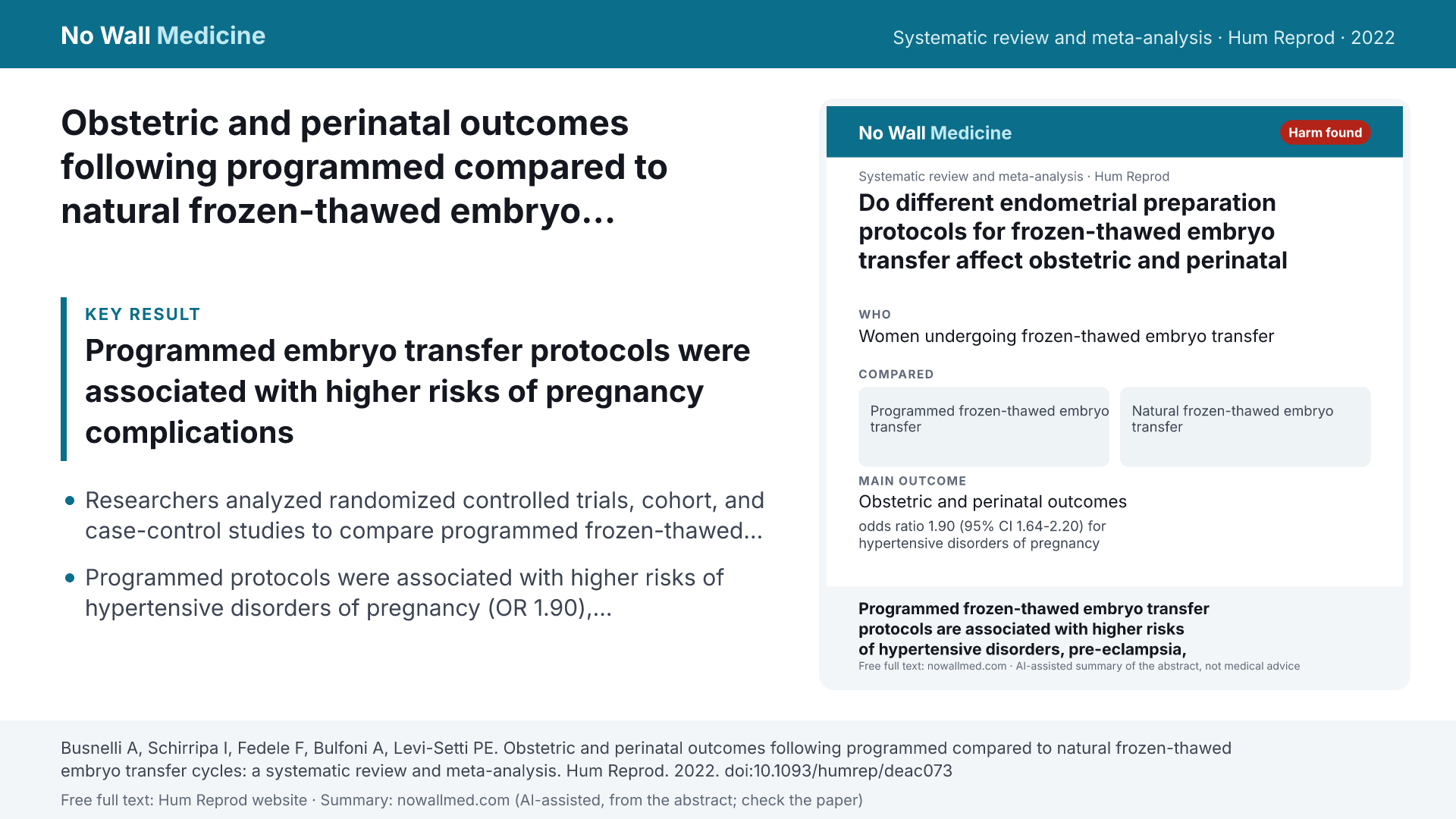
Obstetric and perinatal outcomes following programmed compared to natural frozen-thawed embryo transfer cycles: a systematic review and meta-analysis
Key result: Programmed embryo transfer protocols were associated with higher risks of pregnancy complications
Key points
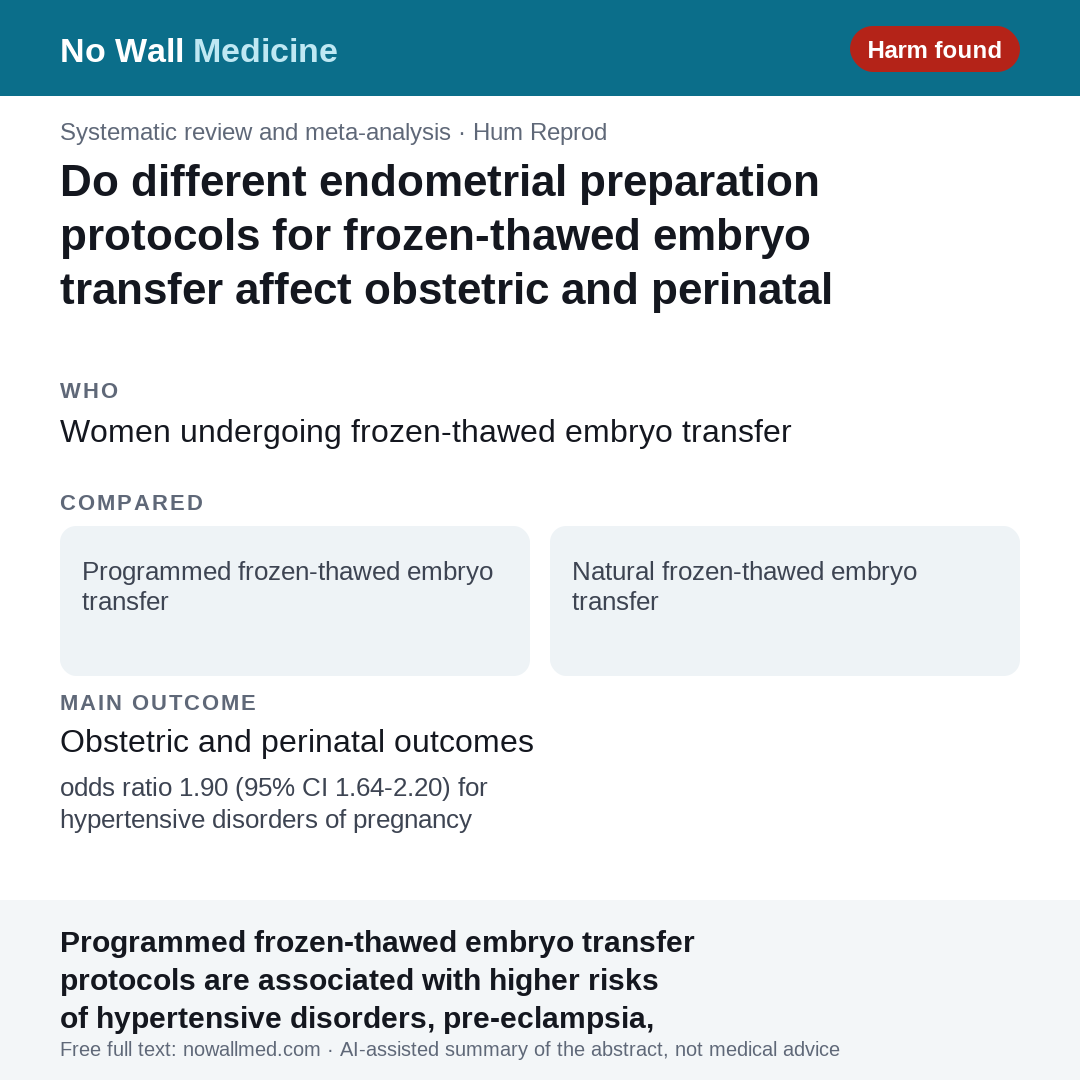
- Researchers analyzed randomized controlled trials, cohort, and case-control studies to compare programmed frozen-thawed embryo transfer using hormone replacement therapy to natural cycles.
- Programmed protocols were associated with higher risks of hypertensive disorders of pregnancy (OR 1.90), pre-eclampsia (OR 2.11), postpartum hemorrhage (OR 2.53), and cesarean section (OR 1.62).
- Other associated risks included placenta previa (OR 1.27), preterm birth (OR 1.19), very preterm birth (OR 1.63), and placenta accreta (OR 6.29).
Why it matters: The reasons behind the increased obstetric and perinatal complications associated with frozen-thawed embryo transfer are currently unknown and understudied.
Limitation the authors note: The authors noted heterogeneity across studies regarding hormone replacement therapy timing and dosage, embryo stage at transfer, and the inclusion of preimplantation genetic testing cycles.
Discussion prompts
- Would these patients look like yours? Who was left out?
- Is the main outcome one that matters to patients?
- Is the difference large enough to change what you do?
Cite: Busnelli A, Schirripa I, Fedele F, Bulfoni A, Levi-Setti PE. Obstetric and perinatal outcomes following programmed compared to natural frozen-thawed embryo transfer cycles: a systematic review and meta-analysis. Hum Reprod. 2022. doi:10.1093/humrep/deac073
Free full text: Hum Reprod website · Summary and visual abstract: nowallmed.com/a/obstetric-and-perinatal-outcomes-following-programmed-compared-to-y1vjml/ (AI-assisted from the abstract; check the paper before relying on it).