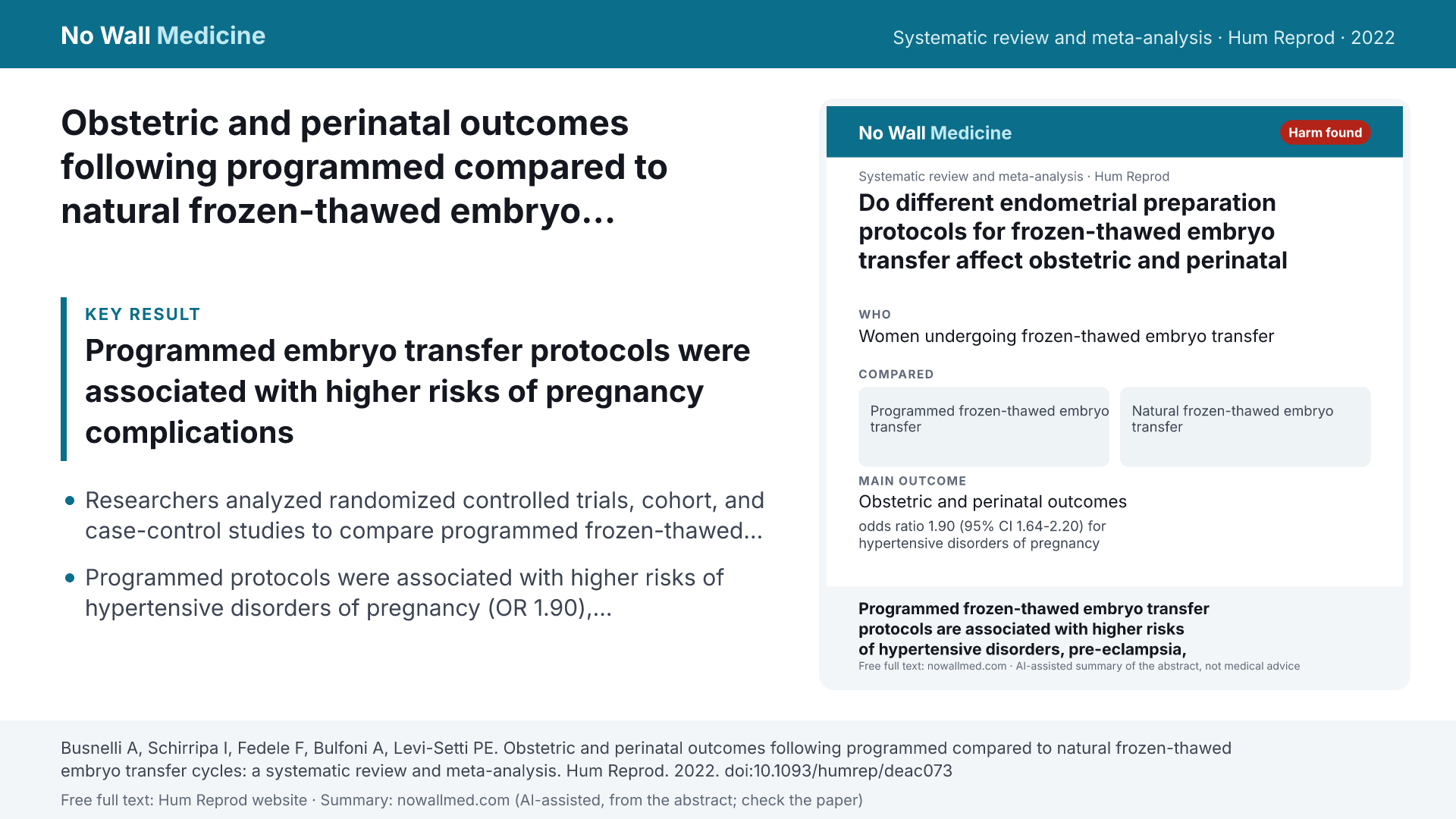
Programmed embryo transfer protocols were associated with higher risks of pregnancy complications
Obstetric and perinatal outcomes following programmed compared to natural frozen-thawed embryo transfer cycles: a systematic review and meta-analysis
Systematic review and meta-analysisHarm found
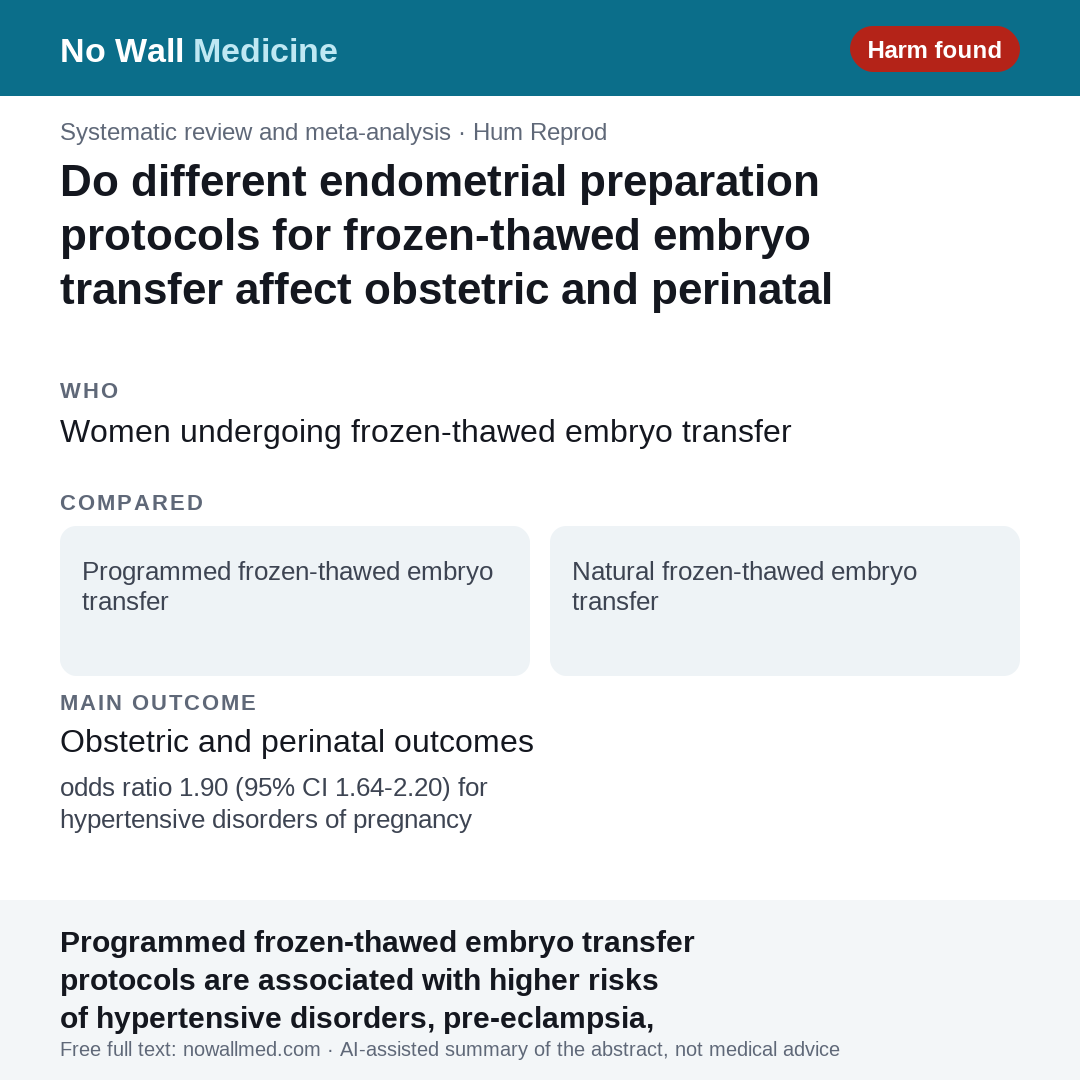
Do different endometrial preparation protocols for frozen-thawed embryo transfer affect obstetric and perinatal outcomes?
Who
Women undergoing frozen-thawed embryo transfer
Compared
Programmed frozen-thawed embryo transfer
Natural frozen-thawed embryo transfer
Main outcome
Obstetric and perinatal outcomes
Result: odds ratio 1.90 (95% CI 1.64-2.20) for hypertensive disorders of pregnancy
Bottom line: Programmed frozen-thawed embryo transfer protocols are associated with higher risks of hypertensive disorders, pre-eclampsia, hemorrhage, and cesarean section.
Limitation: Heterogeneity across studies regarding hormone replacement therapy timing, dosage, embryo stage, and genetic testing inclusion.
Hum Reprod · 2022-05-14Download image
Clinical question: Do different endometrial preparation protocols for frozen-thawed embryo transfer affect obstetric and perinatal outcomes?
Why it matters: The reasons behind the increased obstetric and perinatal complications associated with frozen-thawed embryo transfer are currently unknown and understudied.
Key points
- Researchers analyzed randomized controlled trials, cohort, and case-control studies to compare programmed frozen-thawed embryo transfer using hormone replacement therapy to natural cycles.
- Programmed protocols were associated with higher risks of hypertensive disorders of pregnancy (OR 1.90), pre-eclampsia (OR 2.11), postpartum hemorrhage (OR 2.53), and cesarean section (OR 1.62).
- Other associated risks included placenta previa (OR 1.27), preterm birth (OR 1.19), very preterm birth (OR 1.63), and placenta accreta (OR 6.29).
Limitation the authors note: The authors noted heterogeneity across studies regarding hormone replacement therapy timing and dosage, embryo stage at transfer, and the inclusion of preimplantation genetic testing cycles.
Headline and key points written with AI from the paper’s abstract, with every number checked against it. Read the paper before relying on them.
Was this summary helpful?
Subject terms
Cite this article
Busnelli A, Schirripa I, Fedele F, Bulfoni A, Levi-Setti PE. Obstetric and perinatal outcomes following programmed compared to natural frozen-thawed embryo transfer cycles: a systematic review and meta-analysis. Hum Reprod. 2022. doi:10.1093/humrep/deac073
Spotted a mistake? Suggest a correction