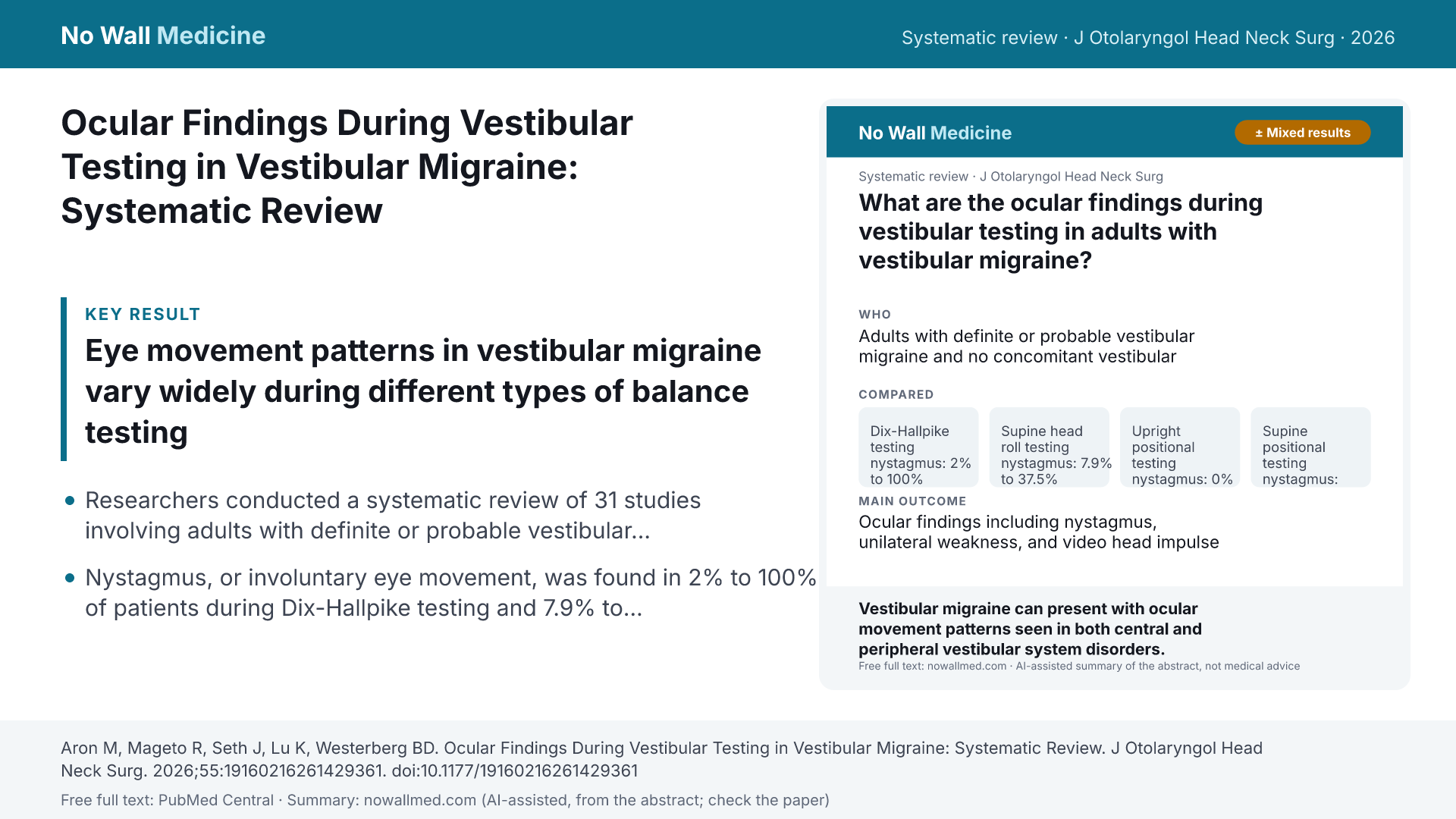
Eye movement patterns in vestibular migraine vary widely during different types of balance testing
Ocular Findings During Vestibular Testing in Vestibular Migraine: Systematic Review
Systematic reviewMixed results
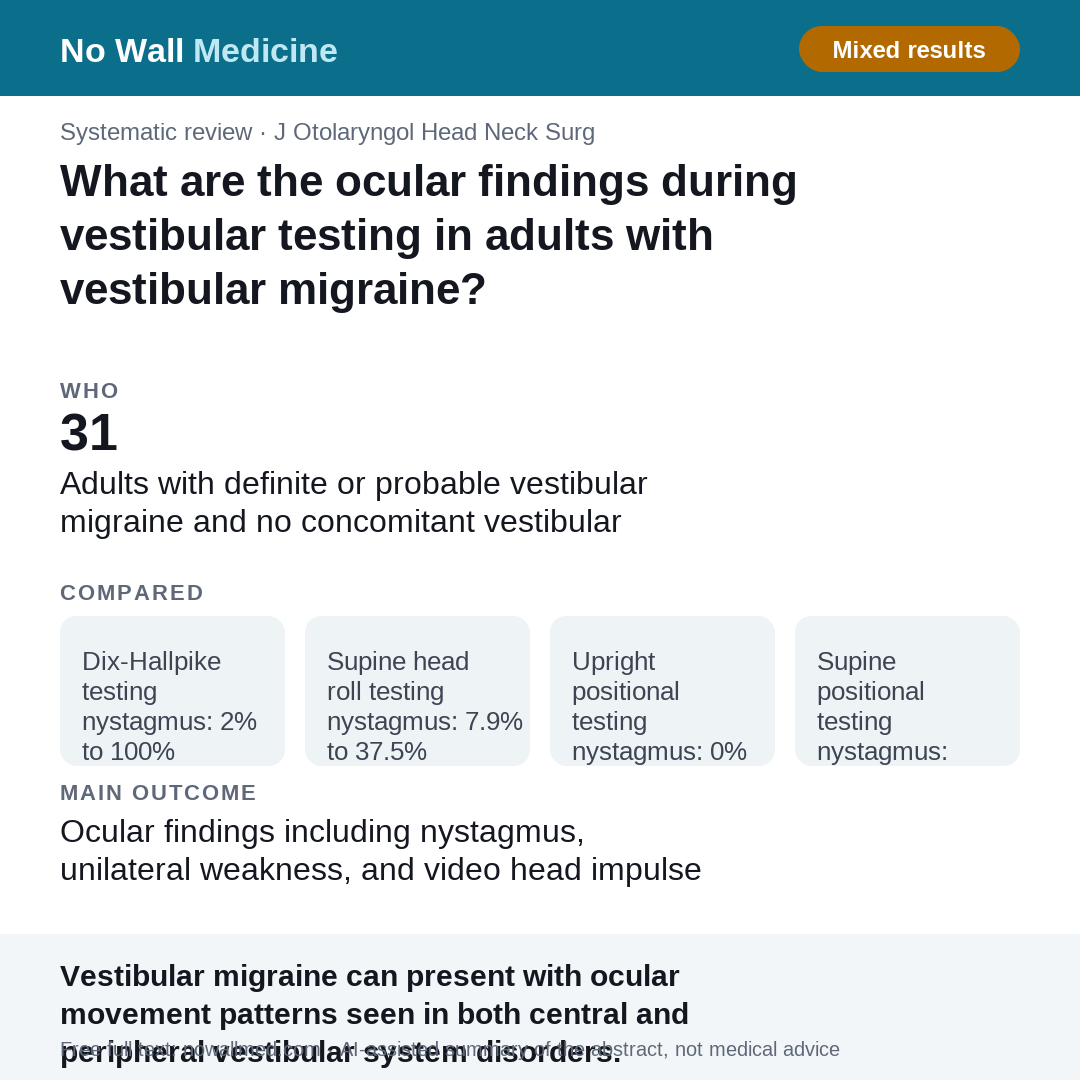
What are the ocular findings during vestibular testing in adults with vestibular migraine?
Who
31
Adults with definite or probable vestibular migraine and no concomitant vestibular disorders
Compared
Dix-Hallpike testing nystagmus: 2% to 100%
Supine head roll testing nystagmus: 7.9% to 37.5%
Upright positional testing nystagmus: 0% to 100%
Supine positional testing nystagmus: 42.1% to 95.5%
Main outcome
Ocular findings including nystagmus, unilateral weakness, and video head impulse testing
Bottom line: Vestibular migraine can present with ocular movement patterns seen in both central and peripheral vestibular system disorders.
Limitation: Future studies should focus on further describing the characteristics of nystagmus and associated symptoms.
J Otolaryngol Head Neck Surg · 2026-04-08Download image
Clinical question: What are the ocular findings during vestibular testing in adults with vestibular migraine?
Why it matters: Vestibular migraine is diagnosed using limited consensus-based criteria and presents with symptoms that overlap with other vestibular disorders.
Key points
- Researchers conducted a systematic review of 31 studies involving adults with definite or probable vestibular migraine and no other vestibular disorders.
- Nystagmus, or involuntary eye movement, was found in 2% to 100% of patients during Dix-Hallpike testing and 7.9% to 37.5% during supine head roll testing.
- During video head impulse testing, which measures the vestibulo-ocular reflex, both abnormal gain and corrective saccades, or quick eye movements, were observed.
Headline and key points written with AI from the paper’s abstract, with every number checked against it. Read the paper before relying on them.
Was this summary helpful?
Subject terms
Cite this article
Aron M, Mageto R, Seth J, Lu K, Westerberg BD. Ocular Findings During Vestibular Testing in Vestibular Migraine: Systematic Review. J Otolaryngol Head Neck Surg. 2026. doi:10.1177/19160216261429361
Spotted a mistake? Suggest a correction