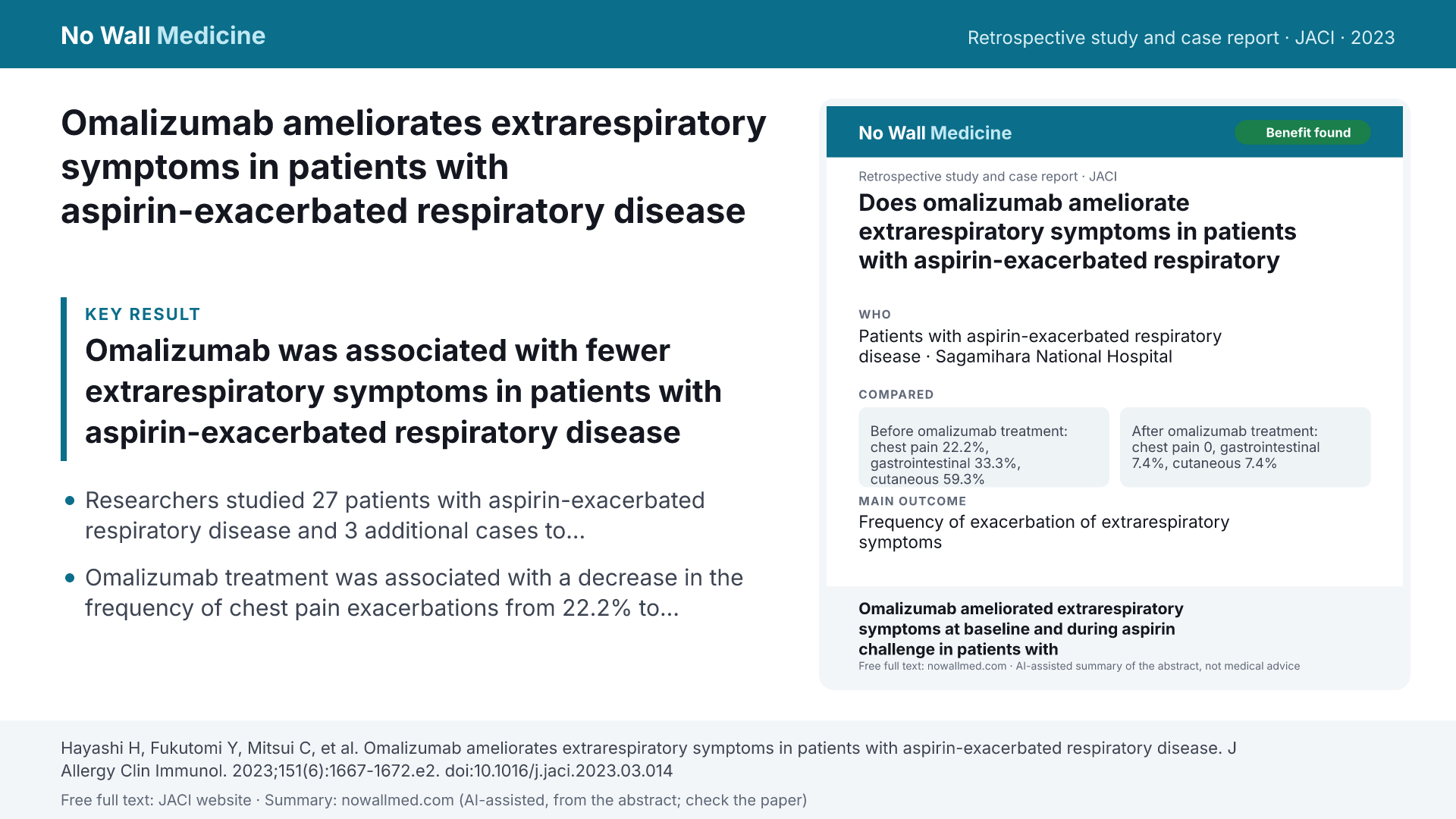
Omalizumab was associated with fewer extrarespiratory symptoms in patients with aspirin-exacerbated respiratory disease
Omalizumab ameliorates extrarespiratory symptoms in patients with aspirin-exacerbated respiratory disease
Retrospective study and case reportBenefit found
Does omalizumab ameliorate extrarespiratory symptoms in patients with aspirin-exacerbated respiratory disease?
Who
Patients with aspirin-exacerbated respiratory disease · Sagamihara National Hospital
Compared
Before omalizumab treatment: chest pain 22.2%, gastrointestinal 33.3%, cutaneous 59.3%
After omalizumab treatment: chest pain 0, gastrointestinal 7.4%, cutaneous 7.4%
Main outcome
Frequency of exacerbation of extrarespiratory symptoms
Bottom line: Omalizumab ameliorated extrarespiratory symptoms at baseline and during aspirin challenge in patients with aspirin-exacerbated respiratory disease.
JACI · 2023-03-24 · Save PNG
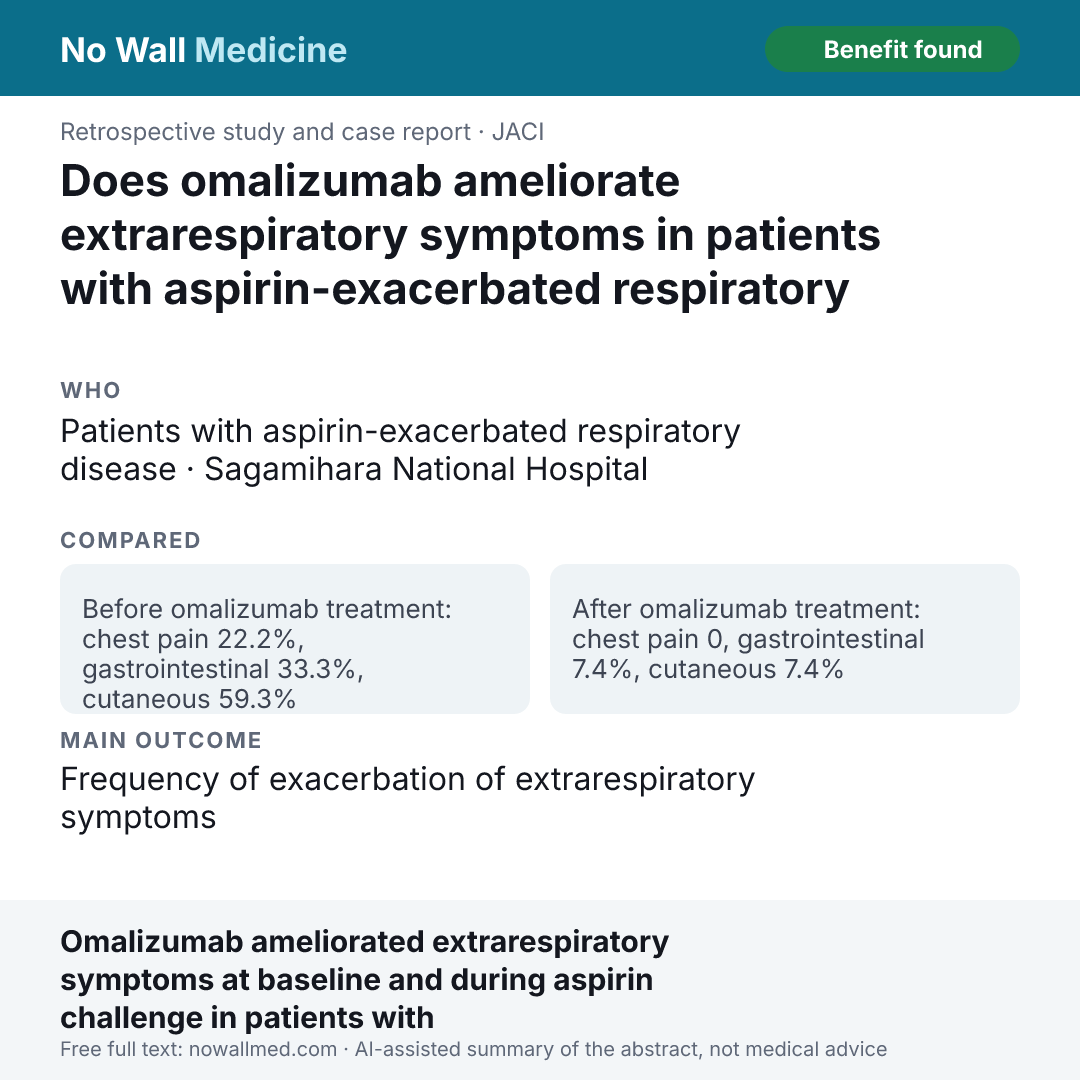
Clinical question: Does omalizumab ameliorate extrarespiratory symptoms in patients with aspirin-exacerbated respiratory disease?
Key points
- Researchers studied 27 patients with aspirin-exacerbated respiratory disease and 3 additional cases to measure extrarespiratory symptoms like chest, gastrointestinal, and skin issues.
- Omalizumab treatment was associated with a decrease in the frequency of chest pain exacerbations from 22.2% to 0%, gastrointestinal symptoms from 33.3% to 7.4%, and cutaneous symptoms from 59.3% to 7.4%.
- In a secondary analysis, omalizumab was associated with an attenuation of all extrarespiratory symptoms during an aspirin challenge compared to a placebo.
Headline and key points written with AI from the paper’s abstract, with every number checked against it. Read the paper before relying on them.
Was this summary helpful?
Subject terms
Headline, design, result, key points, caveat and citation as plain text.
Cite this article
Hayashi H, Fukutomi Y, Mitsui C, et al. Omalizumab ameliorates extrarespiratory symptoms in patients with aspirin-exacerbated respiratory disease. J Allergy Clin Immunol. 2023;151(6):1667-1672.e2. doi:10.1016/j.jaci.2023.03.014
Spotted a mistake? Suggest a correction