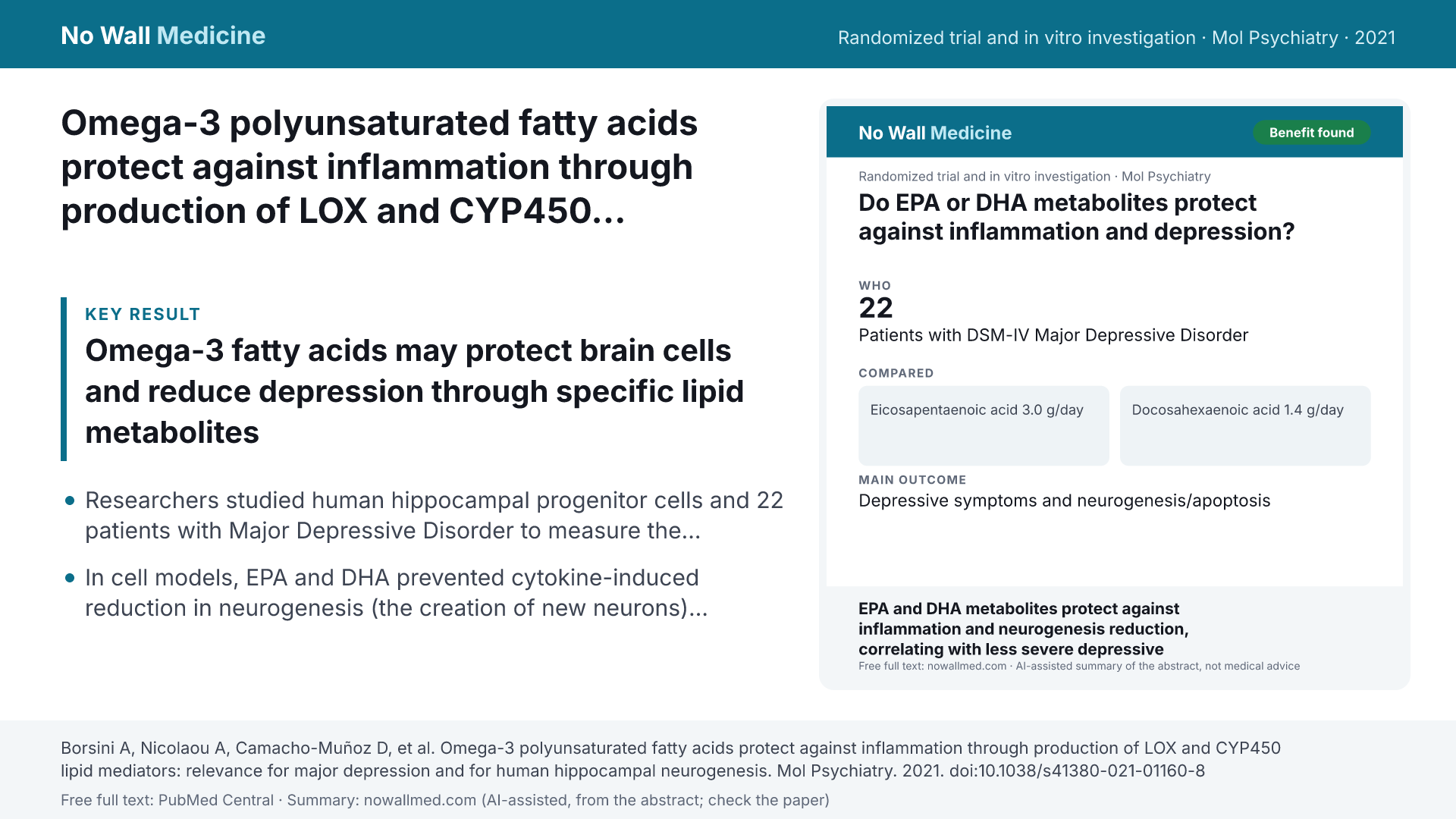
Omega-3 fatty acids may protect brain cells and reduce depression through specific lipid metabolites
Omega-3 polyunsaturated fatty acids protect against inflammation through production of LOX and CYP450 lipid mediators: relevance for major depression and for human hippocampal neurogenesis
Randomized trial and in vitro investigationBenefit found
Do EPA or DHA metabolites protect against inflammation and depression?
Who
22
Patients with DSM-IV Major Depressive Disorder
Compared
Eicosapentaenoic acid 3.0 g/day
Docosahexaenoic acid 1.4 g/day
Main outcome
Depressive symptoms and neurogenesis/apoptosis
Bottom line: EPA and DHA metabolites protect against inflammation and neurogenesis reduction, correlating with less severe depressive symptoms.
Mol Psychiatry · 2021-06-16 · Save PNG
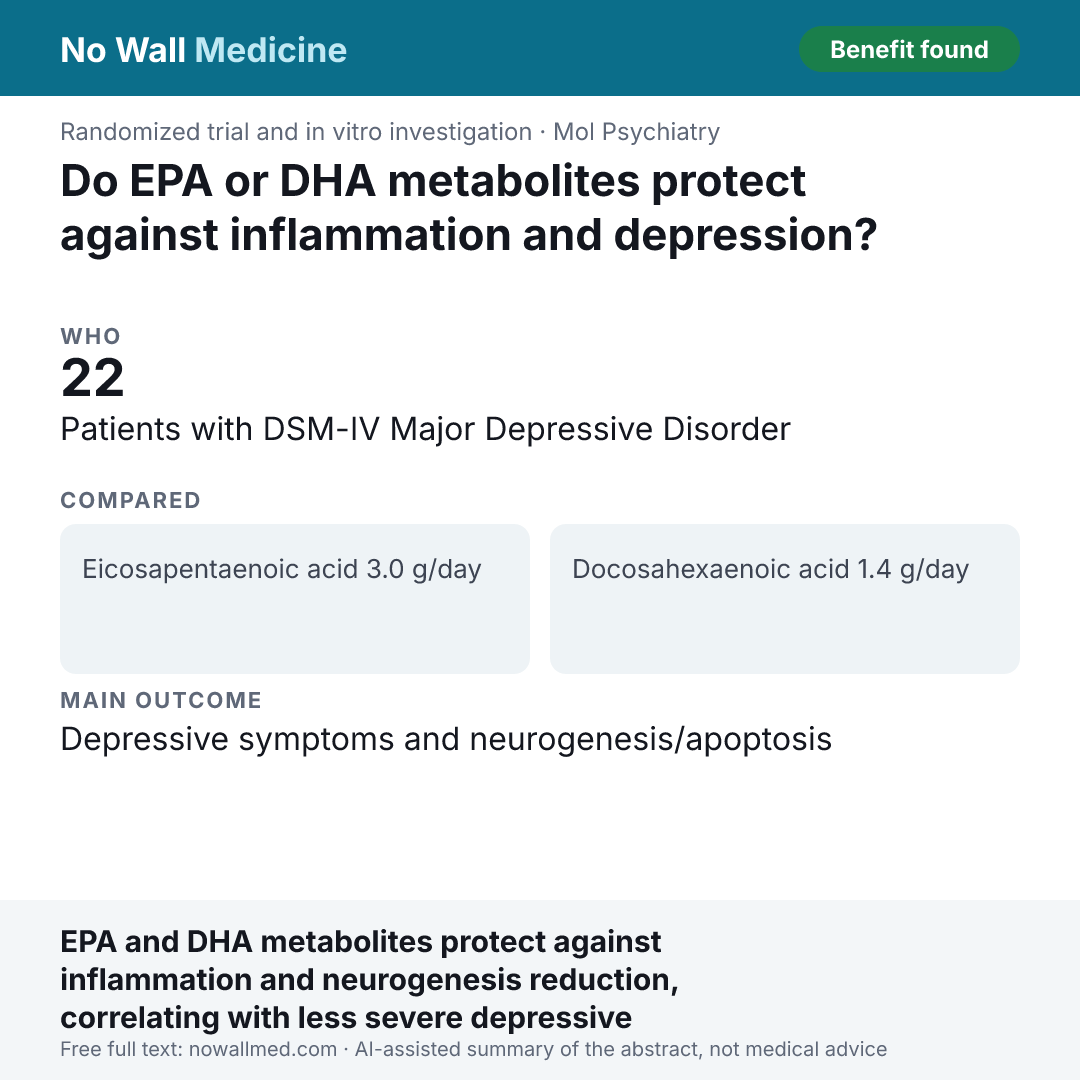
Clinical question: Do EPA or DHA metabolites protect against inflammation and depression?
Key points
- Researchers studied human hippocampal progenitor cells and 22 patients with Major Depressive Disorder to measure the effects of eicosapentaenoic acid (EPA) and docosahexaenoic acid (DHA).
- In cell models, EPA and DHA prevented cytokine-induced reduction in neurogenesis (the creation of new neurons) and apoptosis (programmed cell death) via lipoxygenase and cytochrome P450 metabolites.
- In the clinical trial, 22 patients received 3.0 g/day of EPA or 1.4 g/day of DHA for 12 weeks, showing metabolite increases linked to less severe depressive symptoms.
Headline and key points written with AI from the paper’s abstract, with every number checked against it. Read the paper before relying on them.
Was this summary helpful?
Subject terms
Headline, design, result, key points, caveat and citation as plain text.
Cite this article
Borsini A, Nicolaou A, Camacho-Muñoz D, et al. Omega-3 polyunsaturated fatty acids protect against inflammation through production of LOX and CYP450 lipid mediators: relevance for major depression and for human hippocampal neurogenesis. Mol Psychiatry. 2021. doi:10.1038/s41380-021-01160-8
Spotted a mistake? Suggest a correction