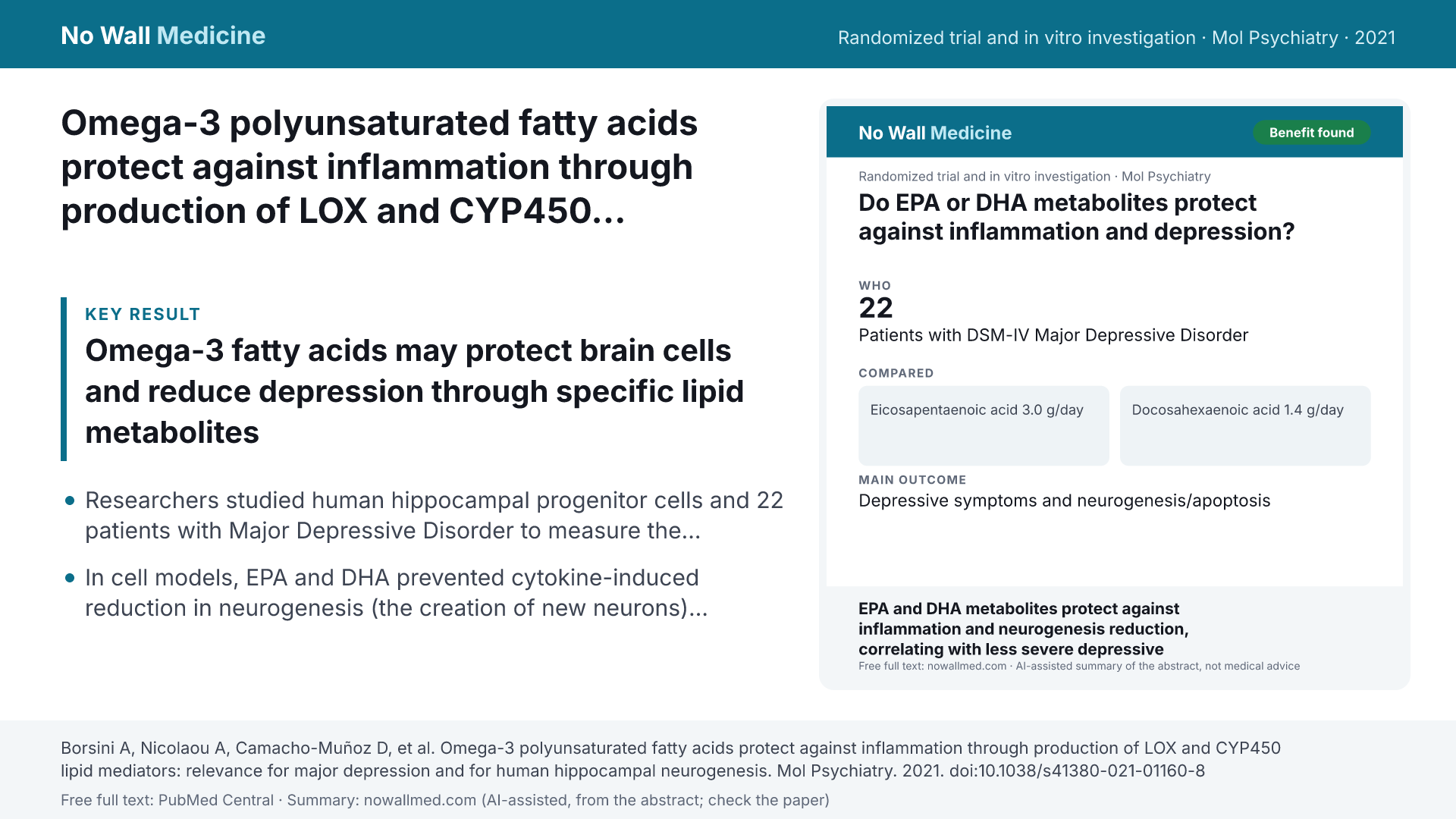
Omega-3 polyunsaturated fatty acids protect against inflammation through production of LOX and CYP450 lipid mediators: relevance for major depression and for human hippocampal neurogenesis
Key result: Omega-3 fatty acids may protect brain cells and reduce depression through specific lipid metabolites
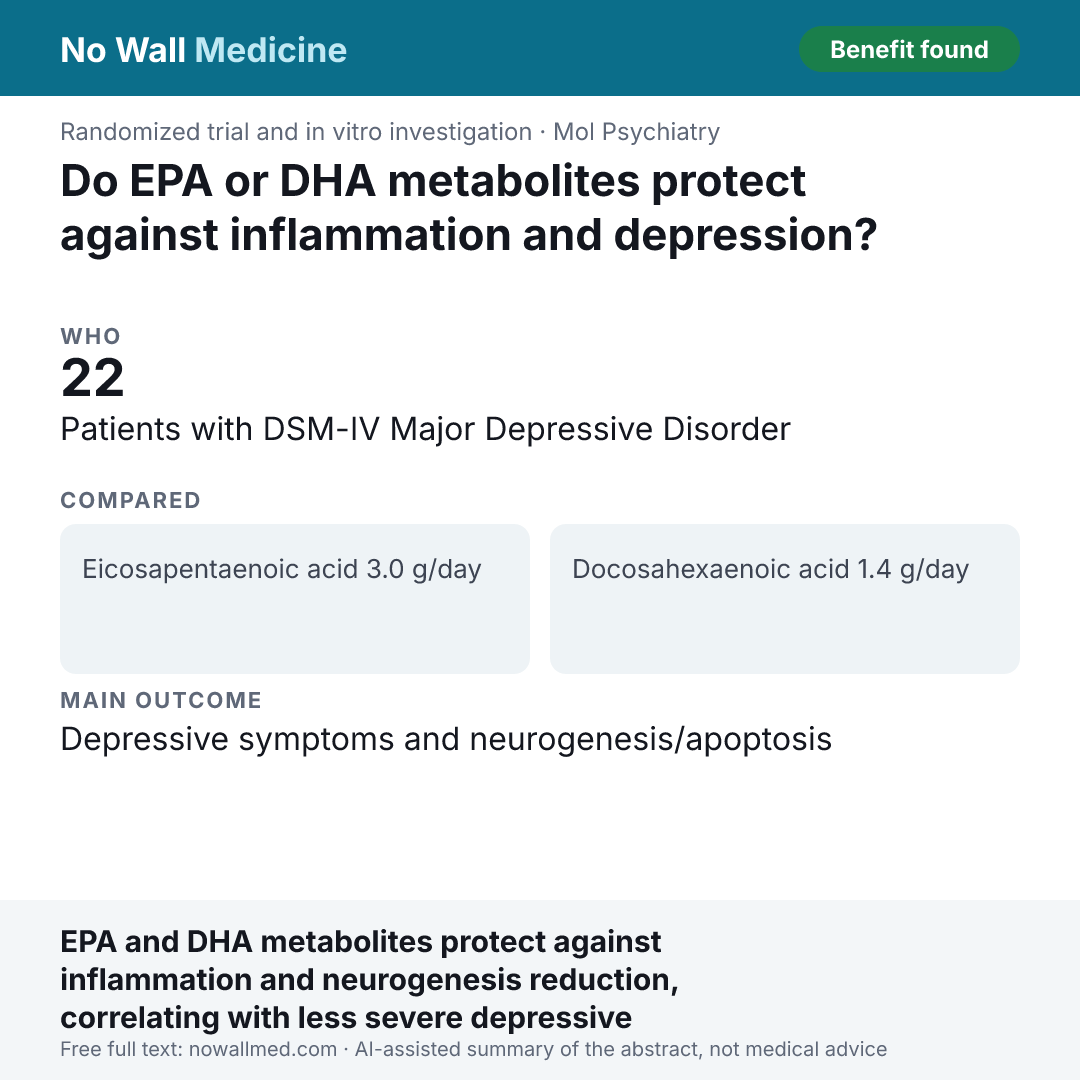
Randomized trial and in vitro investigationBenefit found
Do EPA or DHA metabolites protect against inflammation and depression?
Who
22
Patients with DSM-IV Major Depressive Disorder
Compared
Eicosapentaenoic acid 3.0 g/day
Docosahexaenoic acid 1.4 g/day
Main outcome
Depressive symptoms and neurogenesis/apoptosis
Bottom line: EPA and DHA metabolites protect against inflammation and neurogenesis reduction, correlating with less severe depressive symptoms.
Mol Psychiatry · 2021-06-16 · Save PNG
Key points
- Researchers studied human hippocampal progenitor cells and 22 patients with Major Depressive Disorder to measure the effects of eicosapentaenoic acid (EPA) and docosahexaenoic acid (DHA).
- In cell models, EPA and DHA prevented cytokine-induced reduction in neurogenesis (the creation of new neurons) and apoptosis (programmed cell death) via lipoxygenase and cytochrome P450 metabolites.
- In the clinical trial, 22 patients received 3.0 g/day of EPA or 1.4 g/day of DHA for 12 weeks, showing metabolite increases linked to less severe depressive symptoms.
Discussion prompts
- Would these patients look like yours? Who was left out?
- Is the main outcome one that matters to patients?
- Is the difference large enough to change what you do?
Cite: Borsini A, Nicolaou A, Camacho-Muñoz D, et al. Omega-3 polyunsaturated fatty acids protect against inflammation through production of LOX and CYP450 lipid mediators: relevance for major depression and for human hippocampal neurogenesis. Mol Psychiatry. 2021. doi:10.1038/s41380-021-01160-8
Free full text: PubMed Central · Summary and visual abstract: nowallmed.com/a/omega-3-polyunsaturated-fatty-acids-protect-against-inflammation-a5zhdm/ (AI-assisted from the abstract; check the paper before relying on it).