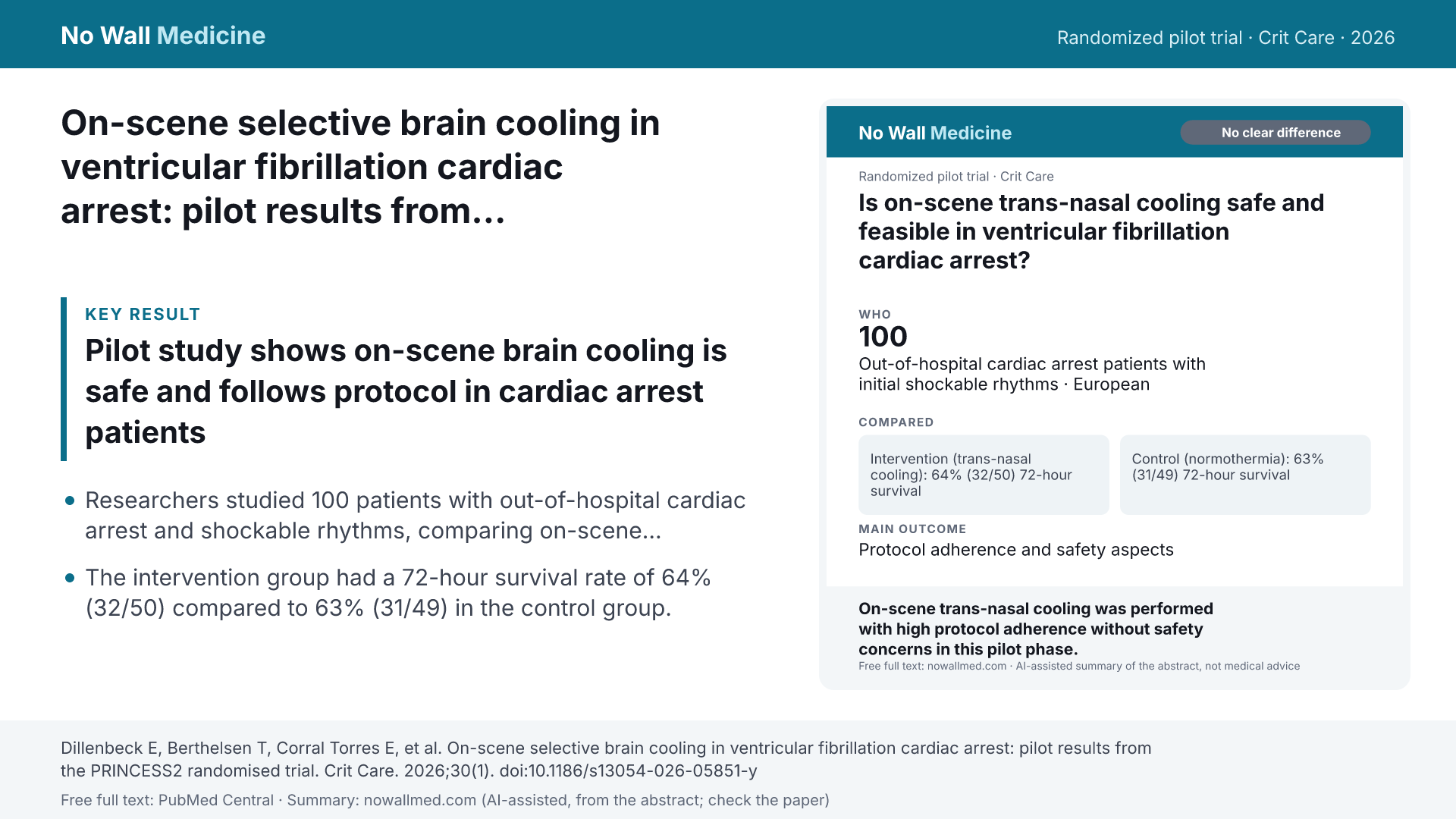
Pilot study shows on-scene brain cooling is safe and follows protocol in cardiac arrest patients
On-scene selective brain cooling in ventricular fibrillation cardiac arrest: pilot results from the PRINCESS2 randomised trial
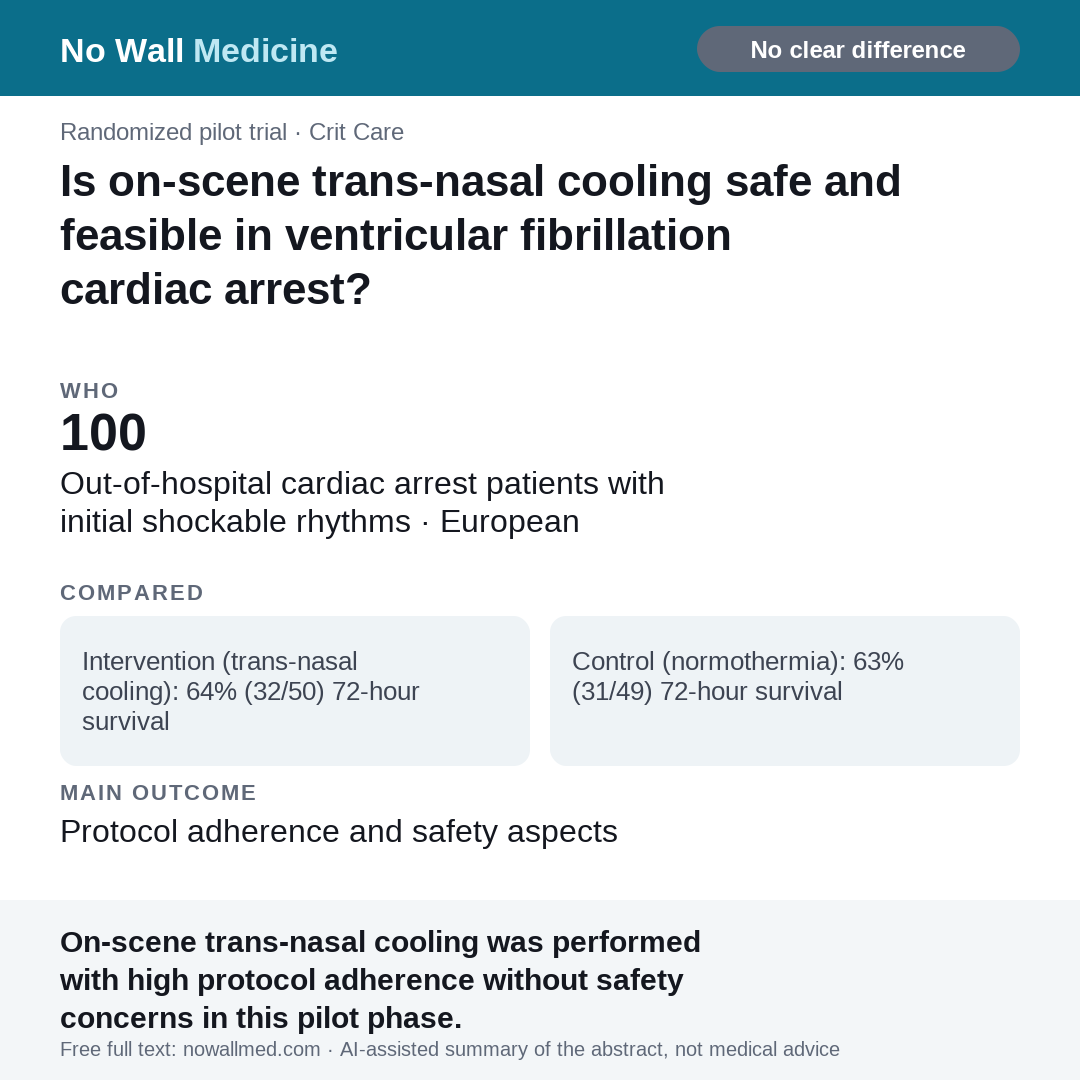
Randomized pilot trialNo clear difference
Is on-scene trans-nasal cooling safe and feasible in ventricular fibrillation cardiac arrest?
Who
100
Out-of-hospital cardiac arrest patients with initial shockable rhythms · European multicentre trial
Compared
Intervention (trans-nasal cooling): 64% (32/50) 72-hour survival
Control (normothermia): 63% (31/49) 72-hour survival
Main outcome
Protocol adherence and safety aspects
Bottom line: On-scene trans-nasal cooling was performed with high protocol adherence without safety concerns in this pilot phase.
Crit Care · 2026-02-12Download image
Clinical question: Is on-scene trans-nasal cooling safe and feasible in ventricular fibrillation cardiac arrest?
Why it matters: No neuroprotective treatment currently exists to address brain injury caused by ischemia-reperfusion after cardiac arrest.
Key points
- Researchers studied 100 patients with out-of-hospital cardiac arrest and shockable rhythms, comparing on-scene trans-nasal cooling to normothermia with fever control.
- The intervention group had a 72-hour survival rate of 64% (32/50) compared to 63% (31/49) in the control group.
- The study found high protocol adherence at 92% and no device-related serious adverse events during the pilot phase.
Headline and key points written with AI from the paper’s abstract, with every number checked against it. Read the paper before relying on them.
Was this summary helpful?
Subject terms
Cite this article
Dillenbeck E, Berthelsen T, Corral Torres E, et al. On-scene selective brain cooling in ventricular fibrillation cardiac arrest: pilot results from the PRINCESS2 randomised trial. Crit Care. 2026. doi:10.1186/s13054-026-05851-y
Spotted a mistake? Suggest a correction