One Health Field Approach Applied to Leptospirosis: A Systematic Review and Meta-Analysis Across Humans, Animals and the Environment
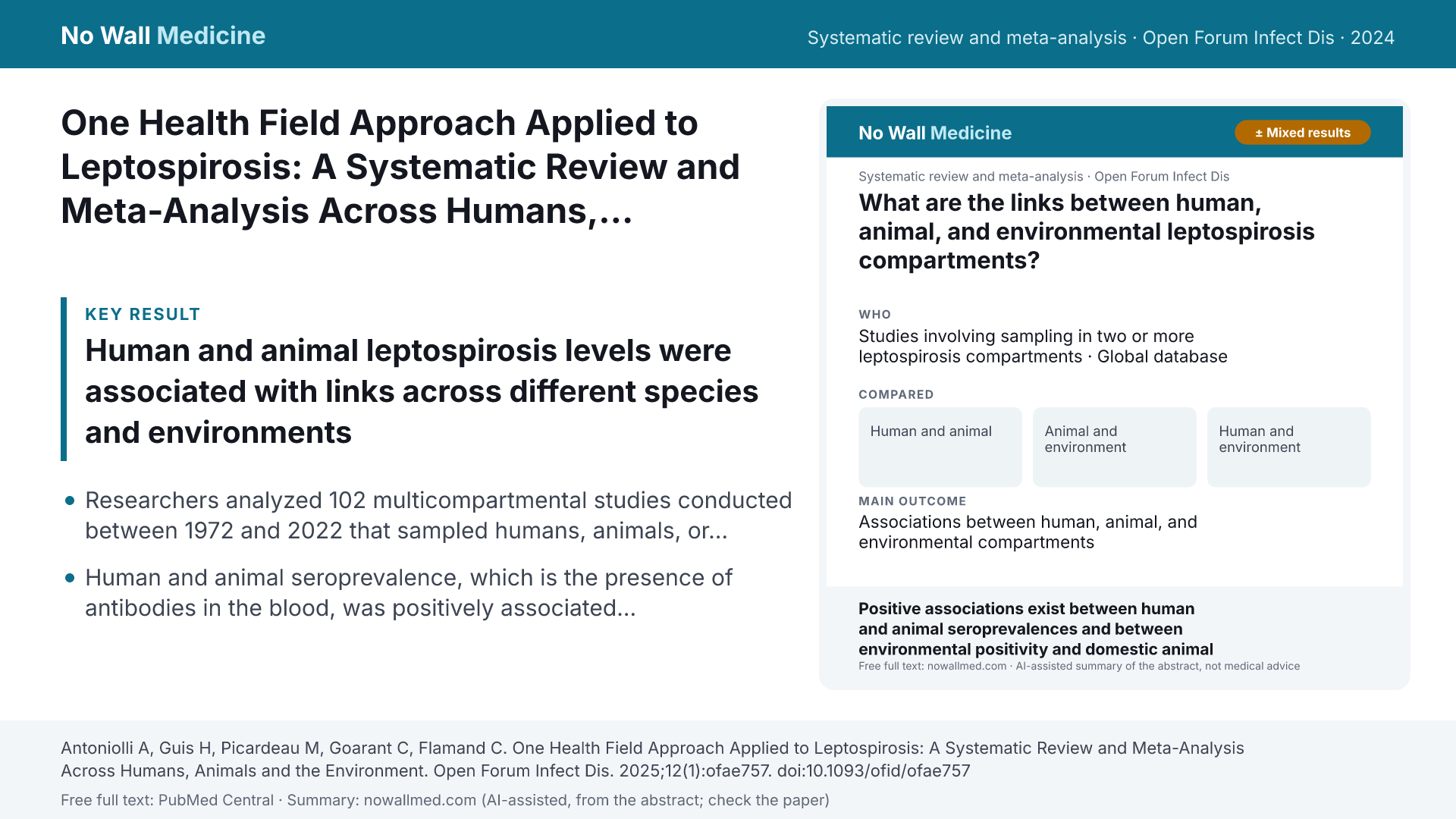
Key result: Human and animal leptospirosis levels were associated with links across different species and environments
Key points
- Researchers analyzed 102 multicompartmental studies conducted between 1972 and 2022 that sampled humans, animals, or the environment.
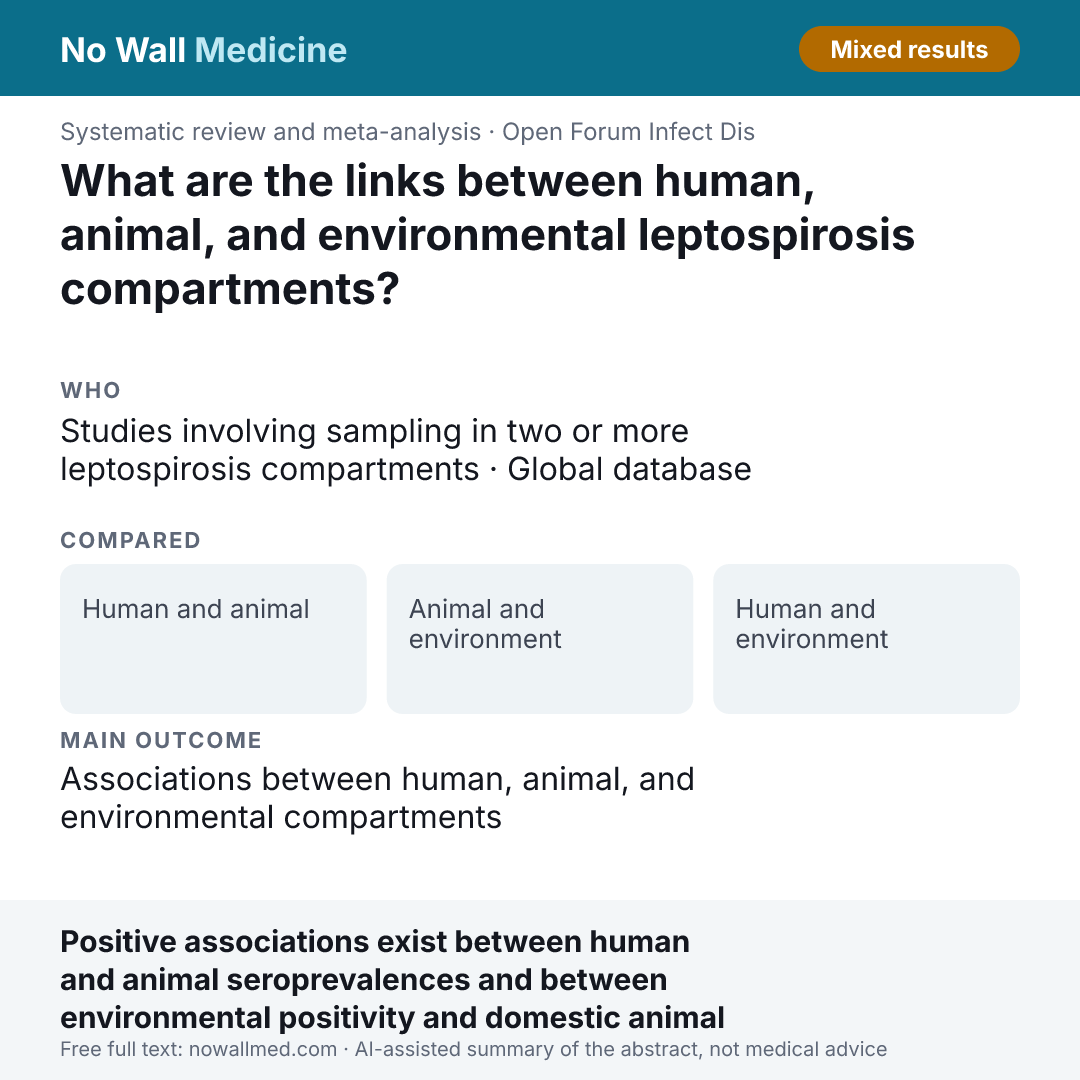
- Human and animal seroprevalence, which is the presence of antibodies in the blood, was positively associated with livestock and wild nonrodent animals.
- The environmental positivity rate was linked to the seroprevalence of domestic animals.
Why it matters: The transmission dynamics and risk factors of leptospirosis, a disease spread through urine, remain unclear due to a lack of robust One Health research.
Limitation the authors note: The analysis was constrained by the limited number of studies included and by the quality of protocols.
Discussion prompts
- Would these patients look like yours? Who was left out?
- Is the main outcome one that matters to patients?
- Is the difference large enough to change what you do?
Cite: Antoniolli A, Guis H, Picardeau M, Goarant C, Flamand C. One Health Field Approach Applied to Leptospirosis: A Systematic Review and Meta-Analysis Across Humans, Animals and the Environment. Open Forum Infect Dis. 2025;12(1):ofae757. doi:10.1093/ofid/ofae757
Free full text: PubMed Central · Summary and visual abstract: nowallmed.com/a/one-health-field-approach-applied-to-leptospirosis-a-systematic-mqit1v/ (AI-assisted from the abstract; check the paper before relying on it).