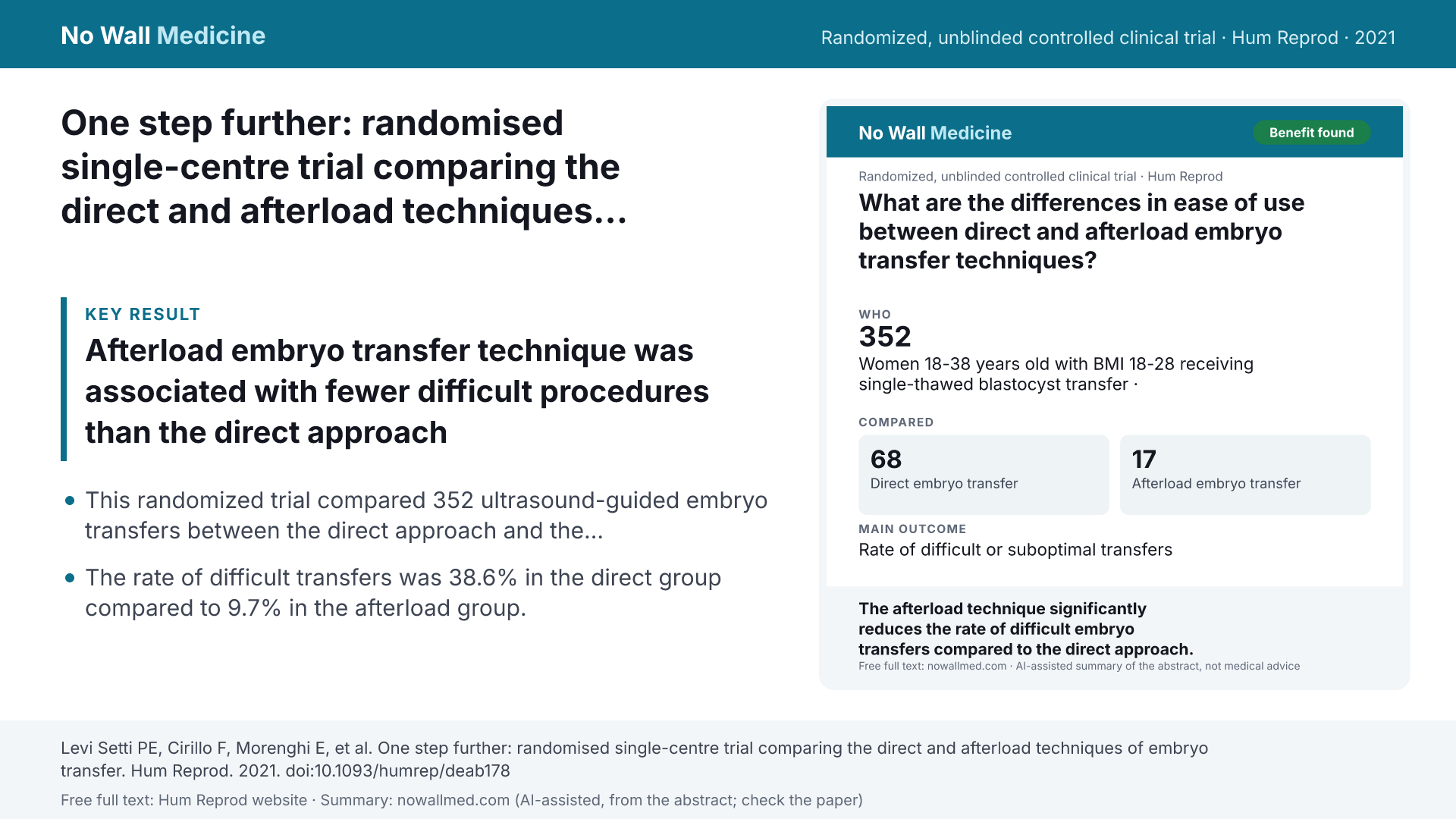
One step further: randomised single-centre trial comparing the direct and afterload techniques of embryo transfer
Key result: Afterload embryo transfer technique was associated with fewer difficult procedures than the direct approach
Key points
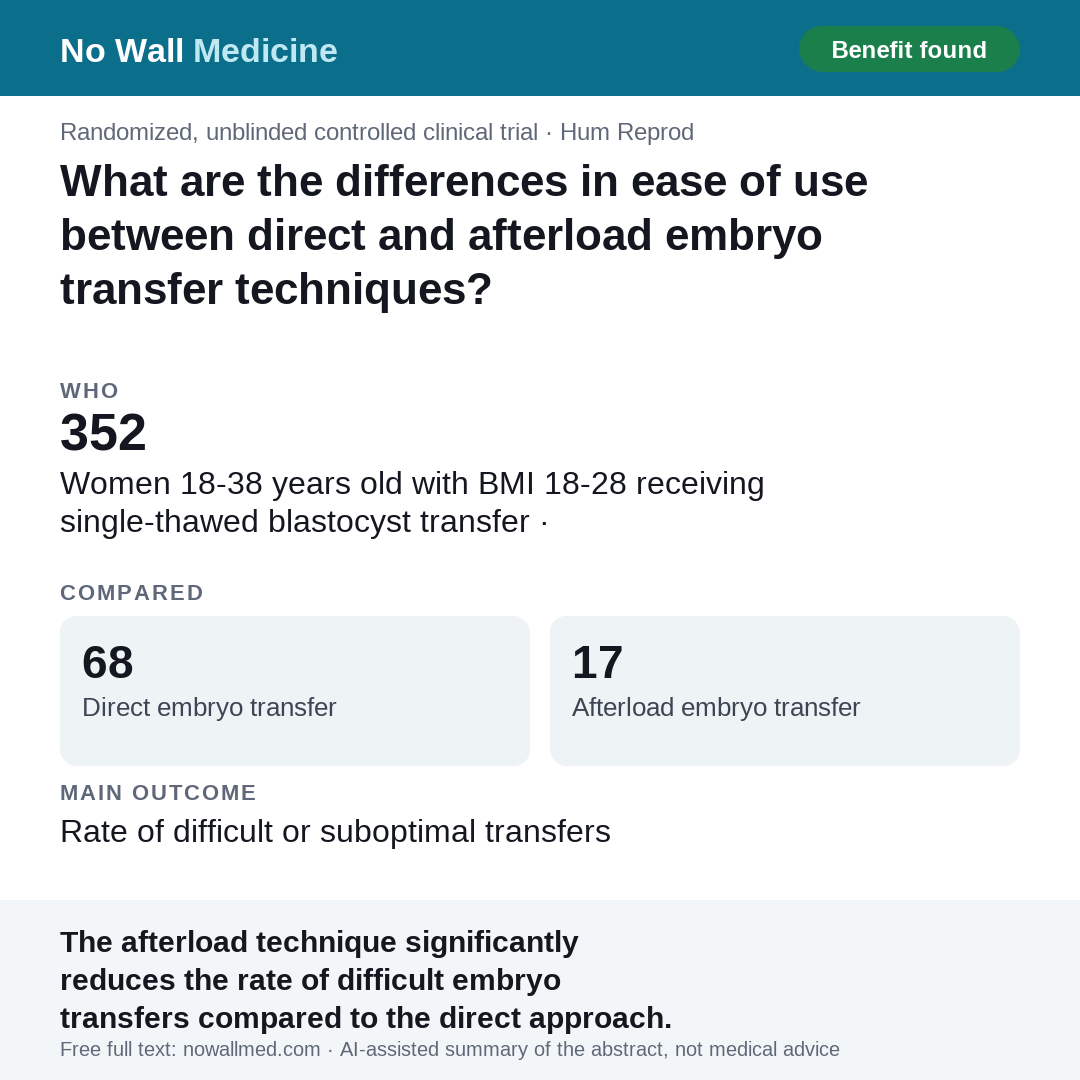
- This randomized trial compared 352 ultrasound-guided embryo transfers between the direct approach and the afterload approach in women aged 18 to 38 years.
- The rate of difficult transfers was 38.6% in the direct group compared to 9.7% in the afterload group.
- Clinical pregnancy rates were 42.0% for the direct group and 48.3% for the afterload group, which was not a statistically significant difference.
Why it matters: It is unknown which technique using soft catheters is preferable to reduce the operator factor during embryo transfer.
Limitation the authors note: The authors state that conclusions about pregnancy rates should not be generalized because the sample analysis was not performed on that outcome and the difference was not statistically significant.
Discussion prompts
- Would these patients look like yours? Who was left out?
- Is the main outcome one that matters to patients?
- Is the difference large enough to change what you do?
Cite: Levi Setti PE, Cirillo F, Morenghi E, et al. One step further: randomised single-centre trial comparing the direct and afterload techniques of embryo transfer. Hum Reprod. 2021. doi:10.1093/humrep/deab178
Free full text: Hum Reprod website · Summary and visual abstract: nowallmed.com/a/one-step-further-randomised-single-centre-trial-comparing-the-direct-1tuxzwi/ (AI-assisted from the abstract; check the paper before relying on it).