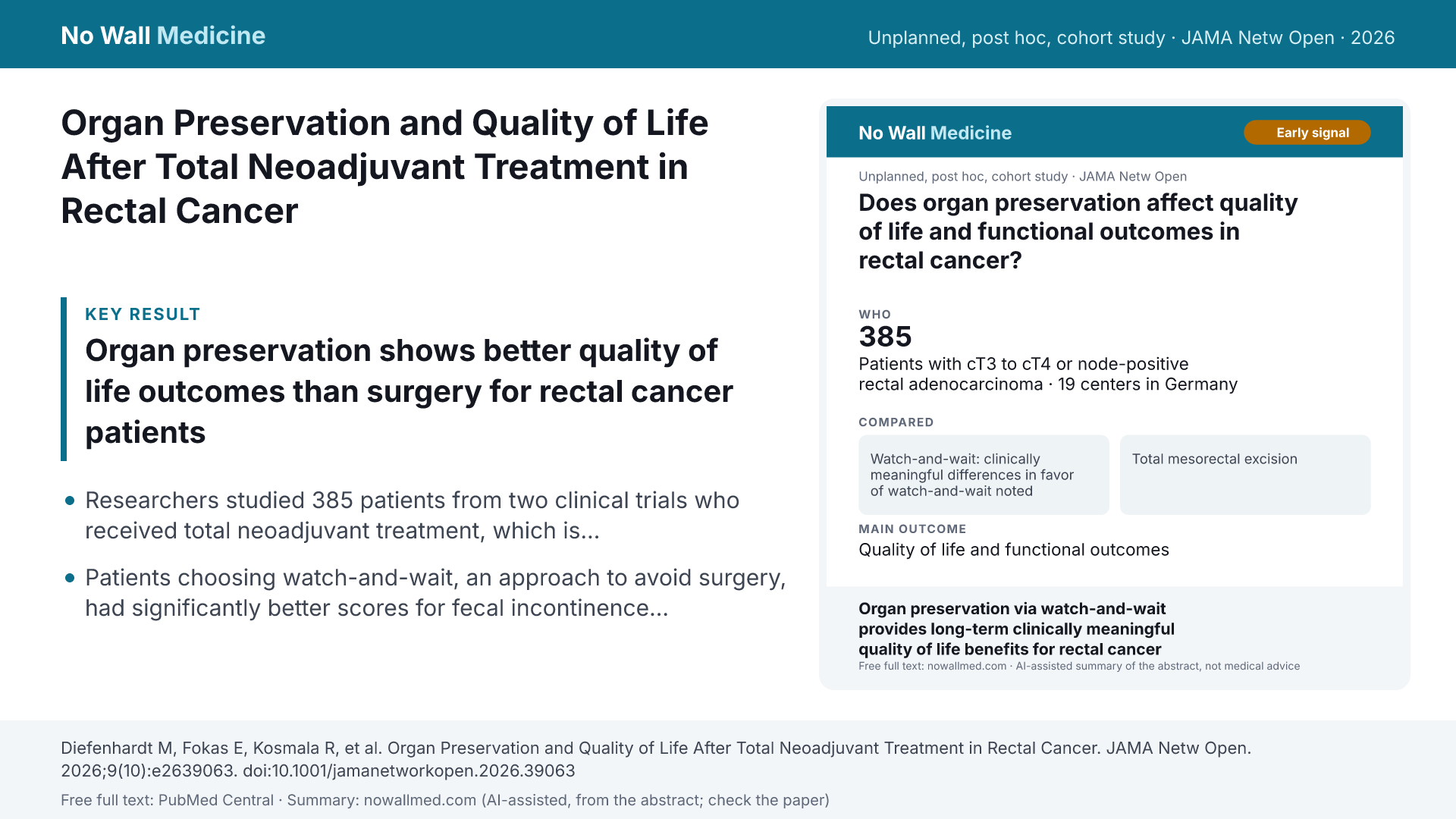
Organ preservation shows better quality of life outcomes than surgery for rectal cancer patients
Organ Preservation and Quality of Life After Total Neoadjuvant Treatment in Rectal Cancer
Unplanned, post hoc, cohort studyEarly signal
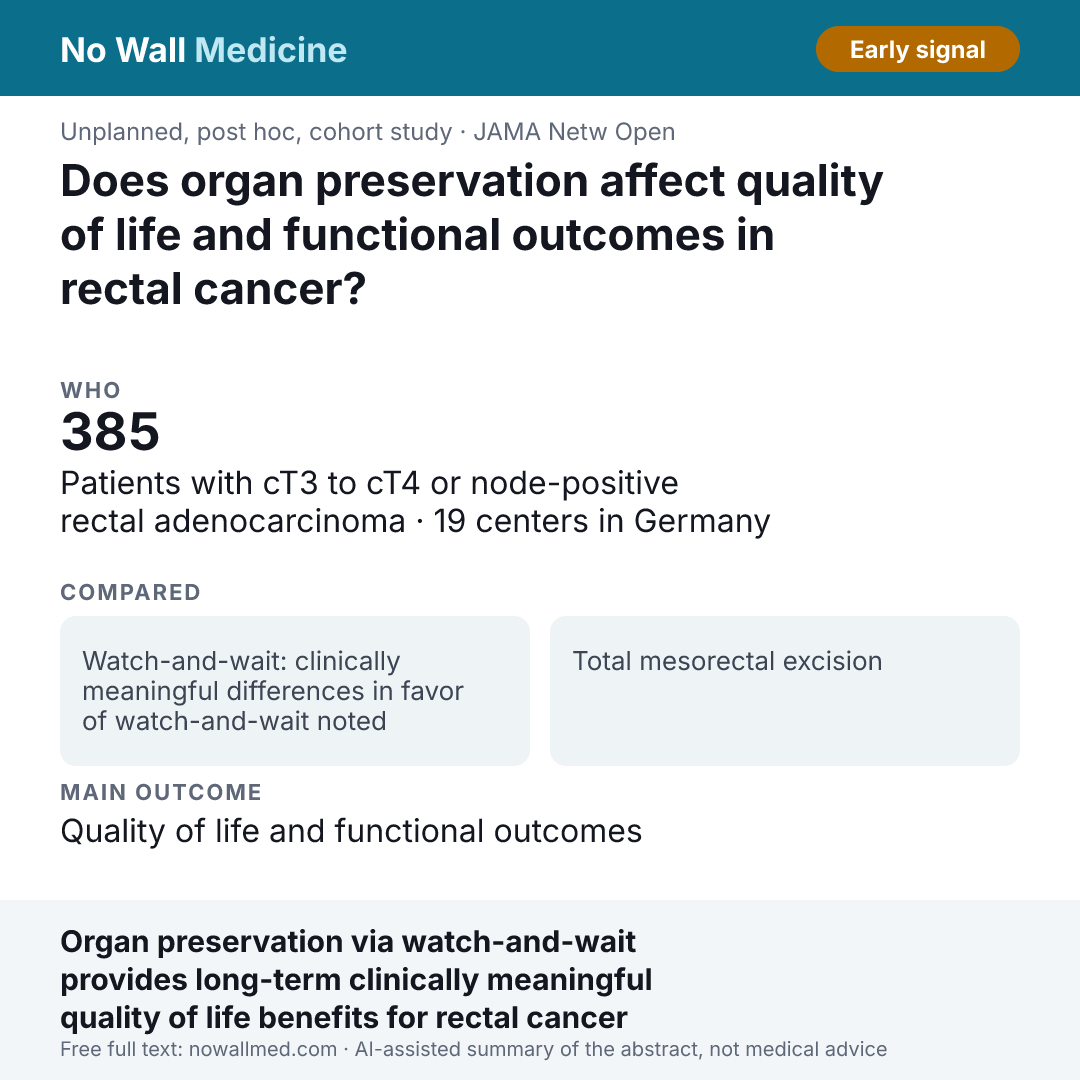
Does organ preservation affect quality of life and functional outcomes in rectal cancer?
Who
385
Patients with cT3 to cT4 or node-positive rectal adenocarcinoma · 19 centers in Germany
Compared
Watch-and-wait: clinically meaningful differences in favor of watch-and-wait noted
Total mesorectal excision
Main outcome
Quality of life and functional outcomes
Bottom line: Organ preservation via watch-and-wait provides long-term clinically meaningful quality of life benefits for rectal cancer patients.
Limitation: In the absence of prospective randomized trials
JAMA Netw Open · 2026-10-01 · Save PNG
Same trial (NCT02363374, NCT03561142)
Papers we list that report this registered trial, oldest first. Read a secondary analysis alongside the main results.
- Longer follow-up No clear difference
Induction or consolidation chemotherapy sequences showed similar long-term survival and quality of life in rectal cancer JAMA Oncol 2022-01 - Main results Early signal
This paper JAMA Netw Open 2026-10
Clinical question: Does organ preservation affect quality of life and functional outcomes in rectal cancer?
Why it matters: A thorough understanding of how watch-and-wait versus total mesorectal excision affects long-term bowel, urinary, and sexual function remains limited.
Key points
- Researchers studied 385 patients from two clinical trials who received total neoadjuvant treatment, which is chemoradiation combined with chemotherapy before surgery.
- Patients choosing watch-and-wait, an approach to avoid surgery, had significantly better scores for fecal incontinence (-21.2), stool frequency (-19.8), and social functioning (9.7).
- The study found clinically meaningful improvements in physical functioning (10.2) and global health status (9.2) for those undergoing organ preservation.
Headline and key points written with AI from the paper’s abstract, with every number checked against it. Read the paper before relying on them.
Was this summary helpful?
Subject terms
Headline, design, result, key points, caveat and citation as plain text.
Cite this article
Diefenhardt M, Fokas E, Kosmala R, et al. Organ Preservation and Quality of Life After Total Neoadjuvant Treatment in Rectal Cancer. JAMA Netw Open. 2026;9(10):e2639063. doi:10.1001/jamanetworkopen.2026.39063
Spotted a mistake? Suggest a correction