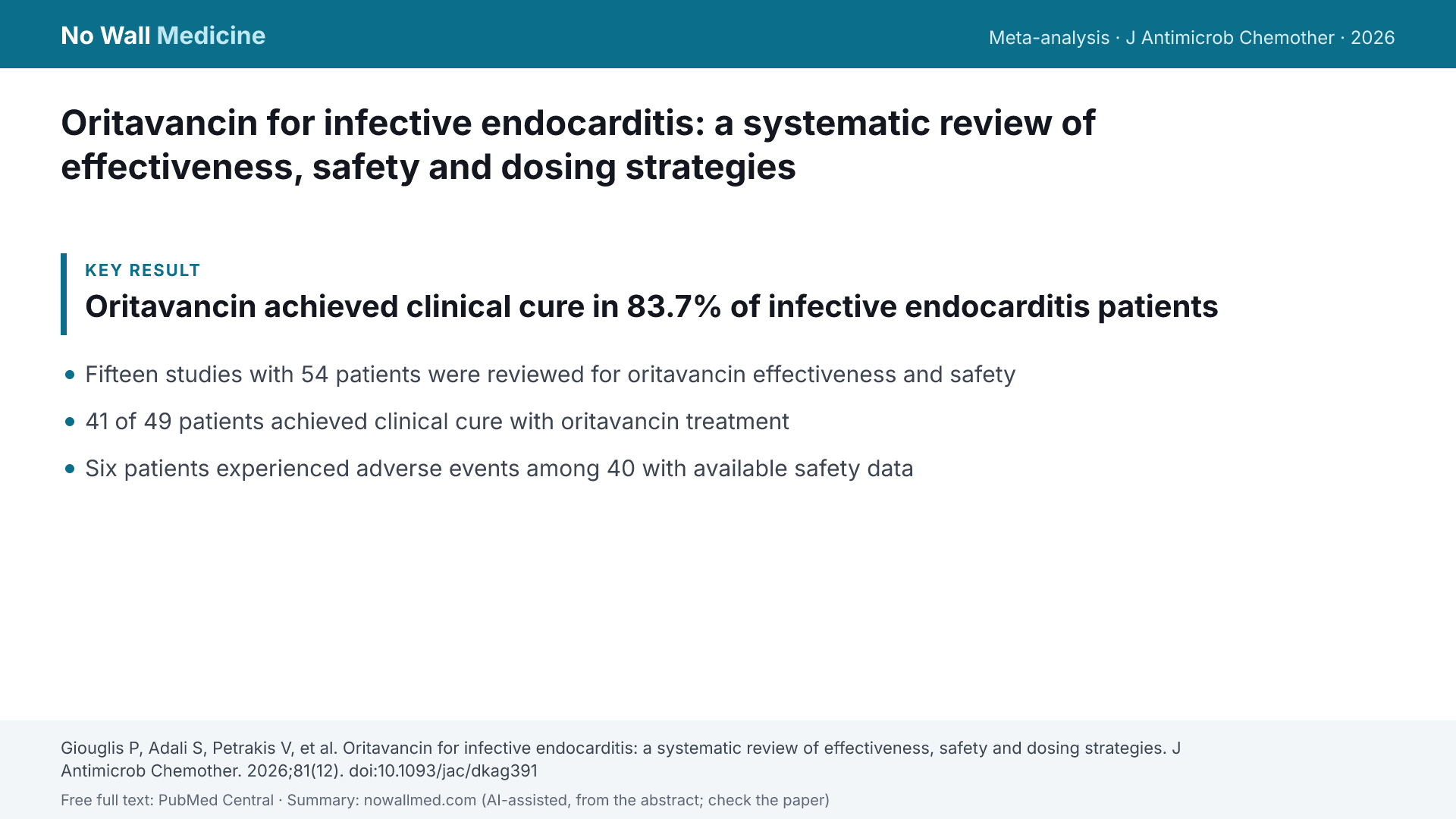
Oritavancin achieved clinical cure in 83.7% of infective endocarditis patients
Oritavancin for infective endocarditis: a systematic review of effectiveness, safety and dosing strategies
Why this study matters
- Why it matters: Infective endocarditis is a severe infection of the endocardial surface that poses a major therapeutic challenge due to the need for prolonged antimicrobial therapy and potential complications. (paper's introduction)
- Before this study: The role of oritavancin in infective endocarditis remains poorly defined, with available evidence derived predominantly from observational studies, case series, and case reports. (paper's introduction)
- What it adds: This study evaluated the effectiveness, safety, and treatment strategies of oritavancin in adults with infective endocarditis, finding clinical cure in most evaluable reported cases. (abstract)
- The authors say: Oritavancin may have a role as an individualized treatment-completion strategy in selected patients with infective endocarditis, rather than as a replacement for guideline-directed first-line therapy. (paper's discussion)
AI-assisted context written only from the sources linked above (paper's introduction, abstract, paper's discussion), with every number checked against the source it came from. Read the paper before relying on it.
Key points
- Fifteen studies with 54 patients were reviewed for oritavancin effectiveness and safety.
- 41 of 49 patients achieved clinical cure with oritavancin treatment.
- Six patients experienced adverse events among 40 with available safety data.
Limitation the authors note: Evidence remains limited to small observational studies and case reports with heterogeneous treatment strategies
Headline and key points written with AI from the paper’s abstract, with every number checked against it. Read the paper before relying on them.
Was this summary helpful?
Subject terms
Cite this article
Giouglis P, Adali S, Petrakis V, et al. Oritavancin for infective endocarditis: a systematic review of effectiveness, safety and dosing strategies. J Antimicrob Chemother. 2026;81(12). doi:10.1093/jac/dkag391
Spotted a mistake? Suggest a correction