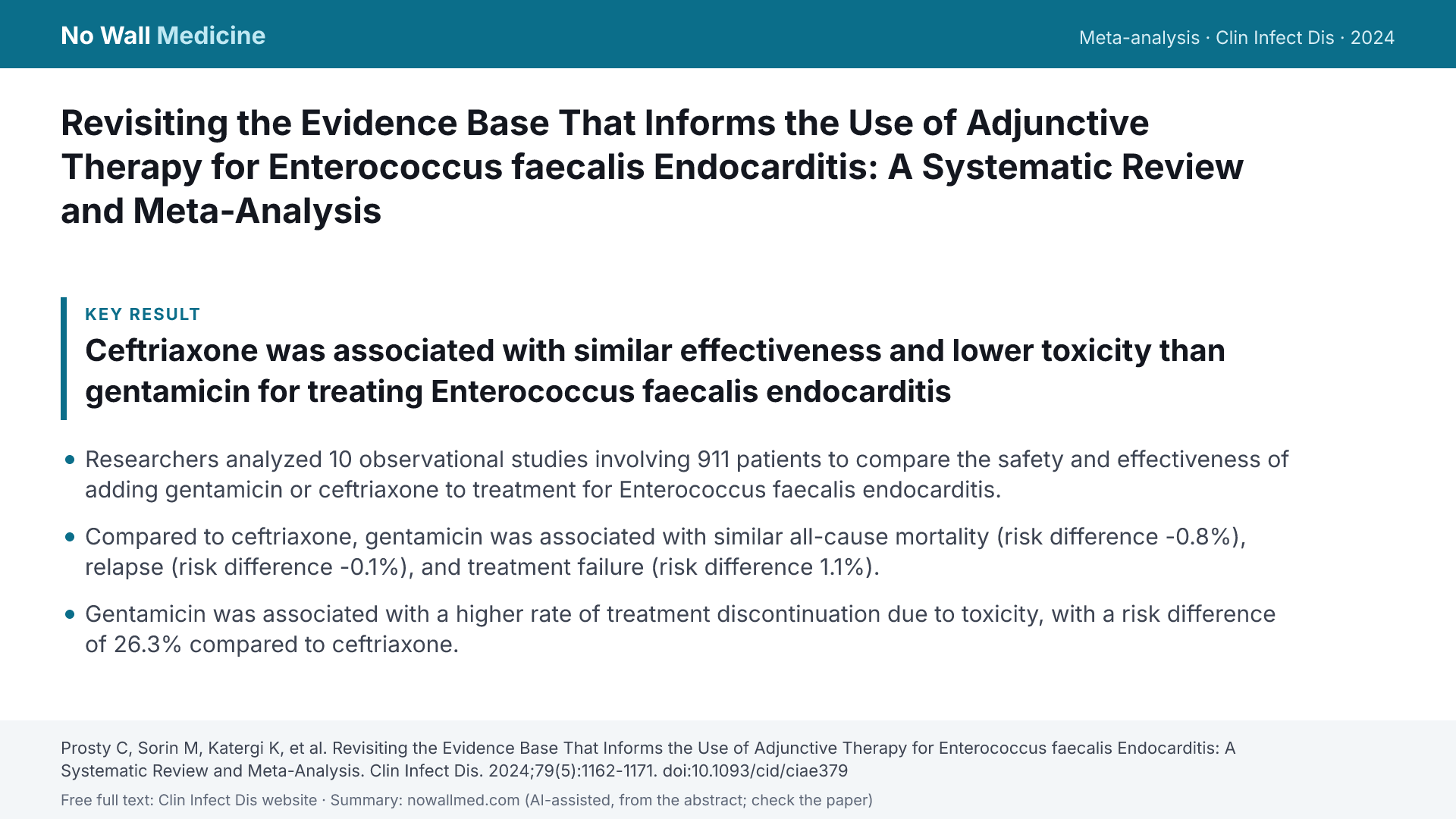
Ceftriaxone was associated with similar effectiveness and lower toxicity than gentamicin for treating Enterococcus faecalis endocarditis
Revisiting the Evidence Base That Informs the Use of Adjunctive Therapy for Enterococcus faecalis Endocarditis: A Systematic Review and Meta-Analysis
Systematic review and meta-analysisNo clear difference
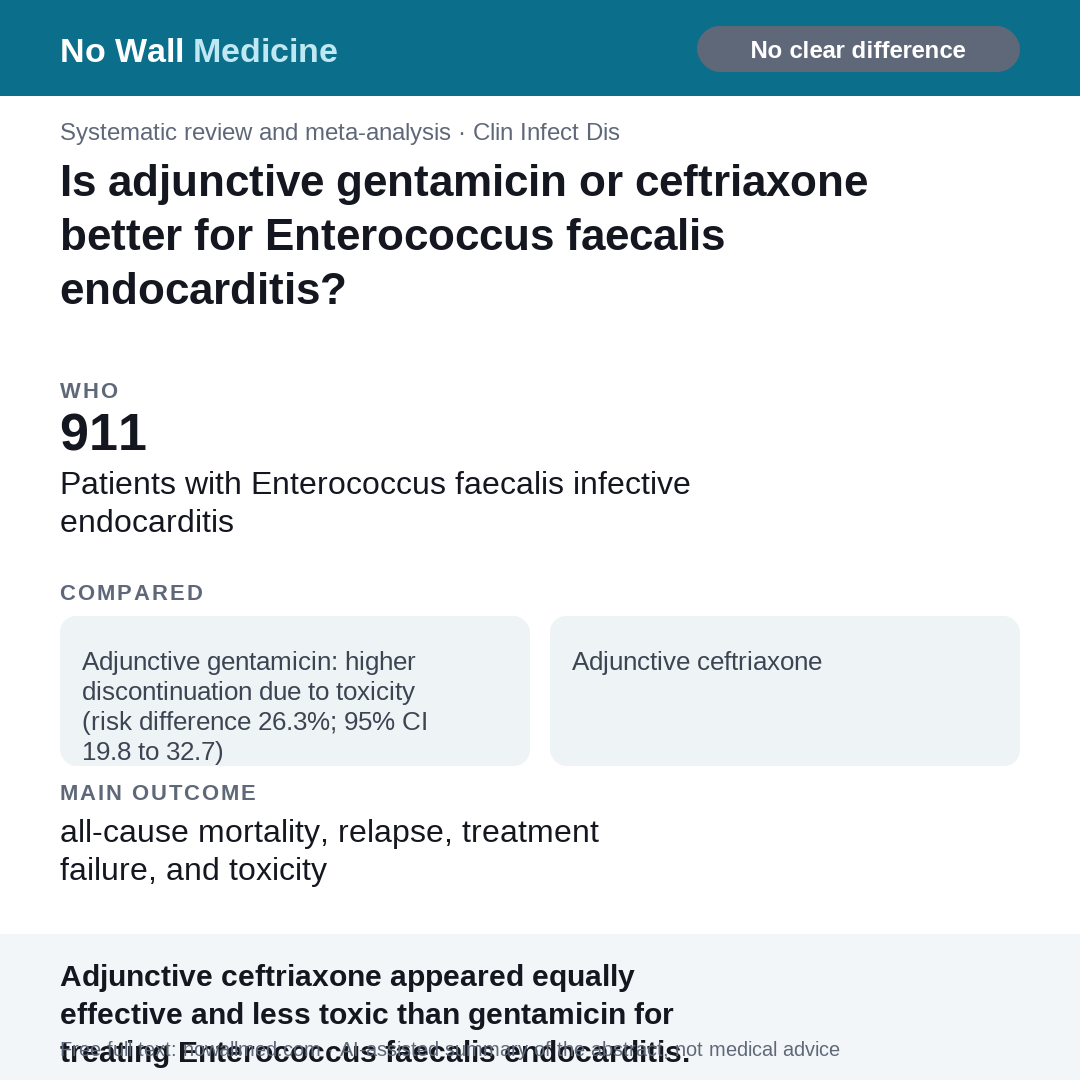
Is adjunctive gentamicin or ceftriaxone better for Enterococcus faecalis endocarditis?
Who
911
Patients with Enterococcus faecalis infective endocarditis
Compared
Adjunctive gentamicin: higher discontinuation due to toxicity (risk difference 26.3%; 95% CI 19.8 to 32.7)
Adjunctive ceftriaxone
Main outcome
all-cause mortality, relapse, treatment failure, and toxicity
Result: risk difference -0.8% (95% CI -5.0 to 3.5) for mortality
Bottom line: Adjunctive ceftriaxone appeared equally effective and less toxic than gentamicin for treating Enterococcus faecalis endocarditis.
Limitation: Meta-analysis was limited to 10 observational studies at high risk of bias.
Clin Infect Dis · 2024-07-23Download image
Clinical question: Is adjunctive gentamicin or ceftriaxone better for Enterococcus faecalis endocarditis?
Why it matters: Current guidelines recommend adding gentamicin to treatment for Enterococcus faecalis endocarditis despite potential risks of toxicity.
Key points
- Researchers analyzed 10 observational studies involving 911 patients to compare the safety and effectiveness of adding gentamicin or ceftriaxone to treatment for Enterococcus faecalis endocarditis.
- Compared to ceftriaxone, gentamicin was associated with similar all-cause mortality (risk difference -0.8%), relapse (risk difference -0.1%), and treatment failure (risk difference 1.1%).
- Gentamicin was associated with a higher rate of treatment discontinuation due to toxicity, with a risk difference of 26.3% compared to ceftriaxone.
Limitation the authors note: The meta-analysis was limited to 10 observational studies at high risk of bias.
Headline and key points written with AI from the paper’s abstract, with every number checked against it. Read the paper before relying on them.
Was this summary helpful?
Subject terms
Cite this article
Prosty C, Sorin M, Katergi K, Khalaf R, Fogarty C, Turenne M. Revisiting the Evidence Base That Informs the Use of Adjunctive Therapy for Enterococcus faecalis Endocarditis: A Systematic Review and Meta-Analysis. Clin Infect Dis. 2024. doi:10.1093/cid/ciae379
Spotted a mistake? Suggest a correction
Top studies every Monday
The week’s key trials and guidelines in your specialties, plus any topics you follow. By email, free.
Get the weekly digest