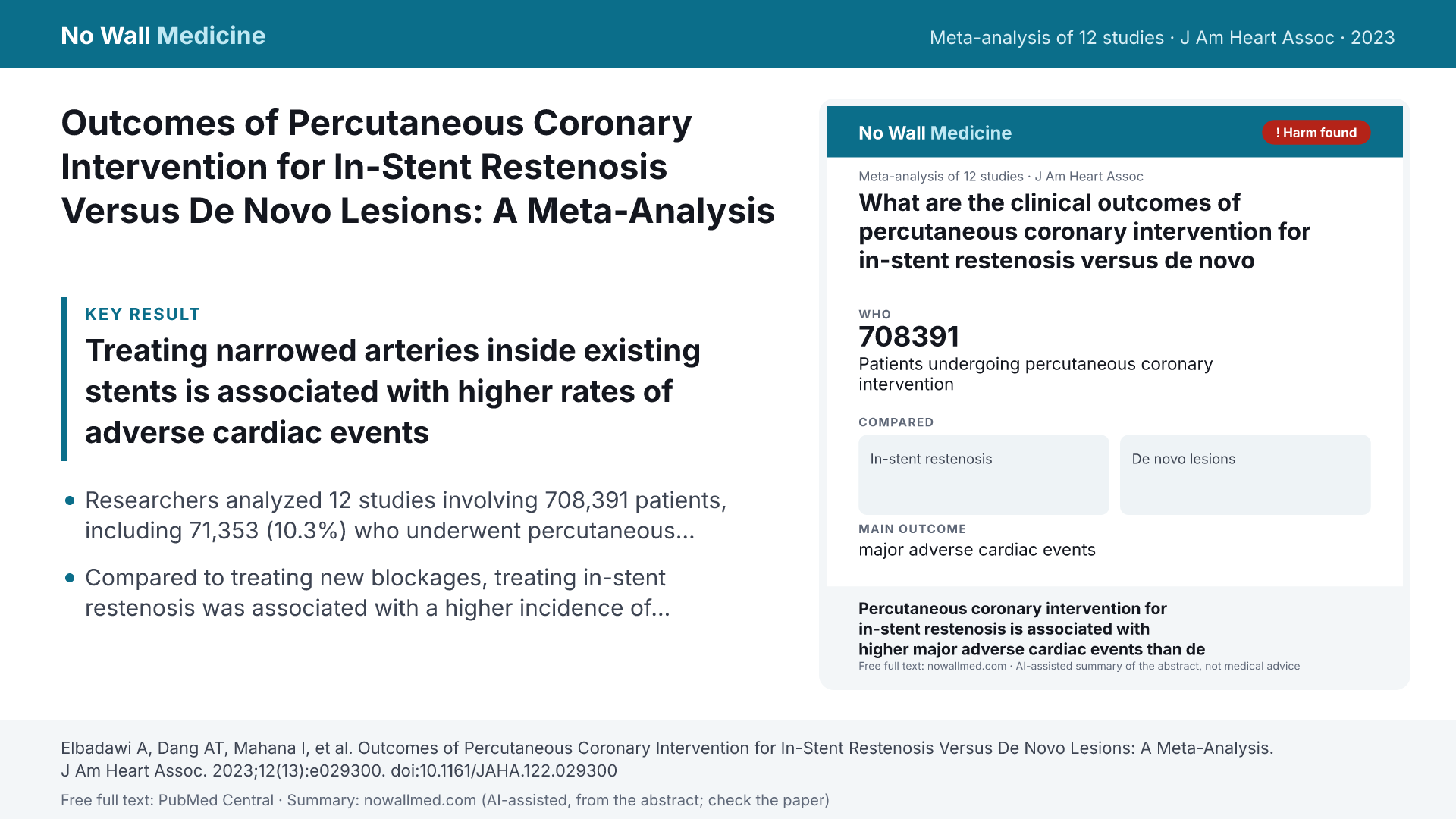
Treating narrowed arteries inside existing stents is associated with higher rates of adverse cardiac events
Outcomes of Percutaneous Coronary Intervention for In-Stent Restenosis Versus De Novo Lesions: A Meta-Analysis
Meta-analysis of 12 studiesHarm found
What are the clinical outcomes of percutaneous coronary intervention for in-stent restenosis versus de novo lesions?
Who
708391
Patients undergoing percutaneous coronary intervention
Compared
In-stent restenosis
De novo lesions
Main outcome
major adverse cardiac events
Result: odds ratio 1.31 (95% CI 1.18-1.46)
Bottom line: Percutaneous coronary intervention for in-stent restenosis is associated with higher major adverse cardiac events than de novo lesions.
J Am Heart Assoc · 2023-06-29Download image
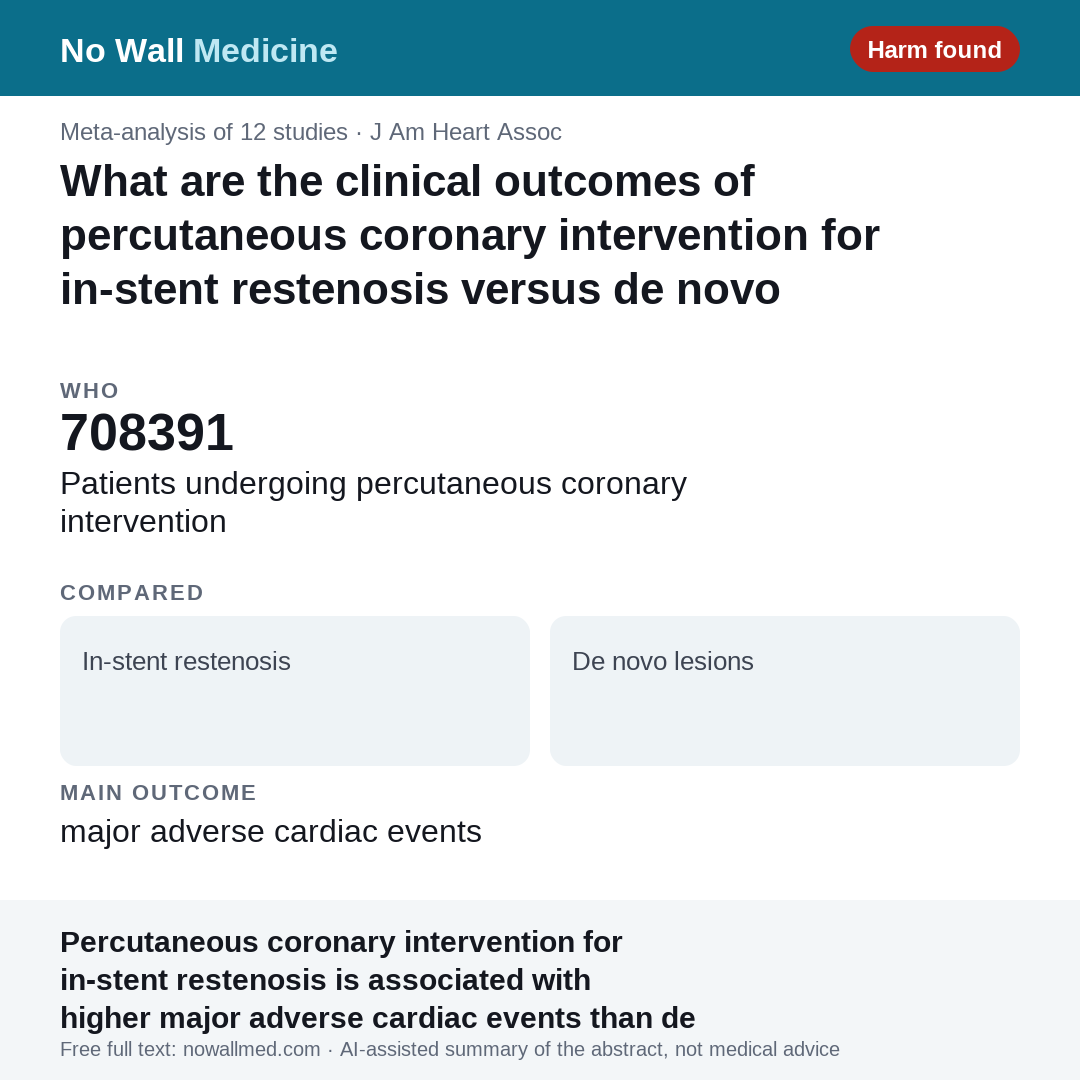
Clinical question: What are the clinical outcomes of percutaneous coronary intervention for in-stent restenosis versus de novo lesions?
Key points
- Researchers analyzed 12 studies involving 708,391 patients, including 71,353 (10.3%) who underwent percutaneous coronary intervention, a procedure to open blocked heart arteries, for in-stent restenosis.
- Compared to treating new blockages, treating in-stent restenosis was associated with a higher incidence of major adverse cardiac events (odds ratio 1.31) and target vessel revascularization (odds ratio 1.42).
- In-stent restenosis was also associated with higher rates of all-cause mortality (odds ratio 1.03), myocardial infarction (odds ratio 1.20), and stent thrombosis (odds ratio 1.44).
Headline and key points written with AI from the paper’s abstract, with every number checked against it. Read the paper before relying on them.
Was this summary helpful?
Subject terms
Headline, design, result, key points, caveat and citation as plain text.
Cite this article
Elbadawi A, Dang AT, Mahana I, et al. Outcomes of Percutaneous Coronary Intervention for In-Stent Restenosis Versus De Novo Lesions: A Meta-Analysis. J Am Heart Assoc. 2023. doi:10.1161/JAHA.122.029300
Spotted a mistake? Suggest a correction