Oxidized phospholipids and lipoprotein(a) were associated with aortic valve calcium and disease progression
Oxidized Phospholipids and Calcific Aortic Valvular Disease
Multi-ethnic study and meta-analysis of 4 trialsBenefit found
Are oxidized phospholipids and lipoprotein(a) associated with calcific aortic valvular disease?
Who
Multi-Ethnic Study of Atherosclerosis participants and patients with aortic stenosis · Multi-Ethnic Study of Atherosclerosis and 4 randomized trials
Compared
Oxidized phospholipids-apolipoprotein B-100: OR per SD: 1.19 (95% CI: 1.07-1.32)
Lipoprotein(a): OR per SD: 1.13 (95% CI: 1.01-1.27)
Main outcome
Prevalence, incidence, and progression of aortic valve calcium and stenosis
Result: ß: 0.07; 95% CI: 0.01-0.12
Bottom line: Oxidized phospholipids-apolipoprotein B-100 predict aortic valve calcium presence, incidence, and progression, especially with high lipoprotein(a) levels.
JACC · 2024-11-15Download image
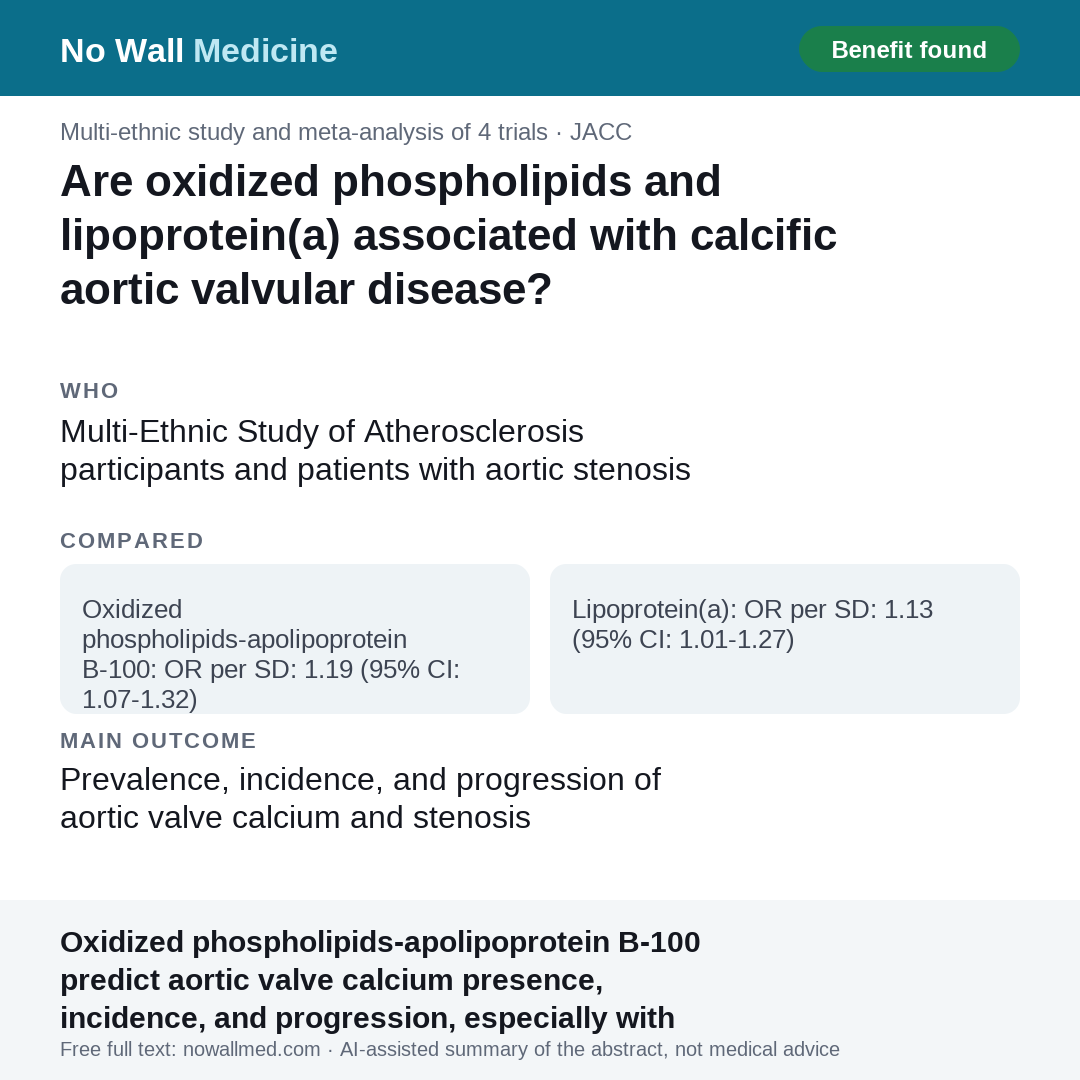
Clinical question: Are oxidized phospholipids and lipoprotein(a) associated with calcific aortic valvular disease?
Why it matters: It was unknown how oxidized phospholipids carried by lipoproteins and lipoprotein(a) relate to the prevalence, incidence, and progression of calcific aortic valve disease.
Key points
- Researchers analyzed data from the Multi-Ethnic Study of Atherosclerosis and a meta-analysis of 4 randomized trials involving participants with established aortic stenosis.
- Oxidized phospholipids were associated with prevalent aortic valve calcium (OR per SD: 1.19 [95% CI: 1.07-1.32]) and incident calcium at 9.5 years.
- In the meta-analysis, oxidized phospholipids were associated with a faster increase in peak aortic valve jet velocity (ß: 0.07; 95% CI: 0.01-0.12).
Headline and key points written with AI from the paper’s abstract, with every number checked against it. Read the paper before relying on them.
Topics
Cite this article
Bhatia HS, Dweck MR, Craig N, Capoulade R, Pibarot P, Trainor PJ. Oxidized Phospholipids and Calcific Aortic Valvular Disease. JACC. 2024. doi:10.1016/j.jacc.2024.08.070
Spotted a mistake? Suggest a correction
Top studies every Monday
The week’s key trials and guidelines in your specialties, by email. Free.
Get the weekly digest