Oxygen supplementation via nasal cannula was associated with lower hypoxemia in children undergoing sedation
Oxygen Supplementation in Pediatric Sedation: Prospective, Multicenter, Randomized Controlled Trial
Prospective, multicenter randomized controlled trialBenefit found
Is low-flow or high-flow nasal cannula more effective for oxygen supplementation during pediatric sedation?
Who
253
Children younger than 18 years undergoing moderate to deep sedation · multicenter
Compared
27.6%control (no oxygen)
7.2%low-flow (2 to 6 l/min)
1.2%high-flow (2 l/kg and 50% oxygen)
Main outcome
hypoxemia incidence
Result: OR 0.184 (95% CI 0.067 to 0.503) for low-flow; OR 0.026 (95% CI 0.003 to 0.207) for high-flow
Bottom line: Routine oxygen supplementation prevents hypoxemia during pediatric sedation, with low-flow oxygen being a reasonable, cost-effective choice.
Anesthesiology · 2025-04-11Download image
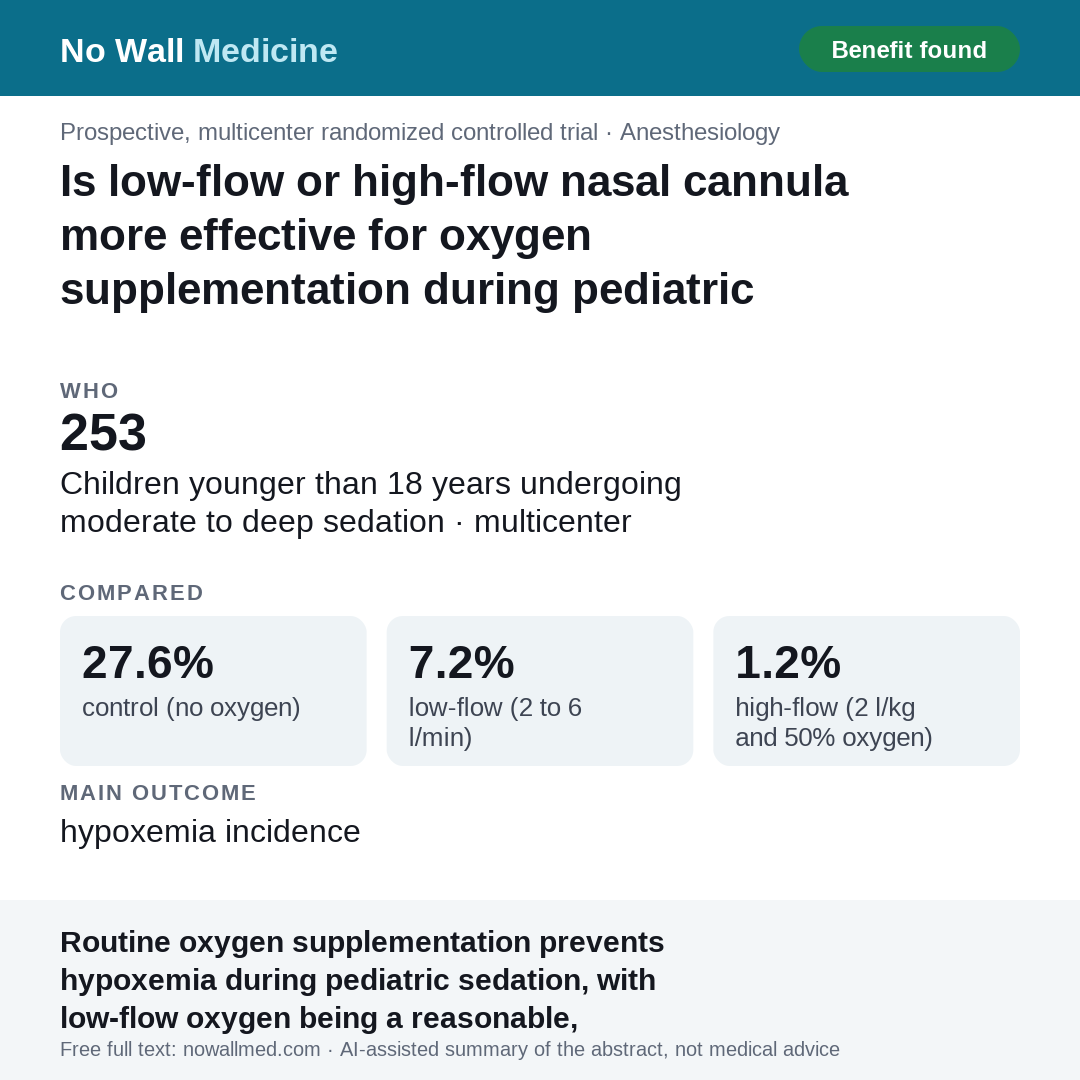
Clinical question: Is low-flow or high-flow nasal cannula more effective for oxygen supplementation during pediatric sedation?
Why it matters: The optimal method for administering oxygen to children during sedation to prevent low blood oxygen levels is currently unclear.
Key points
- Researchers studied 253 children under 18 years old undergoing moderate to deep sedation and compared no oxygen, low-flow nasal cannula, and high-flow nasal cannula.
- Hypoxemia, defined as oxygen saturation of 95% or less for more than 5 seconds, occurred in 27.6% of the control group, 7.2% of the low-flow group, and 1.2% of the high-flow group.
- Rescue interventions were performed more frequently in the control group at 52.9% compared to 10.8% in the low-flow group and 3.6% in the high-flow group.
Headline and key points written with AI from the paper’s abstract, with every number checked against it. Read the paper before relying on them.
Was this summary helpful?
Subject terms
Cite this article
Lee JH, Ko HJ, Park JB, Ji SH, Kim JT. Oxygen Supplementation in Pediatric Sedation: Prospective, Multicenter, Randomized Controlled Trial. Anesthesiology. 2025. doi:10.1097/ALN.0000000000005500
Spotted a mistake? Suggest a correction
Top studies every Monday
The week’s key trials and guidelines in your specialties, plus any topics you follow. By email, free.
Get the weekly digest