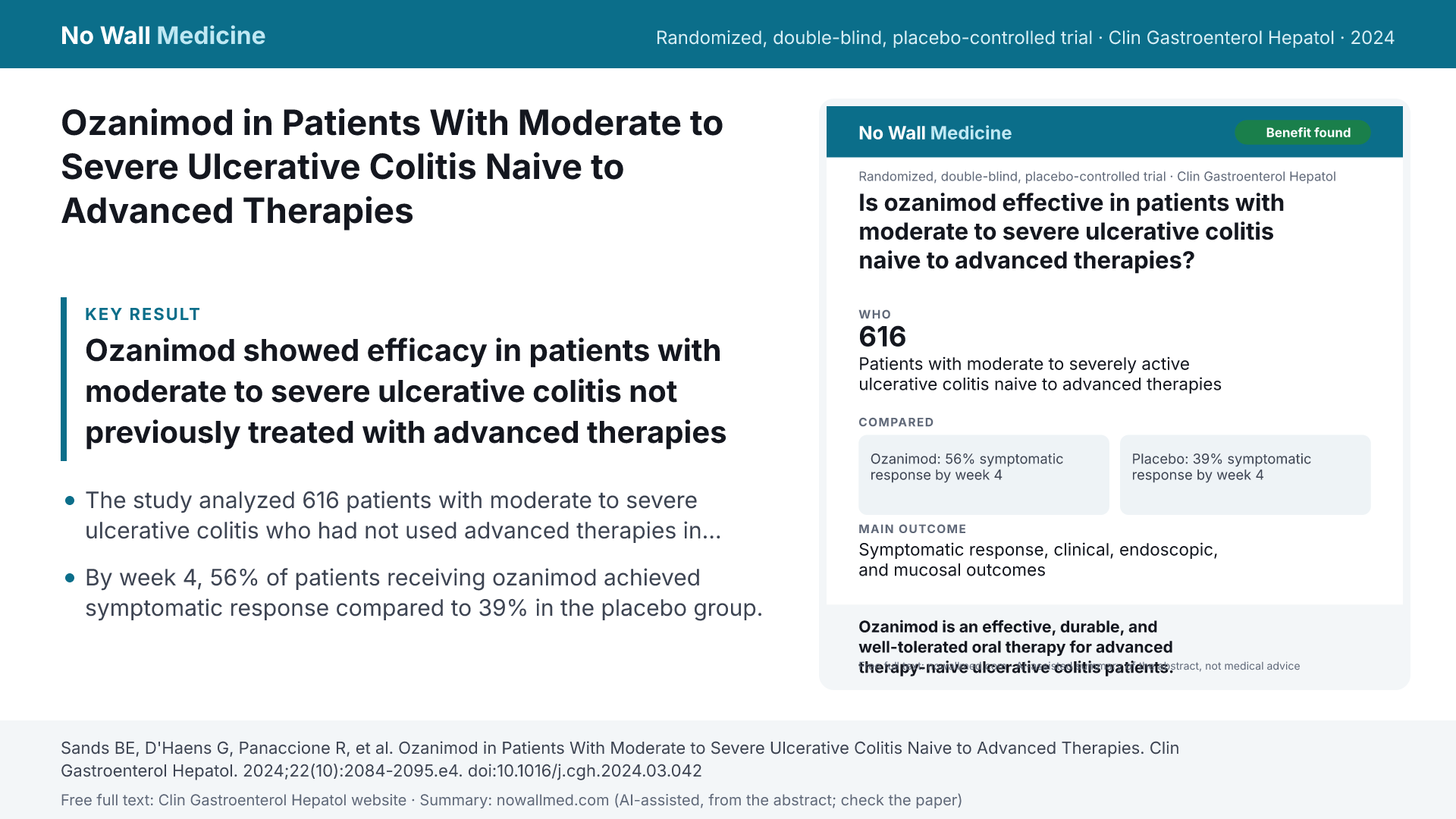
Ozanimod showed efficacy in patients with moderate to severe ulcerative colitis not previously treated with advanced therapies
Ozanimod in Patients With Moderate to Severe Ulcerative Colitis Naive to Advanced Therapies
Randomized, double-blind, placebo-controlled trialBenefit found
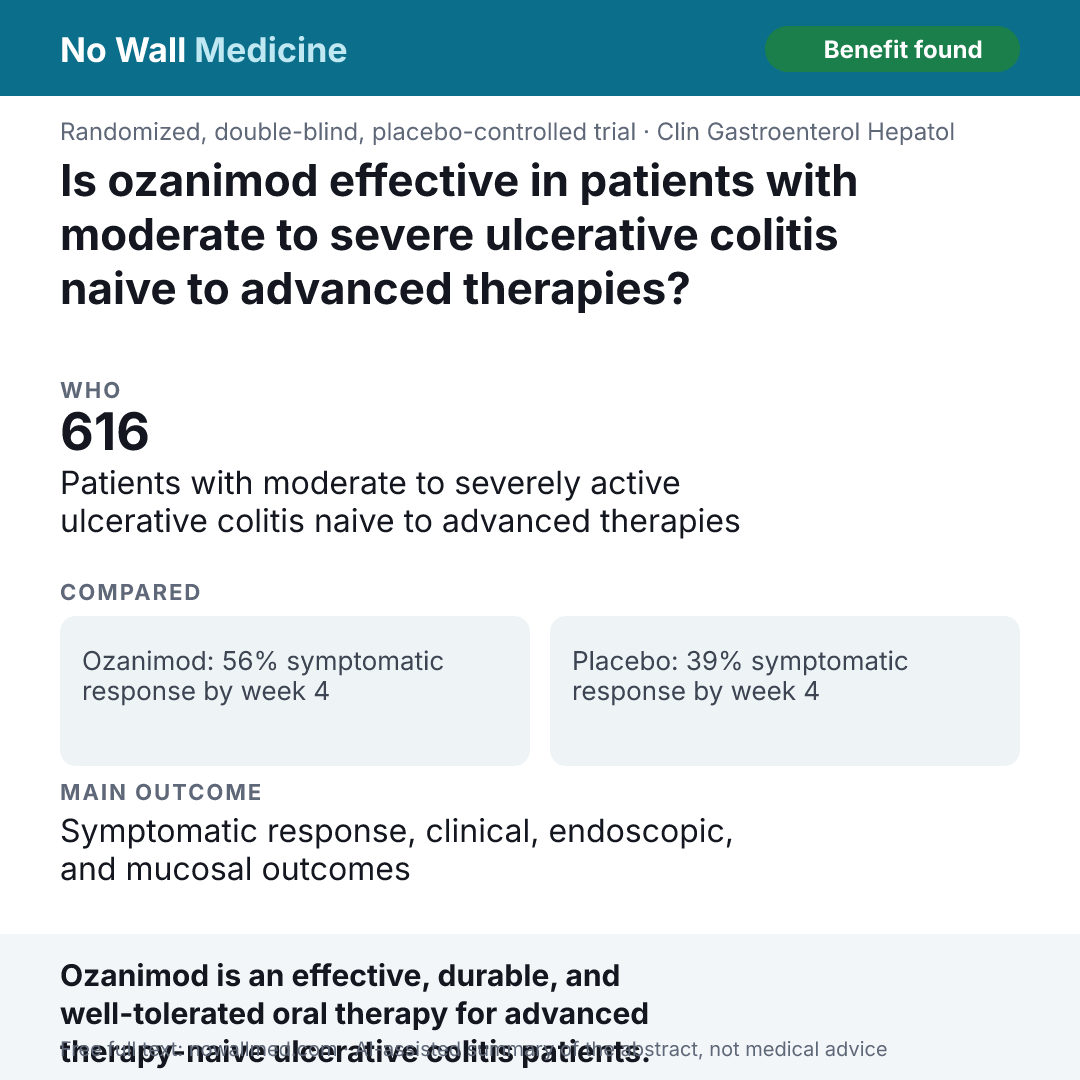
Is ozanimod effective in patients with moderate to severe ulcerative colitis naive to advanced therapies?
Who
616
Patients with moderate to severely active ulcerative colitis naive to advanced therapies
Compared
Ozanimod: 56% symptomatic response by week 4
Placebo: 39% symptomatic response by week 4
Main outcome
Symptomatic response, clinical, endoscopic, and mucosal outcomes
Result: 95% confidence interval, 6.3-26.3
Bottom line: Ozanimod is an effective, durable, and well-tolerated oral therapy for advanced therapy-naive ulcerative colitis patients.
Clin Gastroenterol Hepatol · 2024-05-08 · Save PNG
Same trial (NCT02435992, NCT02531126)
Papers we list that report this registered trial, oldest first. Read a secondary analysis alongside the main results.
- Related analysis Benefit found
Ozanimod showed a well-tolerated cardiovascular safety profile in patients with ulcerative colitis Clin Gastroenterol Hepatol 2023-11 - Related analysis Benefit found
This paper Clin Gastroenterol Hepatol 2024-05 - Main results Key finding
Ozanimod showed efficacy and safety in patients with ulcerative colitis who previously used biologic therapies Am J Gastroenterol 2025-01
Clinical question: Is ozanimod effective in patients with moderate to severe ulcerative colitis naive to advanced therapies?
In absolute numbers
Ozanimod: 56% · Placebo: 39% → a difference of 17 percentage points, so about 6 people would need the treatment for 1 more to benefit (number needed to treat) over the trial’s follow-up.
Worked out by us from the two group results above, not reported by the authors. Check the paper for the exact outcome and timing.
Key points
- The study analyzed 616 patients with moderate to severe ulcerative colitis who had not used advanced therapies in a randomized, placebo-controlled trial and open-label extension.
- By week 4, 56% of patients receiving ozanimod achieved symptomatic response compared to 39% in the placebo group.
- Among patients who maintained clinical response through week 52, 91% stayed in response through week 94 of the open-label extension.
Headline and key points written with AI from the paper’s abstract, with every number checked against it. Read the paper before relying on them.
Was this summary helpful?
Subject terms
Headline, design, result, key points, caveat and citation as plain text.
Cite this article
Sands BE, D'Haens G, Panaccione R, et al. Ozanimod in Patients With Moderate to Severe Ulcerative Colitis Naive to Advanced Therapies. Clin Gastroenterol Hepatol. 2024;22(10):2084-2095.e4. doi:10.1016/j.cgh.2024.03.042
Spotted a mistake? Suggest a correction