Esophageal-sparing radiotherapy reduced esophagitis in advanced lung cancer patients
Palliative Radiation for Advanced Central Lung Tumors With Intentional Avoidance of the Esophagus (PROACTIVE): A Phase 3 Randomized Clinical Trial
Randomized clinical trialBenefit found
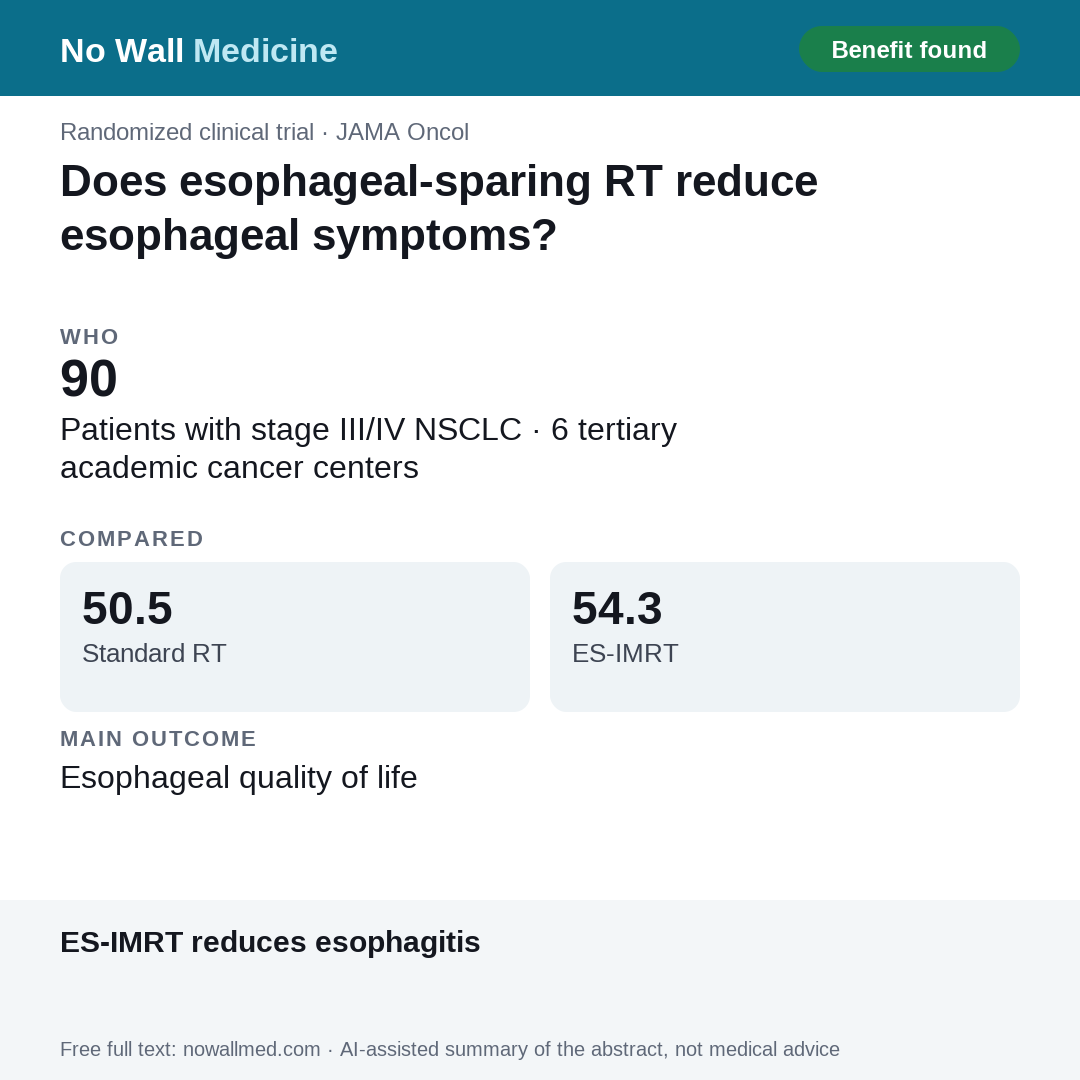
Does esophageal-sparing RT reduce esophageal symptoms?
Who
90
Patients with stage III/IV NSCLC · 6 tertiary academic cancer centers
Compared
50.5Standard RT (10.2)
54.3ES-IMRT (7.6)
Main outcome
Esophageal quality of life
Bottom line: ES-IMRT reduces esophagitis
JAMA Oncol · 2022-02-25Download image
Clinical question: Does esophageal-sparing RT reduce esophageal symptoms?
Why it matters: Whether esophageal-sparing intensity-modulated radiotherapy achieves a clinically relevant reduction in esophageal symptoms remains unclear
Key points
- 90 patients with stage III/IV non-small cell lung cancer were randomized to standard radiotherapy or esophageal-sparing intensity-modulated radiotherapy.
- Esophageal-sparing radiotherapy did not significantly improve esophageal quality of life, but reduced symptomatic esophagitis from 24% to 2%.
- Overall survival was similar in both groups, with a median of 8.6 and 8.7 months.
Limitation the authors note: The study had a small sample size and post hoc analysis findings should be interpreted with caution
Headline and key points written with AI from the paper’s abstract, with every number checked against it. Read the paper before relying on them.
Was this summary helpful?
Subject terms
Cite this article
Louie AV, Granton PV, Fairchild A, Bezjak A, Gopaul D, Mulroy L. Palliative Radiation for Advanced Central Lung Tumors With Intentional Avoidance of the Esophagus (PROACTIVE): A Phase 3 Randomized Clinical Trial. JAMA Oncol. 2022. doi:10.1001/jamaoncol.2021.7664
Spotted a mistake? Suggest a correction
Top studies every Monday
The week’s key trials and guidelines in your specialties, plus any topics you follow. By email, free.
Get the weekly digest