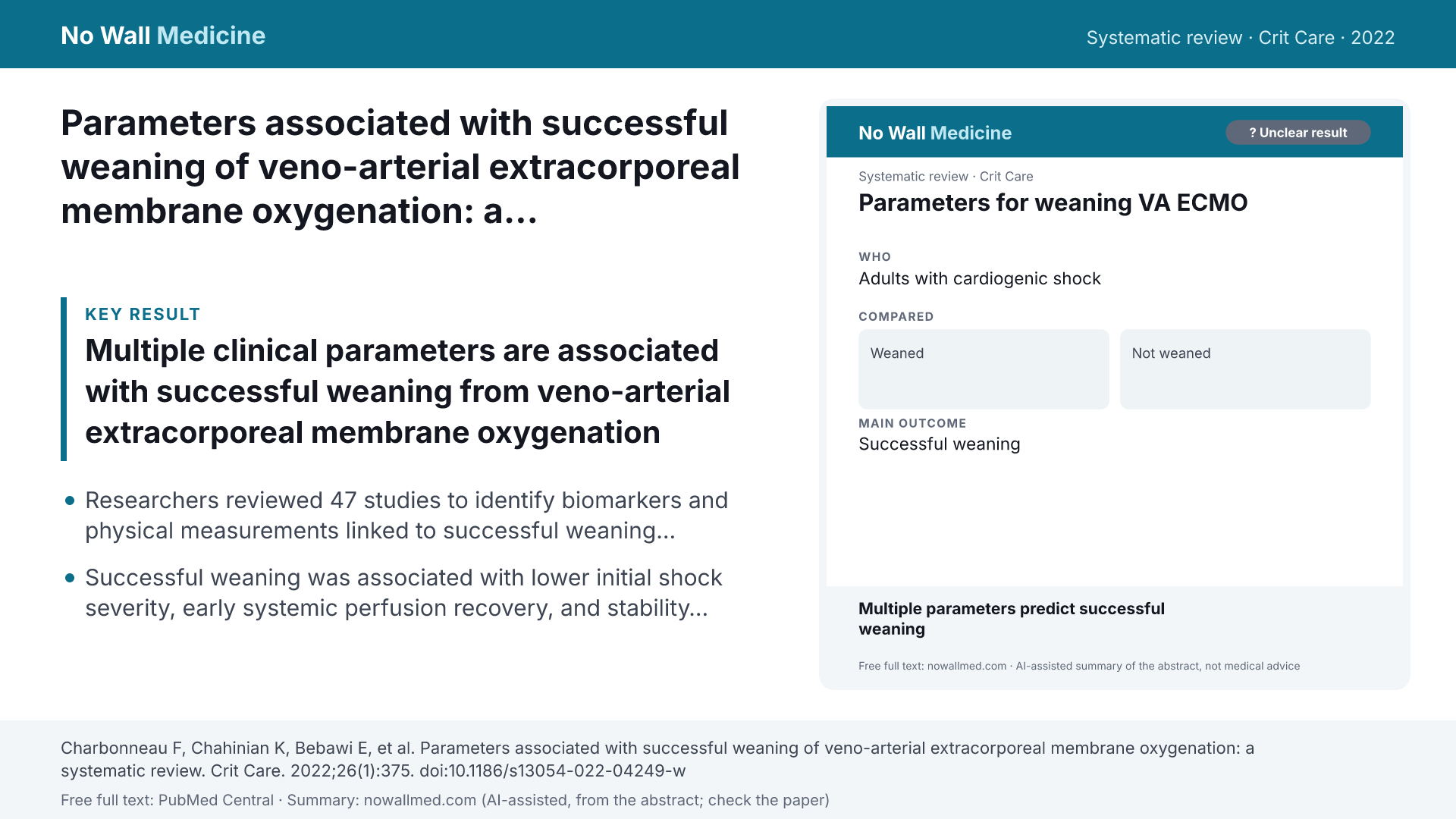
Parameters associated with successful weaning of veno-arterial extracorporeal membrane oxygenation: a systematic review
Key result: Multiple clinical parameters are associated with successful weaning from veno-arterial extracorporeal membrane oxygenation
Key points
- Researchers reviewed 47 studies to identify biomarkers and physical measurements linked to successful weaning from veno-arterial extracorporeal membrane oxygenation in adults with cardiogenic shock.
- Successful weaning was associated with lower initial shock severity, early systemic perfusion recovery, and stability in heart function during flow reduction or pump-controlled trials.
- The left ventricular outflow tract velocity time integral, which indicates stroke volume, was the most frequently used parameter in the included studies.
Why it matters: It is difficult to determine when patients with cardiogenic shock can be successfully removed from mechanical support without needing further assistance or a heart transplant.
Limitation the authors note: Most studies had a moderate or high risk of bias and heterogeneity in methods and timing precluded a meta-analysis.
Discussion prompts
- Would these patients look like yours? Who was left out?
- Is the main outcome one that matters to patients?
- Is the difference large enough to change what you do?
Cite: Charbonneau F, Chahinian K, Bebawi E, et al. Parameters associated with successful weaning of veno-arterial extracorporeal membrane oxygenation: a systematic review. Crit Care. 2022;26(1):375. doi:10.1186/s13054-022-04249-w
Free full text: PubMed Central · Summary and visual abstract: nowallmed.com/a/parameters-associated-with-successful-weaning-of-veno-arterial-1wpjzs4/ (AI-assisted from the abstract; check the paper before relying on it).