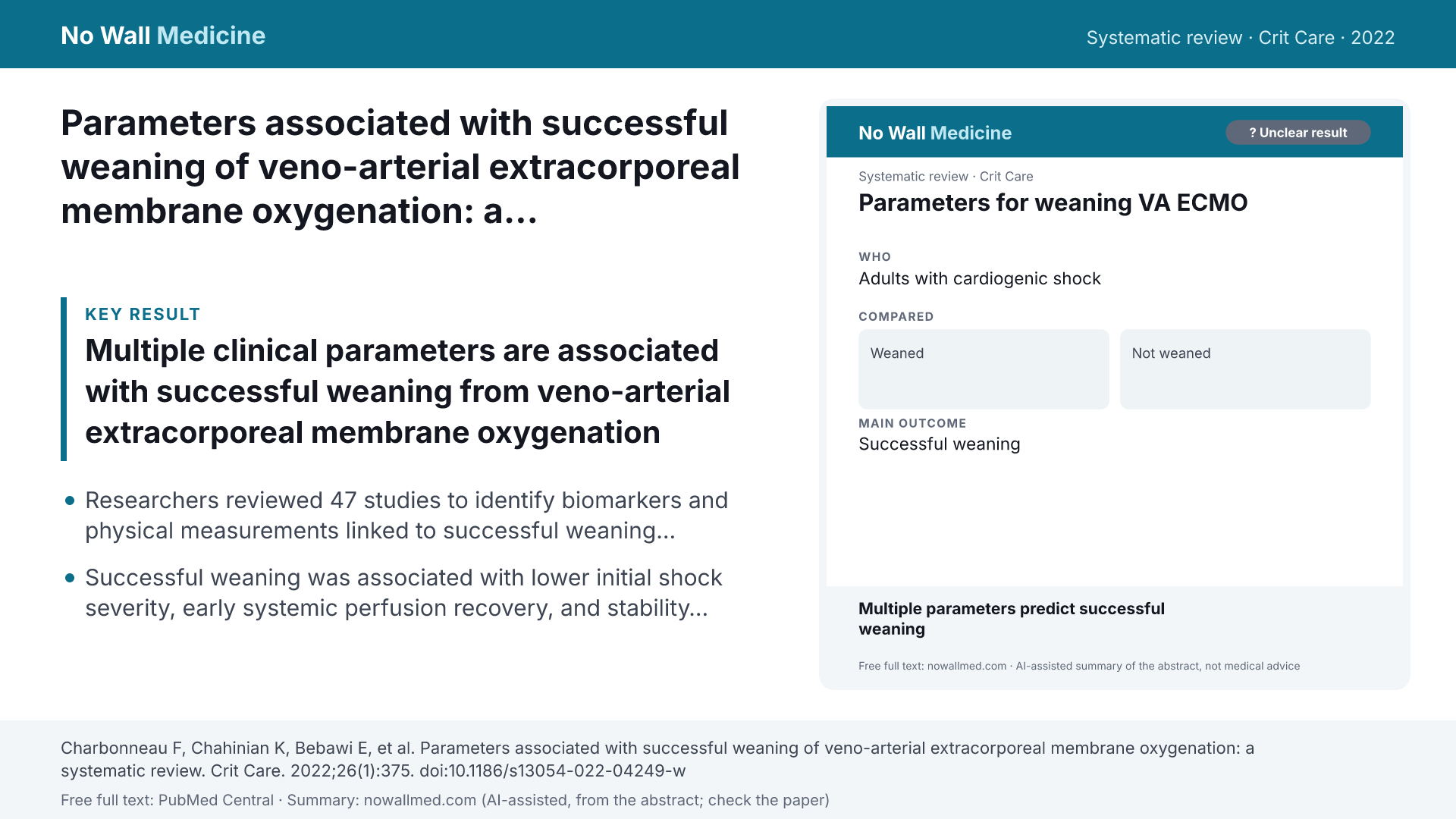
Multiple clinical parameters are associated with successful weaning from veno-arterial extracorporeal membrane oxygenation
Parameters associated with successful weaning of veno-arterial extracorporeal membrane oxygenation: a systematic review
Systematic reviewUnclear result
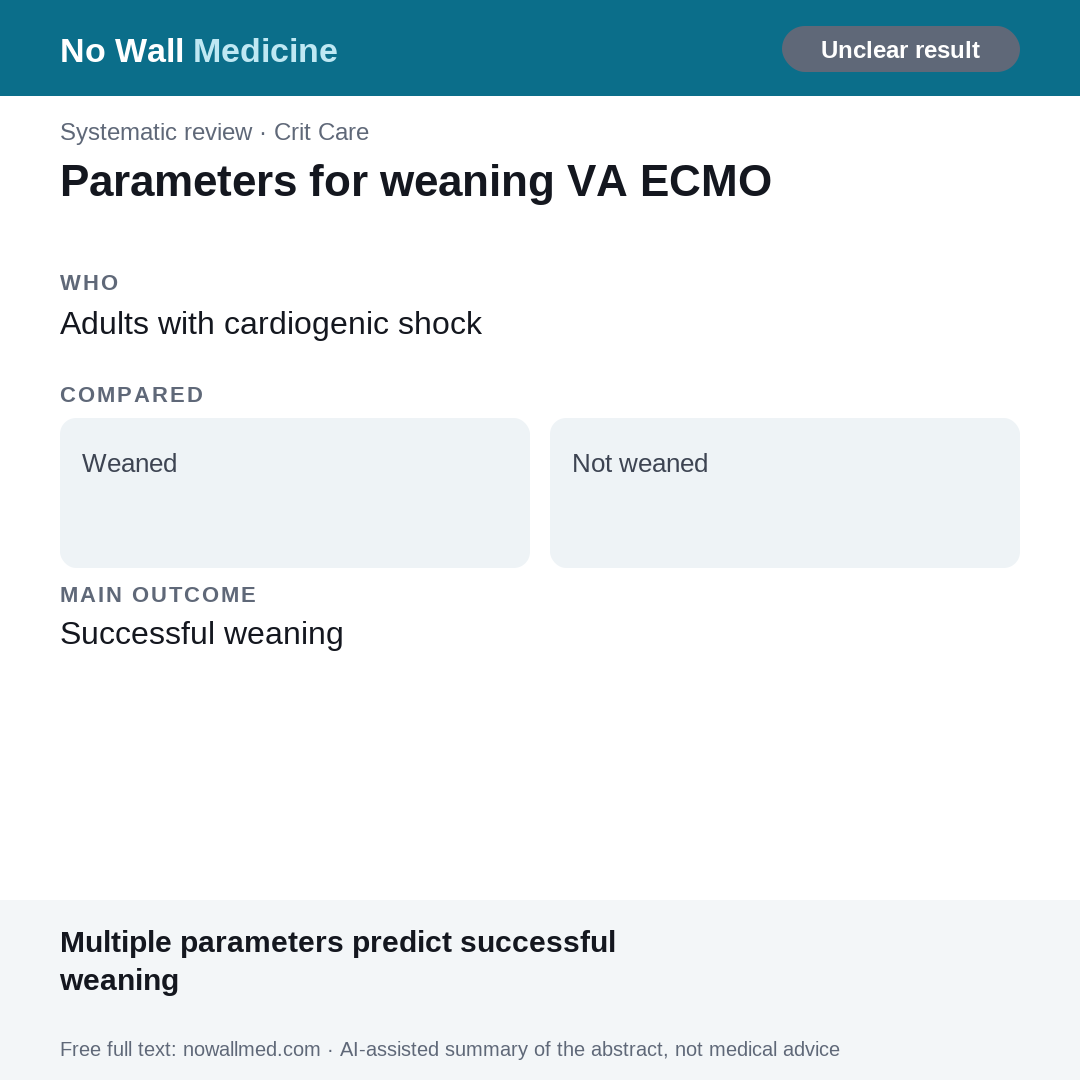
Parameters for weaning VA ECMO
Who
Adults with cardiogenic shock
Compared
Weaned
Not weaned
Main outcome
Successful weaning
Bottom line: Multiple parameters predict successful weaning
Limitation: Moderate or high risk of bias
Crit Care · 2022-12-05Download image
Why it matters: It is difficult to determine when patients with cardiogenic shock can be successfully removed from mechanical support without needing further assistance or a heart transplant.
Key points
- Researchers reviewed 47 studies to identify biomarkers and physical measurements linked to successful weaning from veno-arterial extracorporeal membrane oxygenation in adults with cardiogenic shock.
- Successful weaning was associated with lower initial shock severity, early systemic perfusion recovery, and stability in heart function during flow reduction or pump-controlled trials.
- The left ventricular outflow tract velocity time integral, which indicates stroke volume, was the most frequently used parameter in the included studies.
Limitation the authors note: Most studies had a moderate or high risk of bias and heterogeneity in methods and timing precluded a meta-analysis.
Headline and key points written with AI from the paper’s abstract, with every number checked against it. Read the paper before relying on them.
Was this summary helpful?
Subject terms
Headline, design, result, key points, caveat and citation as plain text.
Cite this article
Charbonneau F, Chahinian K, Bebawi E, et al. Parameters associated with successful weaning of veno-arterial extracorporeal membrane oxygenation: a systematic review. Crit Care. 2022. doi:10.1186/s13054-022-04249-w
Spotted a mistake? Suggest a correction