Ultrasound-accelerated catheter-directed thrombolysis improved vein patency compared to standard treatment for deep vein thrombosis
Patency and reflux in relation to postthrombotic syndrome: a subanalysis of the Ultrasound-Accelerated Catheter-Directed Thrombolysis Versus Anticoagulation for the Prevention of Post-Thrombotic Syndrome trial
Multicenter, randomized, single-blind trialBenefit found
Does ultrasound-accelerated catheter-directed thrombolysis improve patency and reflux in post-thrombotic syndrome prevention?
Who
Patients aged 18-85 years with first iliofemoral deep vein thrombosis · Multicenter
Compared
Ultrasound-accelerated catheter-directed thrombolysis: 45.2% patency at long-term follow-up
Standard treatment: 11.9% patency at long-term follow-up
Main outcome
Patency, reflux, and post-thrombotic syndrome development
Bottom line: Ultrasound-accelerated catheter-directed thrombolysis improved patency and reduced popliteal reflux compared to standard treatment.
Limitation: A proportion of moderate-to-severe post-thrombotic syndrome cases lacks an evident underlying cause.
J Thromb Haemost · 2024-09-17Download image
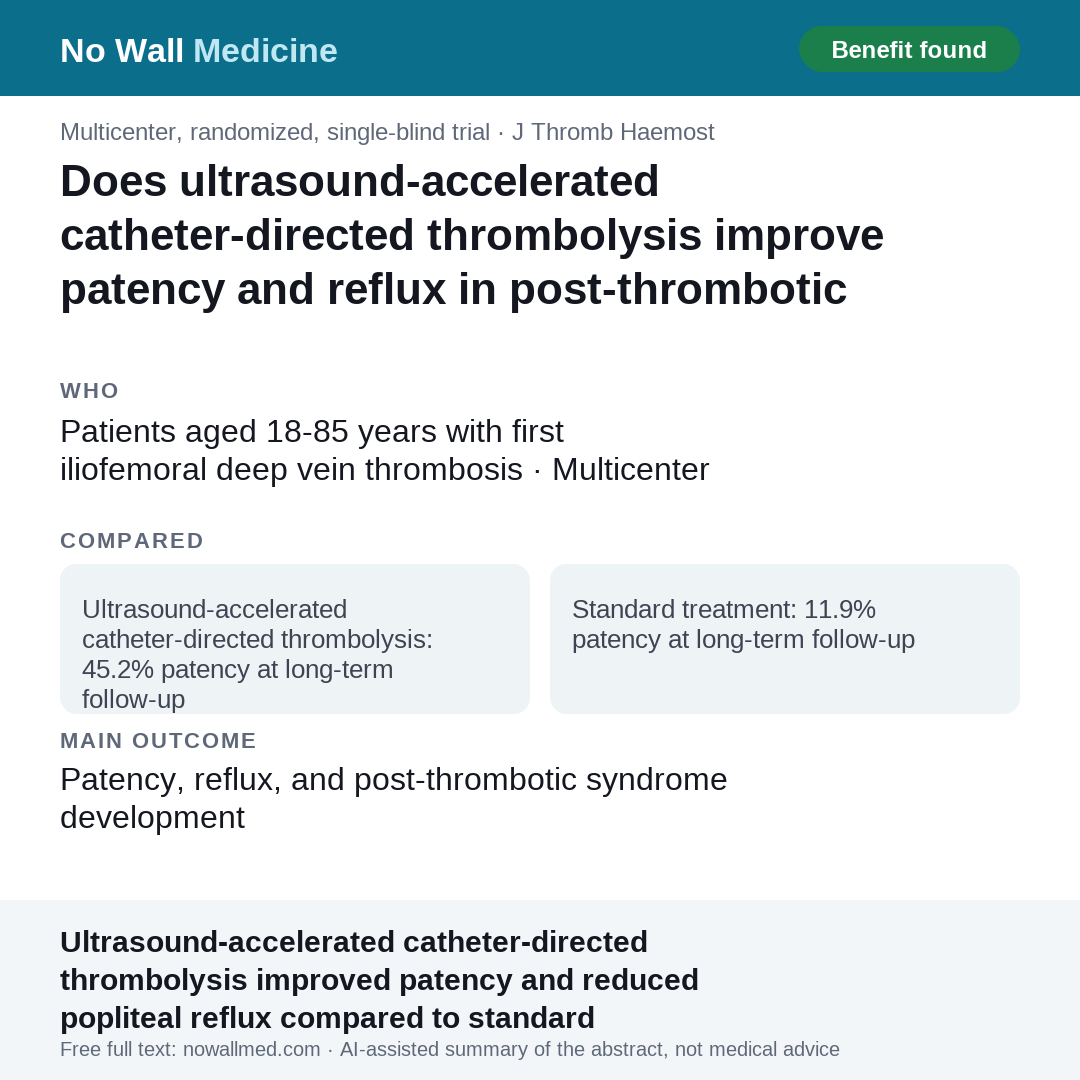
Clinical question: Does ultrasound-accelerated catheter-directed thrombolysis improve patency and reflux in post-thrombotic syndrome prevention?
Why it matters: It is unknown how ultrasound-accelerated catheter-directed thrombolysis affects vein patency, reflux, and the development of postthrombotic syndrome.
Key points
- Researchers studied patients aged 18-85 with first iliofemoral deep vein thrombosis and compared ultrasound-accelerated catheter-directed thrombolysis to standard treatment.
- Ultrasound-accelerated catheter-directed thrombolysis showed higher patency in all vein segments at 12 months (60.3% vs 25.9%) and long-term follow-up (45.2% vs 11.9%).
- Popliteal reflux at 12 months was associated with moderate-to-severe postthrombotic syndrome at both 12 months and long-term follow-up.
Headline and key points written with AI from the paper’s abstract, with every number checked against it. Read the paper before relying on them.
Topics
Cite this article
Hupperetz RD, Iding AFJ, van Laanen J, Brans R, Notten P, Tick LW. Patency and reflux in relation to postthrombotic syndrome: a subanalysis of the Ultrasound-Accelerated Catheter-Directed Thrombolysis Versus Anticoagulation for the Prevention of Post-Thrombotic Syndrome trial. J Thromb Haemost. 2024. doi:10.1016/j.jtha.2024.08.022
Spotted a mistake? Suggest a correction
Top studies every Monday
The week’s key trials and guidelines in your specialties, plus any topics you follow. By email, free.
Get the weekly digest