Insufficient data exists to determine how antithrombotic therapy affects stent patency after venous stenting
Postinterventional antithrombotic management after venous stenting of the iliofemoral tract in acute and chronic thrombosis: A systematic review
Systematic reviewUnclear result
Does antithrombotic therapy improve stent patency after iliofemoral venous stenting?
Who
Patients undergoing venous stenting for acute or chronic thrombosis
Compared
Overall mean primary patency: 82.3% at 1 year
Overall mean primary patency: 73.3% after 2 years
Main outcome
Primary patency rate
Bottom line: The impact of antithrombotic therapy on stent patency remains unknown due to insufficient data.
Limitation: Limited and insufficient data available in current literature.
J Thromb Haemost · 2021-01-05Download image
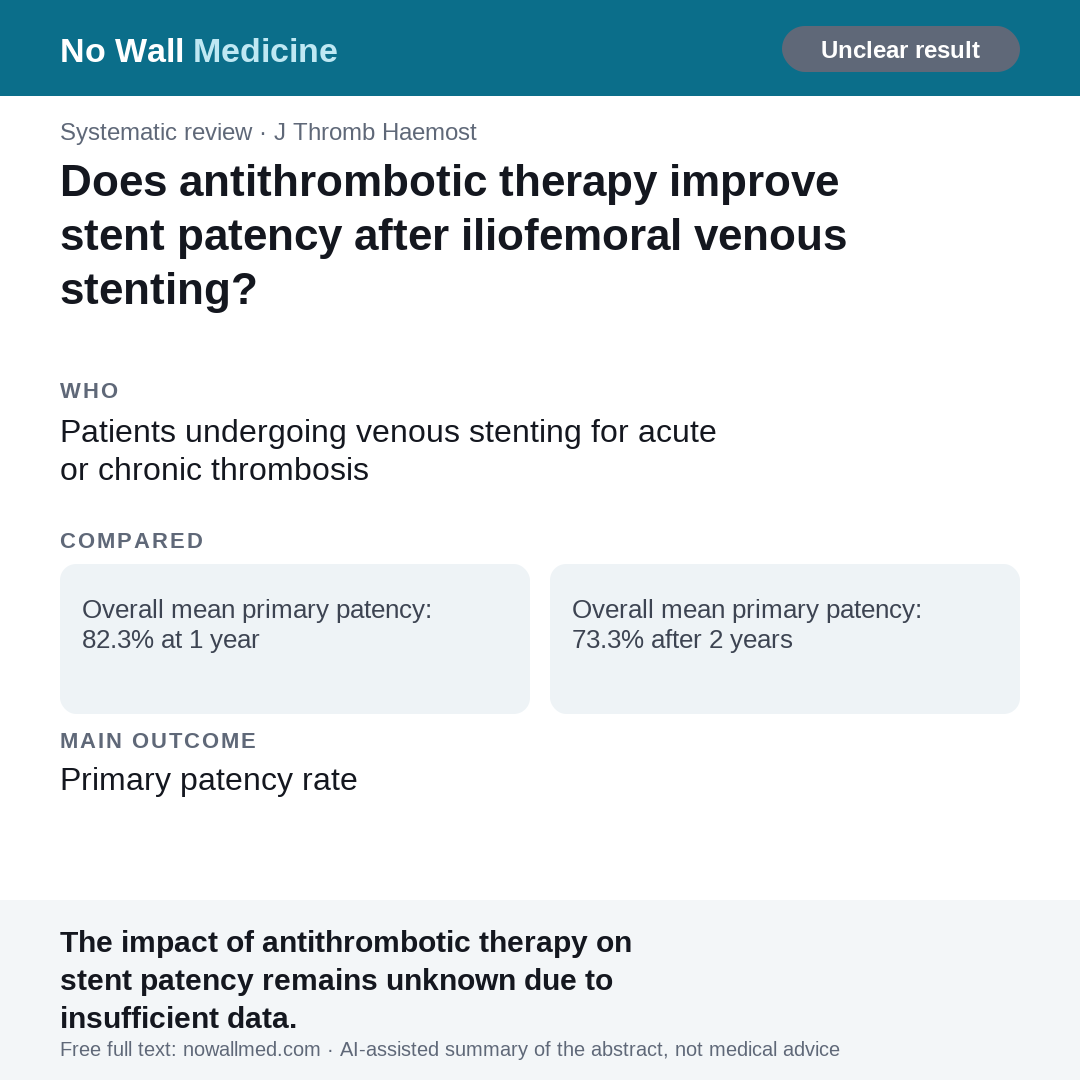
Clinical question: Does antithrombotic therapy improve stent patency after iliofemoral venous stenting?
Why it matters: It is unknown how antithrombotic therapy affects the long-term openness of stents after treating central deep venous outflow obstructions.
Key points
- Researchers reviewed 64 studies involving patients receiving venous stenting for acute or chronic blood clots in the iliofemoral tract.
- The mean primary patency rate, or the percentage of time the stent remains open, was 82.3% at 1 year and 73.3% at 2 years.
- Only 4% of the selected studies directly assessed how antithrombotic therapy affects treatment outcomes.
Limitation the authors note: The impact of therapy remains unknown because of limited and insufficient data available in current literature.
Headline and key points written with AI from the paper’s abstract, with every number checked against it. Read the paper before relying on them.
Was this summary helpful?
Subject terms
Cite this article
Notten P, Ten Cate H, Ten Cate-Hoek AJ. Postinterventional antithrombotic management after venous stenting of the iliofemoral tract in acute and chronic thrombosis: A systematic review. J Thromb Haemost. 2021. doi:10.1111/jth.15197
Spotted a mistake? Suggest a correction
Top studies every Monday
The week’s key trials and guidelines in your specialties, plus any topics you follow. By email, free.
Get the weekly digest