Pathways through which water, sanitation, hygiene, and nutrition interventions reduce antibiotic use in young children: a mediation analysis of a cohort nested within a cluster-randomized trial
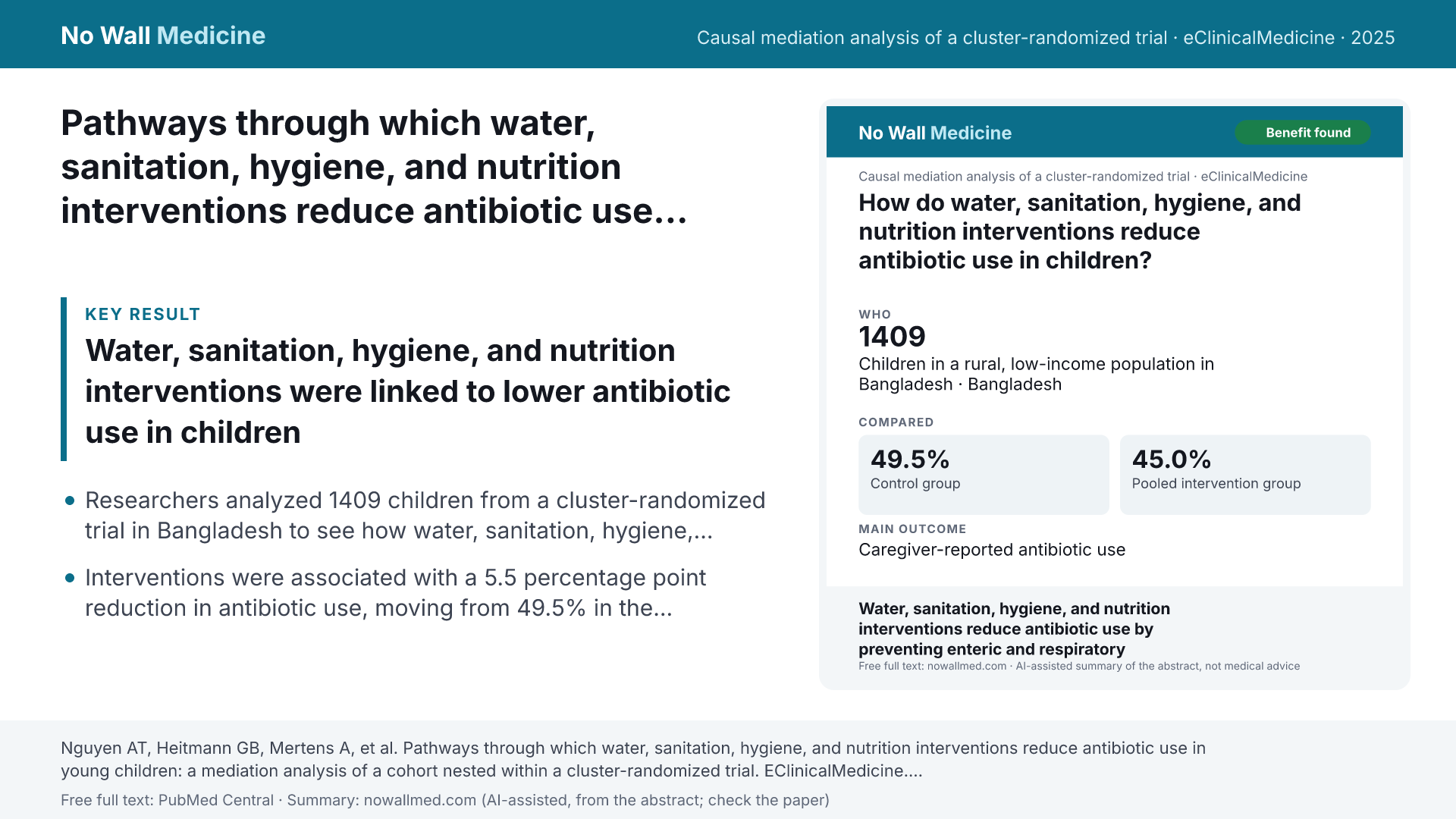
Key result: Water, sanitation, hygiene, and nutrition interventions were linked to lower antibiotic use in children
Key points
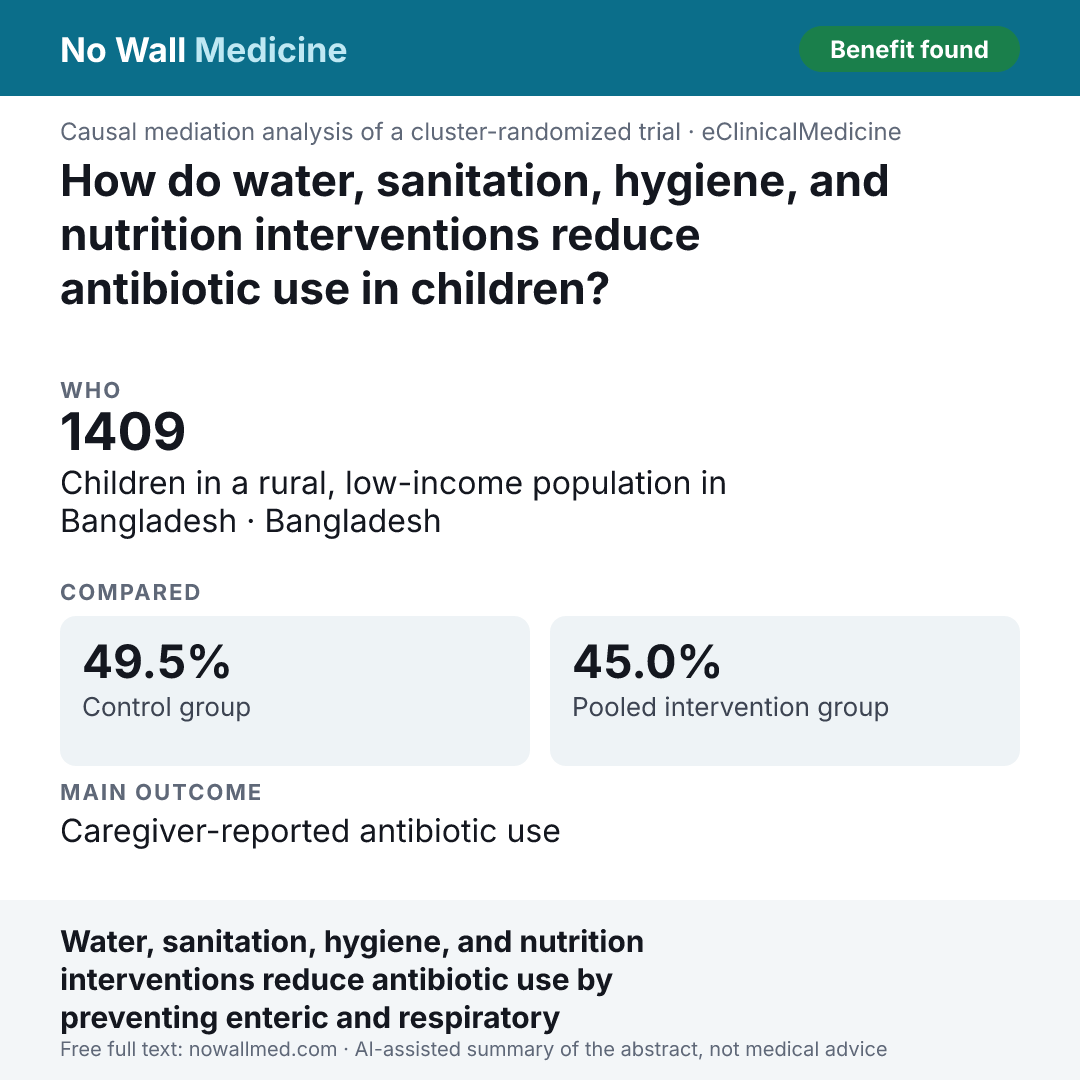
- Researchers analyzed 1409 children from a cluster-randomized trial in Bangladesh to see how water, sanitation, hygiene, and nutrition interventions affected antibiotic use.
- Interventions were associated with a 5.5 percentage point reduction in antibiotic use, moving from 49.5% in the control group to 45.0% in the pooled intervention group.
- The reduction in antibiotic use was linked to lower rates of diarrhea, acute respiratory infections with fever, and the prevalence of enteric viruses.
In absolute numbers: Control group 49.5% vs Pooled intervention group 45%, a difference of 4.5 percentage points (about 23 people treated for one more to benefit).
Why it matters: The specific mechanism through which water, sanitation, hygiene, and nutrition interventions reduce antibiotic use in young children has not been investigated.
Discussion prompts
- Would these patients look like yours? Who was left out?
- Is the main outcome one that matters to patients?
- Is the difference large enough to change what you do?
Cite: Nguyen AT, Heitmann GB, Mertens A, et al. Pathways through which water, sanitation, hygiene, and nutrition interventions reduce antibiotic use in young children: a mediation analysis of a cohort nested within a cluster-randomized trial. EClinicalMedicine. 2025;82:103147. doi:10.1016/j.eclinm.2025.103147
Free full text: PubMed Central · Summary and visual abstract: nowallmed.com/a/pathways-through-which-water-sanitation-hygiene-and-nutrition-1q5bk9y/ (AI-assisted from the abstract; check the paper before relying on it).