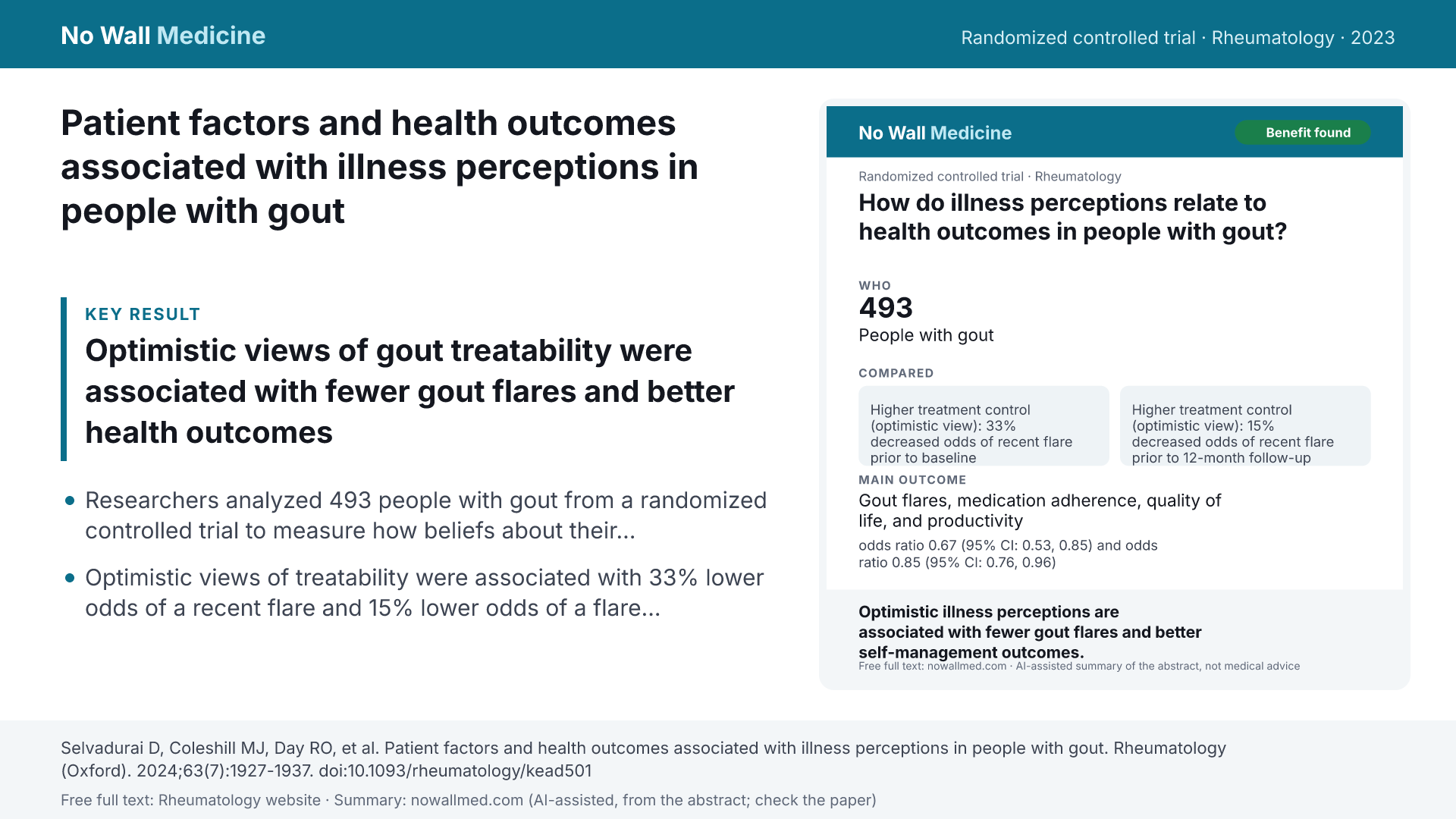
Optimistic views of gout treatability were associated with fewer gout flares and better health outcomes
Patient factors and health outcomes associated with illness perceptions in people with gout
Randomized controlled trialBenefit found
How do illness perceptions relate to health outcomes in people with gout?
Who
493
People with gout
Compared
Higher treatment control (optimistic view): 33% decreased odds of recent flare prior to baseline
Higher treatment control (optimistic view): 15% decreased odds of recent flare prior to 12-month follow-up
Main outcome
Gout flares, medication adherence, quality of life, and productivity
Result: odds ratio 0.67 (95% CI: 0.53, 0.85) and odds ratio 0.85 (95% CI: 0.76, 0.96)
Bottom line: Optimistic illness perceptions are associated with fewer gout flares and better self-management outcomes.
Rheumatology · 2023-09-29 · Save PNG
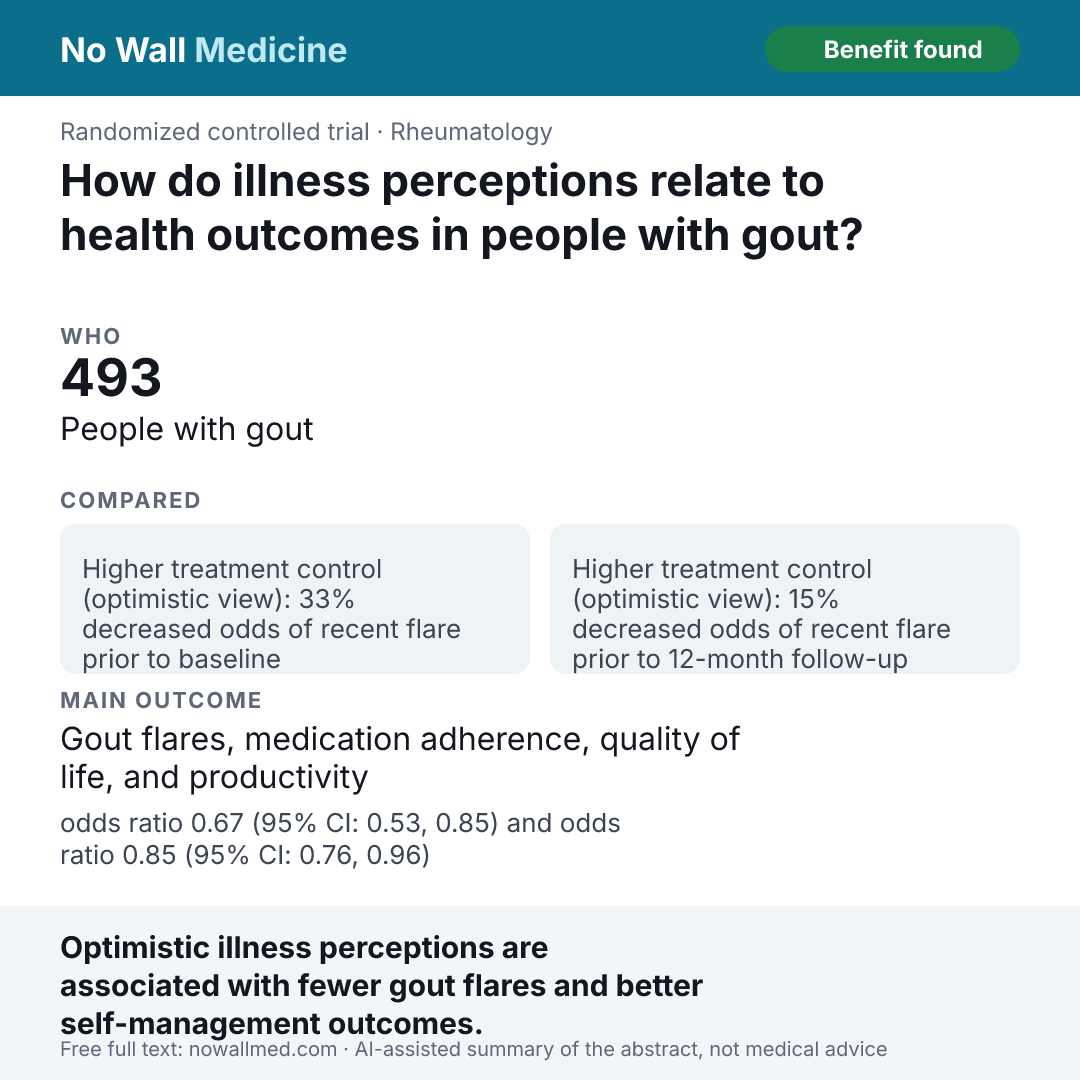
Clinical question: How do illness perceptions relate to health outcomes in people with gout?
Key points
- Researchers analyzed 493 people with gout from a randomized controlled trial to measure how beliefs about their illness related to health outcomes.
- Optimistic views of treatability were associated with 33% lower odds of a recent flare and 15% lower odds of a flare at 12-month follow-up.
- Pessimistic illness perceptions were associated with poorer medication adherence, lower health-related quality of life, and lower productivity, but not with serum urate levels.
Headline and key points written with AI from the paper’s abstract, with every number checked against it. Read the paper before relying on them.
Was this summary helpful?
Subject terms
Headline, design, result, key points, caveat and citation as plain text.
Cite this article
Selvadurai D, Coleshill MJ, Day RO, et al. Patient factors and health outcomes associated with illness perceptions in people with gout. Rheumatology (Oxford). 2024;63(7):1927-1937. doi:10.1093/rheumatology/kead501
Spotted a mistake? Suggest a correction