Patient Preference and Risk Assessment in Opioid Prescribing Disparities: A Secondary Analysis of a Randomized Clinical Trial
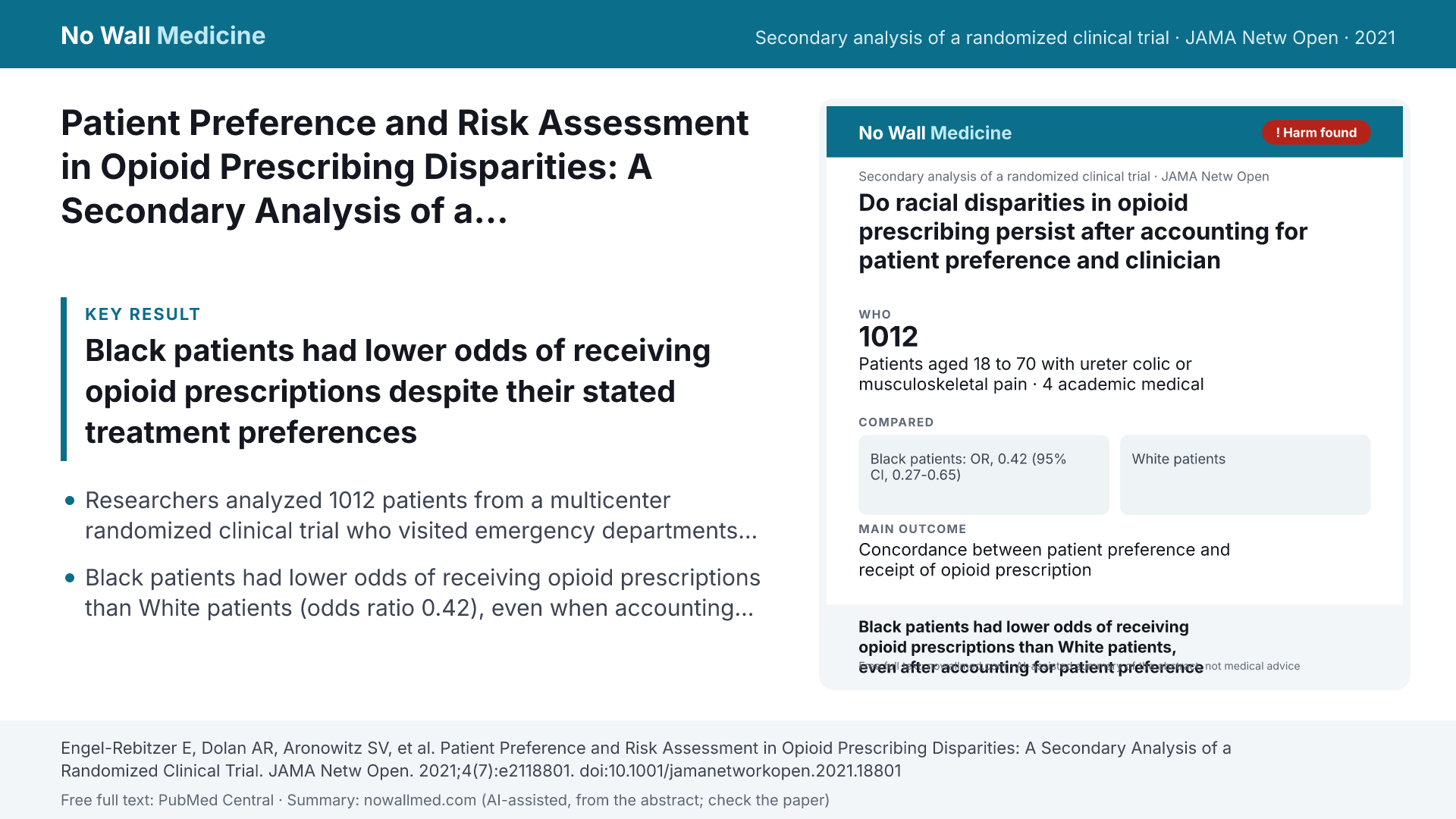
Key result: Black patients had lower odds of receiving opioid prescriptions despite their stated treatment preferences
Secondary analysis of a randomized clinical trialHarm found
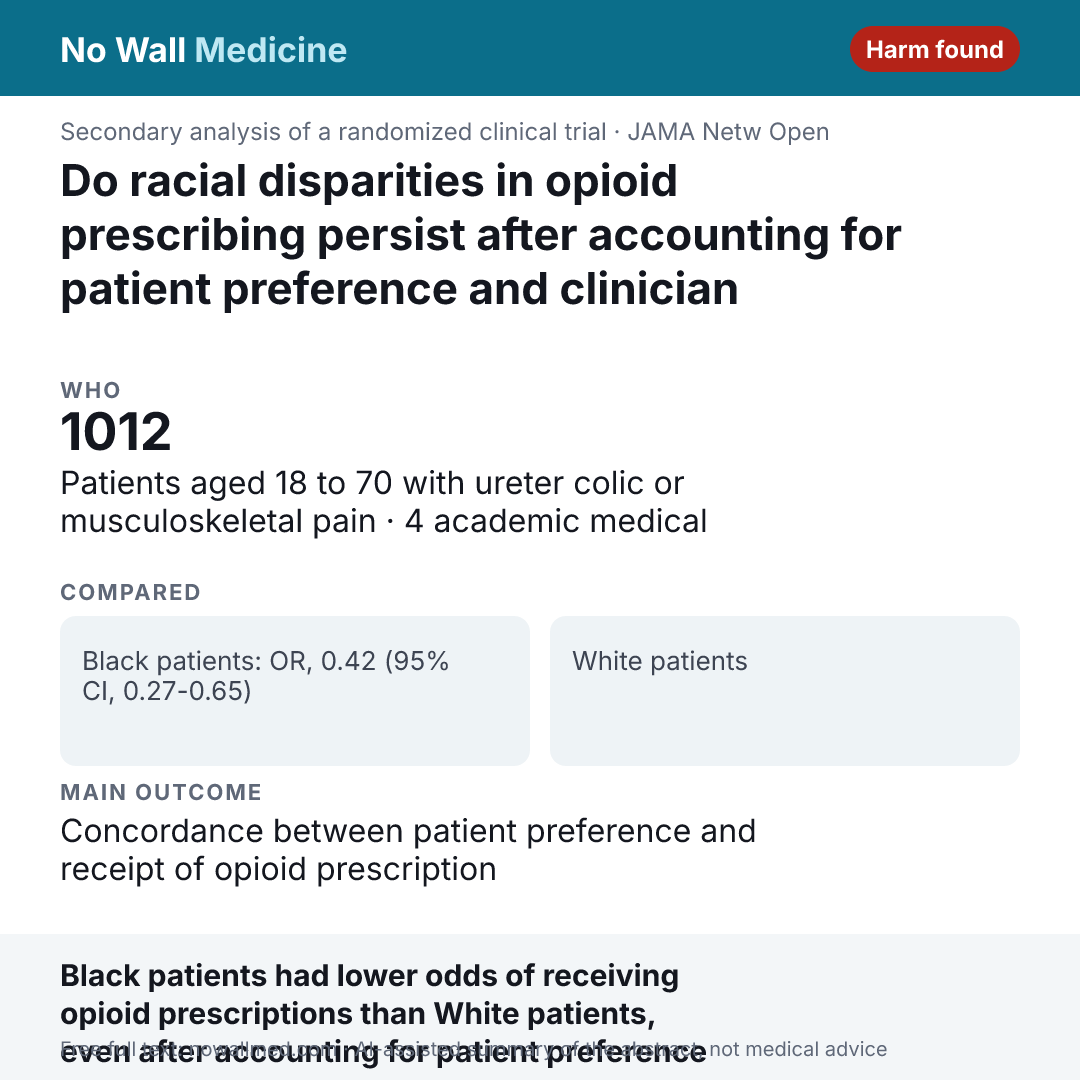
Do racial disparities in opioid prescribing persist after accounting for patient preference and clinician information?
Who
1012
Patients aged 18 to 70 with ureter colic or musculoskeletal pain · 4 academic medical center emergency departments
Compared
Black patients: OR, 0.42 (95% CI, 0.27-0.65)
White patients
Main outcome
Concordance between patient preference and receipt of opioid prescription
Result: odds ratio 0.42 (95% CI 0.27-0.65)
Bottom line: Black patients had lower odds of receiving opioid prescriptions than White patients, even after accounting for patient preference and clinician information.
JAMA Netw Open · 2021-07-01 · Save PNG
Key points
- Researchers analyzed 1012 patients from a multicenter randomized clinical trial who visited emergency departments for acute pain.
- Black patients had lower odds of receiving opioid prescriptions than White patients (odds ratio 0.42), even when accounting for patient preferences.
- Providing clinicians with additional information about patient preferences and misuse risk did not eliminate these prescribing disparities.
Discussion prompts
- Would these patients look like yours? Who was left out?
- Is the main outcome one that matters to patients?
- Is the difference large enough to change what you do?
Cite: Engel-Rebitzer E, Dolan AR, Aronowitz SV, et al. Patient Preference and Risk Assessment in Opioid Prescribing Disparities: A Secondary Analysis of a Randomized Clinical Trial. JAMA Netw Open. 2021. doi:10.1001/jamanetworkopen.2021.18801
Free full text: PubMed Central · Summary and visual abstract: nowallmed.com/a/patient-preference-and-risk-assessment-in-opioid-prescribing-1l6ftwb/ (AI-assisted from the abstract; check the paper before relying on it).