Patient-Reported Disability After Computerized Posturographic Vestibular Retraining for Stable Unilateral Vestibular Deficit
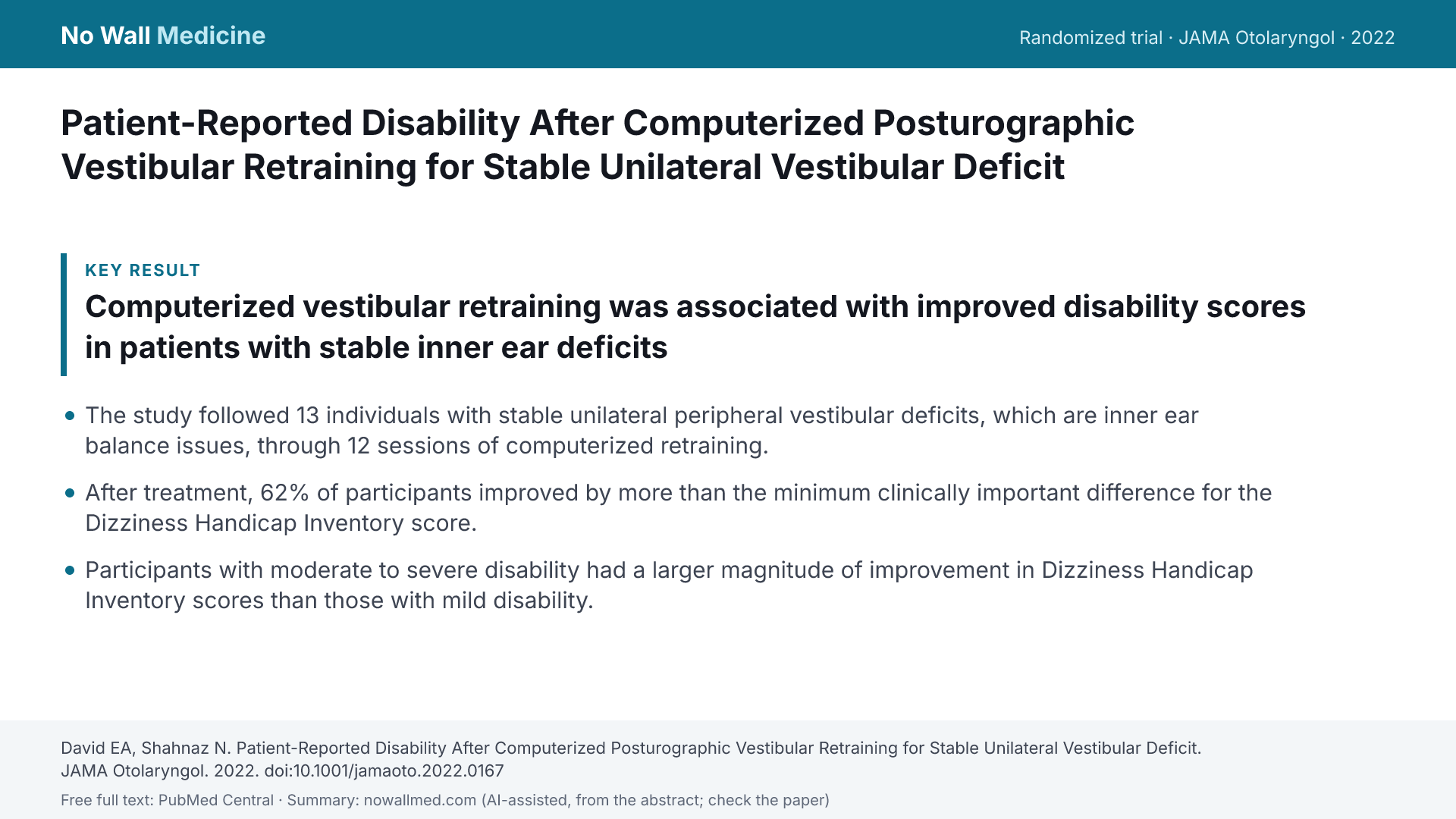
Key result: Computerized vestibular retraining was associated with improved disability scores in patients with stable inner ear deficits
Key points
- The study followed 13 individuals with stable unilateral peripheral vestibular deficits, which are inner ear balance issues, through 12 sessions of computerized retraining.
- After treatment, 62% of participants improved by more than the minimum clinically important difference for the Dizziness Handicap Inventory score.
- Participants with moderate to severe disability had a larger magnitude of improvement in Dizziness Handicap Inventory scores than those with mild disability.
Why it matters: There are few well-supported options for effective treatment for individuals with persistent unilateral vestibular deficits who face increased falling risks.
Discussion prompts
- Would these patients look like yours? Who was left out?
- Is the main outcome one that matters to patients?
- Is the difference large enough to change what you do?
Cite: David EA, Shahnaz N. Patient-Reported Disability After Computerized Posturographic Vestibular Retraining for Stable Unilateral Vestibular Deficit. JAMA Otolaryngol. 2022. doi:10.1001/jamaoto.2022.0167
Free full text: PubMed Central · Summary and visual abstract: nowallmed.com/a/patient-reported-disability-after-computerized-posturographic-1bd8xe4/ (AI-assisted from the abstract; check the paper before relying on it).