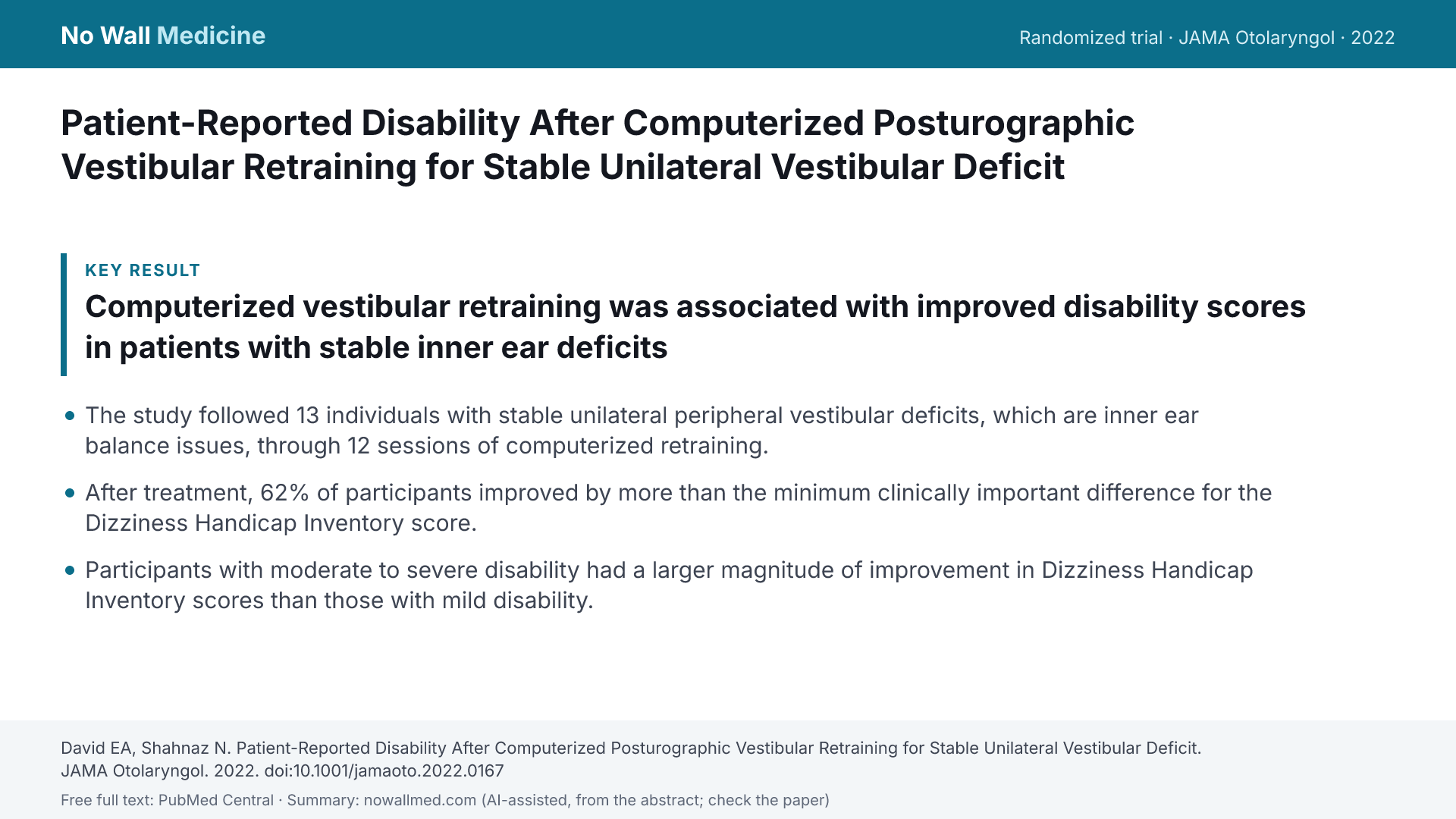
Computerized vestibular retraining was associated with improved disability scores in patients with stable inner ear deficits
Patient-Reported Disability After Computerized Posturographic Vestibular Retraining for Stable Unilateral Vestibular Deficit
Why it matters: There are few well-supported options for effective treatment for individuals with persistent unilateral vestibular deficits who face increased falling risks.
Key points
- The study followed 13 individuals with stable unilateral peripheral vestibular deficits, which are inner ear balance issues, through 12 sessions of computerized retraining.
- After treatment, 62% of participants improved by more than the minimum clinically important difference for the Dizziness Handicap Inventory score.
- Participants with moderate to severe disability had a larger magnitude of improvement in Dizziness Handicap Inventory scores than those with mild disability.
Headline and key points written with AI from the paper’s abstract, with every number checked against it. Read the paper before relying on them.
Was this summary helpful?
Subject terms
Headline, design, result, key points, caveat and citation as plain text.
Cite this article
David EA, Shahnaz N. Patient-Reported Disability After Computerized Posturographic Vestibular Retraining for Stable Unilateral Vestibular Deficit. JAMA Otolaryngol. 2022. doi:10.1001/jamaoto.2022.0167
Spotted a mistake? Suggest a correction