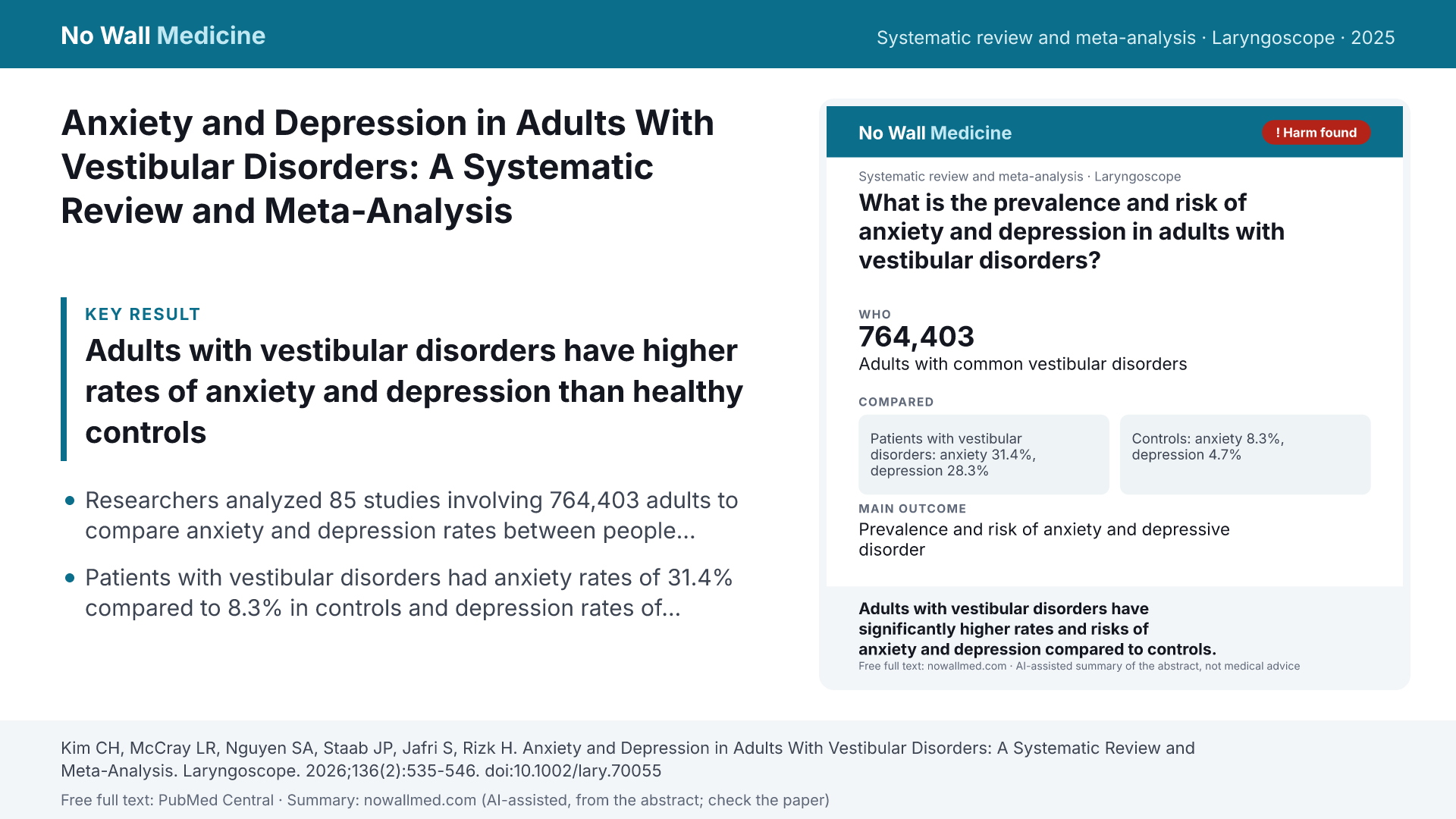
Adults with vestibular disorders have higher rates of anxiety and depression than healthy controls
Anxiety and Depression in Adults With Vestibular Disorders: A Systematic Review and Meta-Analysis
Systematic review and meta-analysisHarm found
What is the prevalence and risk of anxiety and depression in adults with vestibular disorders?
Who
764,403
Adults with common vestibular disorders
Compared
Patients with vestibular disorders: anxiety 31.4%, depression 28.3%
Controls: anxiety 8.3%, depression 4.7%
Main outcome
Prevalence and risk of anxiety and depressive disorder
Result: anxiety RR 1.50 (95% CI 1.1-2.0), depression RR 2.9 (95% CI 1.8-4.4)
Bottom line: Adults with vestibular disorders have significantly higher rates and risks of anxiety and depression compared to controls.
Laryngoscope · 2025-08-15 · Save PNG
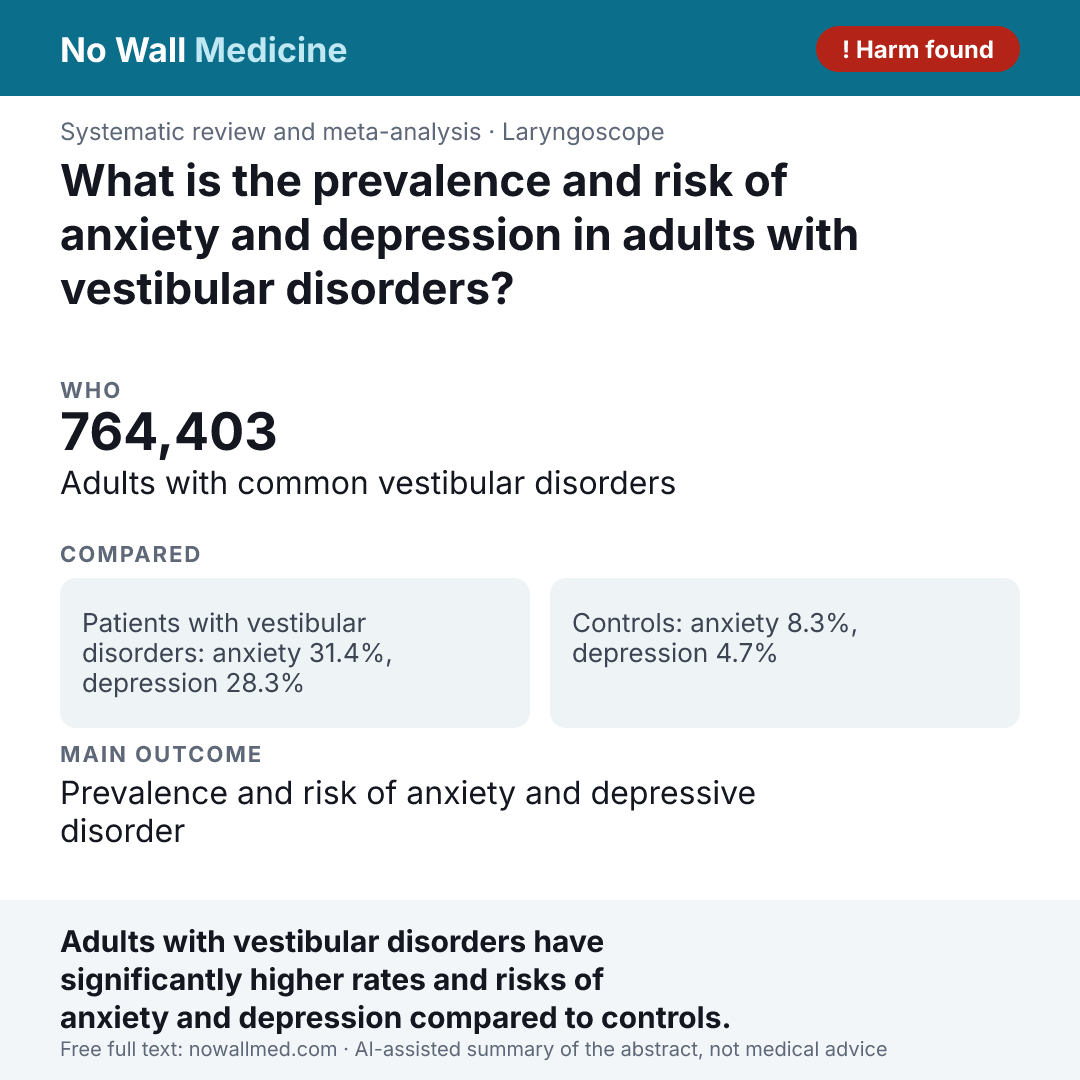
Clinical question: What is the prevalence and risk of anxiety and depression in adults with vestibular disorders?
Key points
- Researchers analyzed 85 studies involving 764,403 adults to compare anxiety and depression rates between people with vestibular disorders and control groups.
- Patients with vestibular disorders had anxiety rates of 31.4% compared to 8.3% in controls and depression rates of 28.3% compared to 4.7% in controls.
- Higher prevalence rates were observed in benign paroxysmal positional vertigo, Meniere's disease, vestibular migraine, and vestibular neuritis.
Headline and key points written with AI from the paper’s abstract, with every number checked against it. Read the paper before relying on them.
Was this summary helpful?
Subject terms
Headline, design, result, key points, caveat and citation as plain text.
Cite this article
Kim CH, McCray LR, Nguyen SA, Staab JP, Jafri S, Rizk H. Anxiety and Depression in Adults With Vestibular Disorders: A Systematic Review and Meta-Analysis. Laryngoscope. 2026;136(2):535-546. doi:10.1002/lary.70055
Spotted a mistake? Suggest a correction