Pessimism was the most important symptom for predicting long-term outcomes in depressed adults
The importance of transdiagnostic symptom level assessment to understanding prognosis for depressed adults: analysis of data from six randomised control trials
Analysis of data from six randomized controlled trialsMixed results
How do transdiagnostic symptom levels and networks predict prognosis for depressed adults?
Who
2858
Depressed patients
Compared
Treatment remitters
Persistent symptoms
Main outcome
Treatment outcomes at three post intervention time points
Bottom line: Pessimism was the most important predictive symptom for depression outcomes across multiple time points.
BMC Med · 2021-05-06 · Save PNG
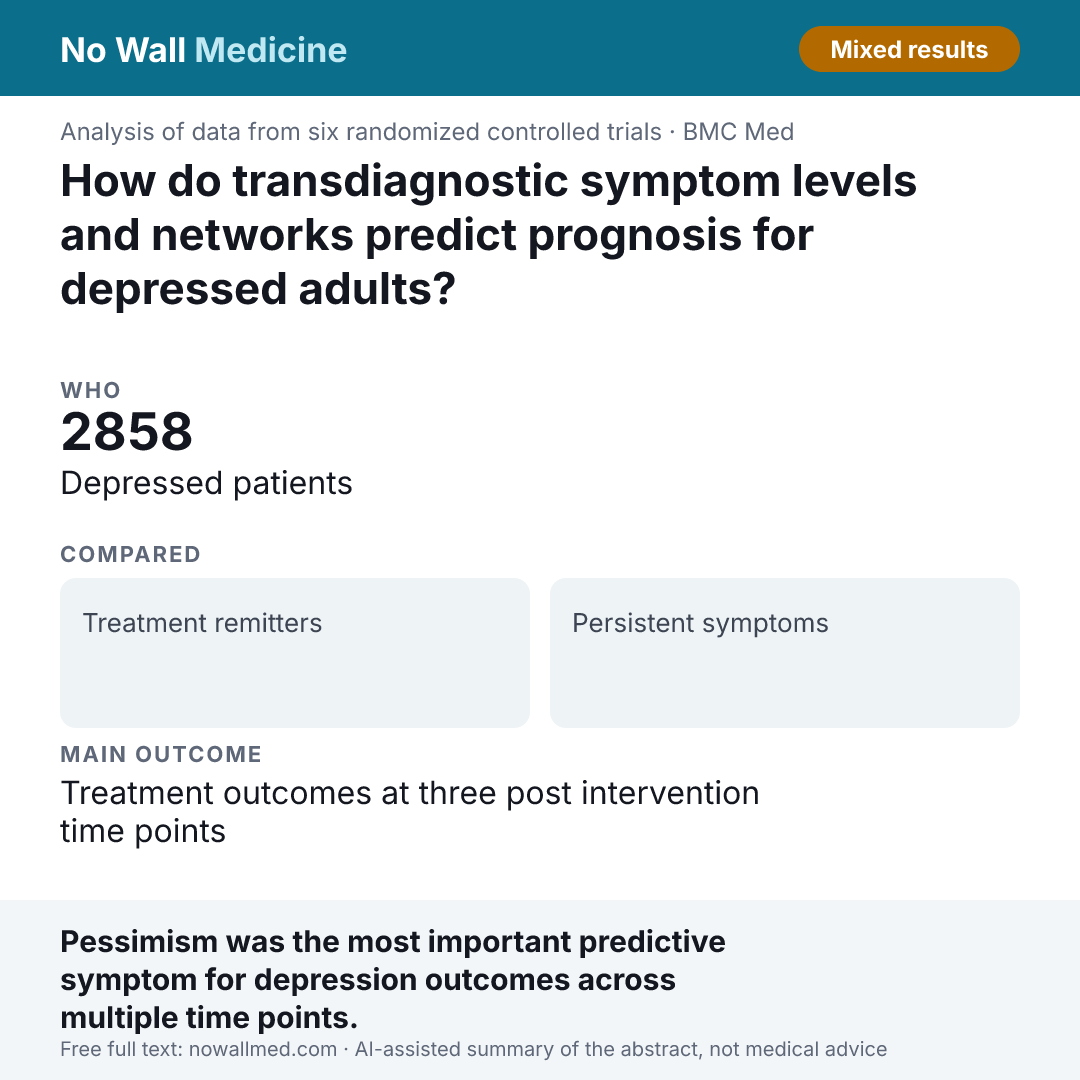
Clinical question: How do transdiagnostic symptom levels and networks predict prognosis for depressed adults?
Key points
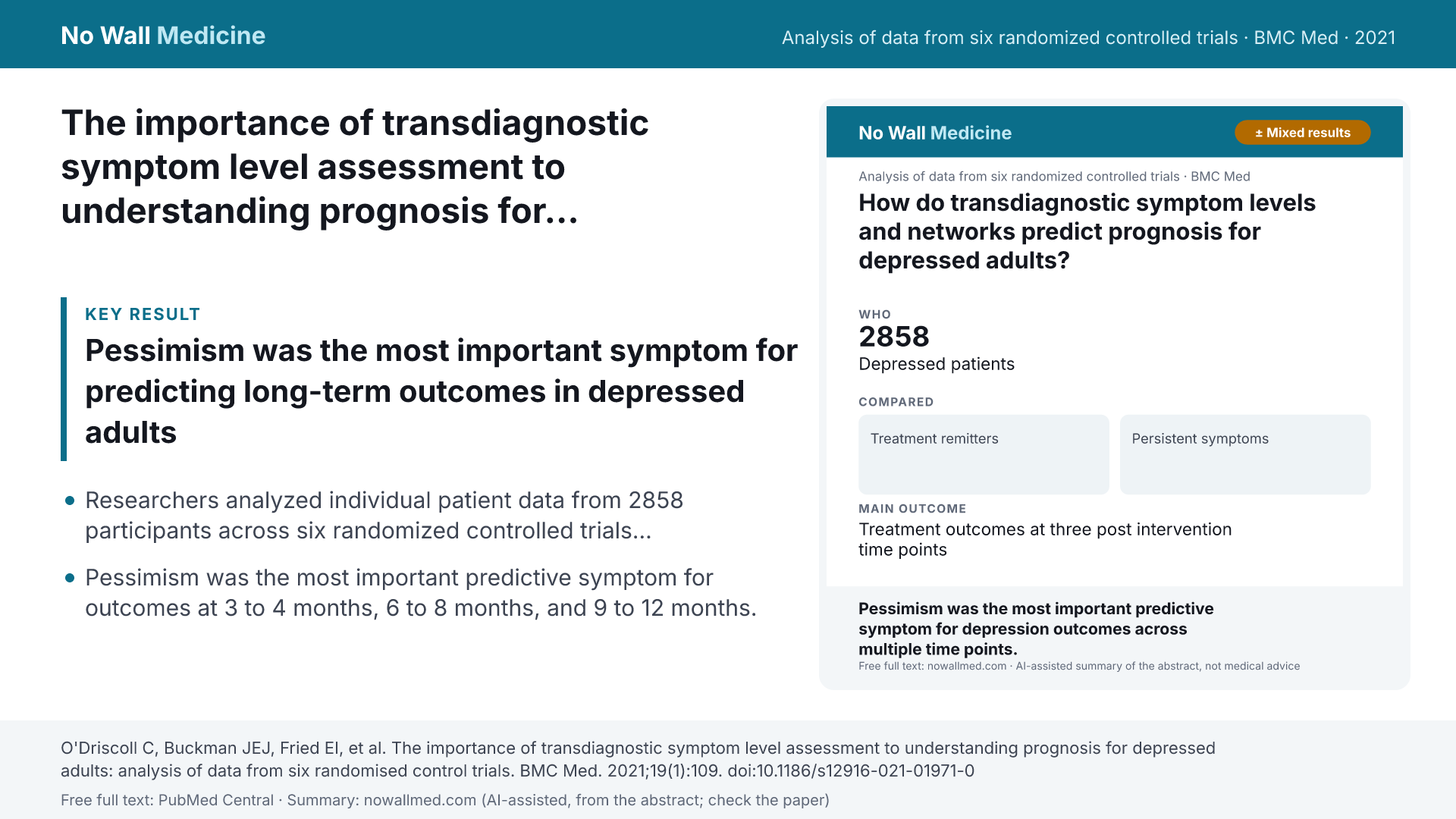
- Researchers analyzed individual patient data from 2858 participants across six randomized controlled trials of depressed patients.
- Pessimism was the most important predictive symptom for outcomes at 3 to 4 months, 6 to 8 months, and 9 to 12 months.
- At the start of the study, sadness and failure or worthlessness were the most interconnected symptoms within the symptom network.
Headline and key points written with AI from the paper’s abstract, with every number checked against it. Read the paper before relying on them.
Was this summary helpful?
Subject terms
Headline, design, result, key points, caveat and citation as plain text.
Cite this article
O'Driscoll C, Buckman JEJ, Fried EI, et al. The importance of transdiagnostic symptom level assessment to understanding prognosis for depressed adults: analysis of data from six randomised control trials. BMC Med. 2021. doi:10.1186/s12916-021-01971-0
Spotted a mistake? Suggest a correction