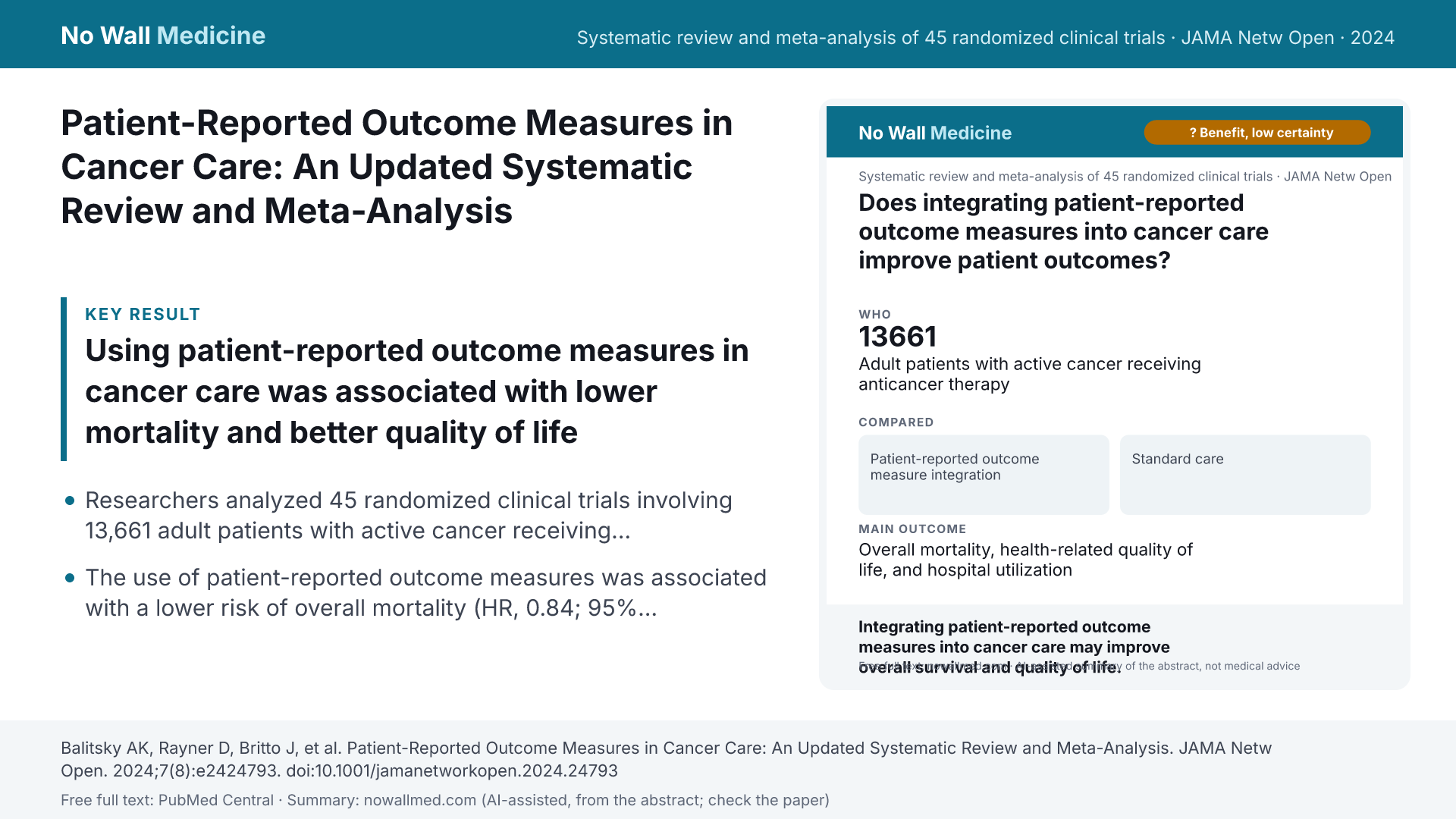
Using patient-reported outcome measures in cancer care was associated with lower mortality and better quality of life
Patient-Reported Outcome Measures in Cancer Care: An Updated Systematic Review and Meta-Analysis
Systematic review and meta-analysis of 45 randomized clinical trialsBenefit, low certainty
Does integrating patient-reported outcome measures into cancer care improve patient outcomes?
Who
13661
Adult patients with active cancer receiving anticancer therapy
Compared
Patient-reported outcome measure integration
Standard care
Main outcome
Overall mortality, health-related quality of life, and hospital utilization
Result: hazard ratio 0.84 (95% CI, 0.72-0.98)
Bottom line: Integrating patient-reported outcome measures into cancer care may improve overall survival and quality of life.
JAMA Netw Open · 2024-08-01 · Save PNG
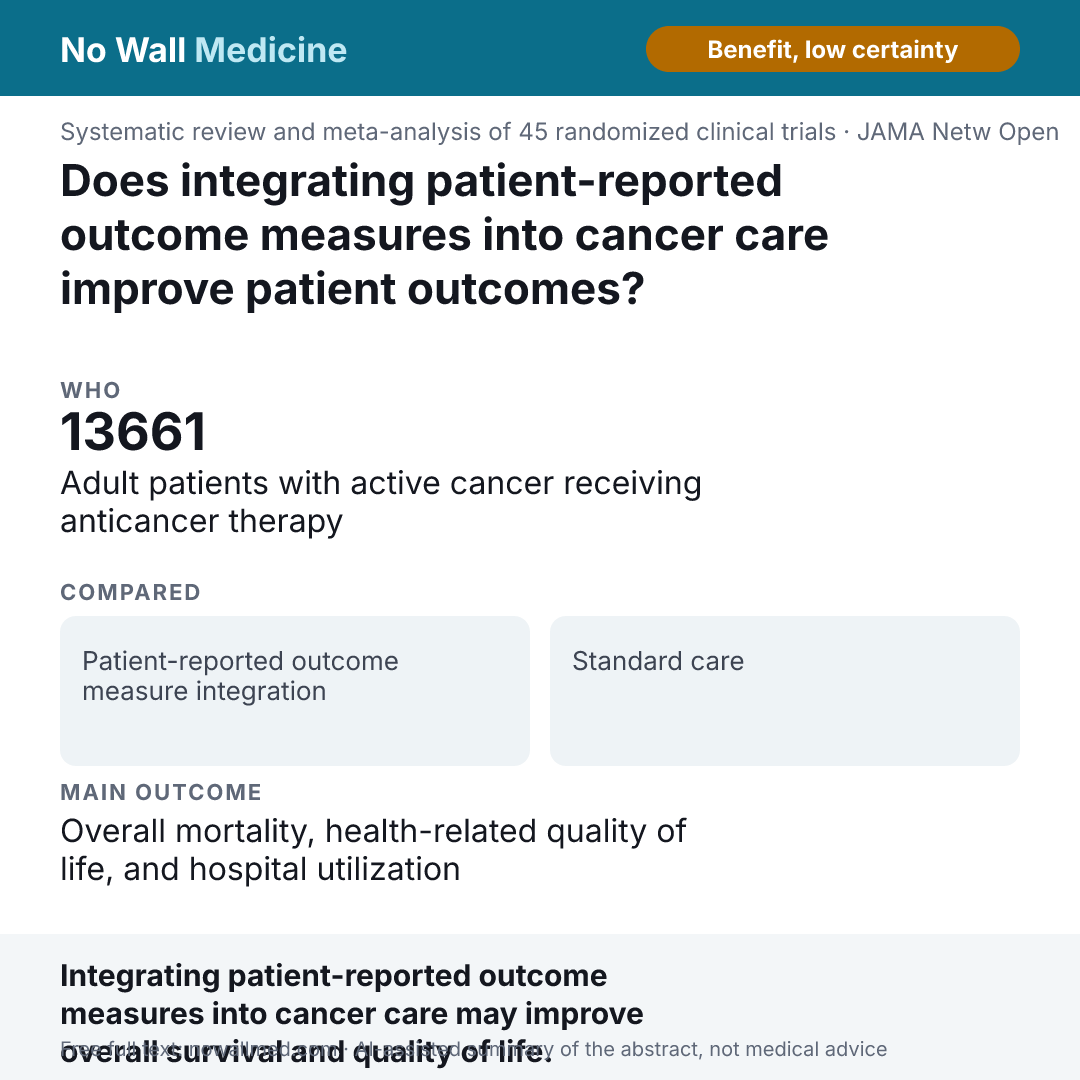
Clinical question: Does integrating patient-reported outcome measures into cancer care improve patient outcomes?
Key points
- Researchers analyzed 45 randomized clinical trials involving 13,661 adult patients with active cancer receiving anticancer therapy.
- The use of patient-reported outcome measures was associated with a lower risk of overall mortality (HR, 0.84; 95% CI, 0.72-0.98) and improved health-related quality of life at 12 weeks (MD, 2.45; 95% CI, 0.42-4.48).
- The addition of these measures was not associated with changes in emergency department visits (OR, 0.74; 95% CI, 0.54-1.02) or hospital admissions (OR, 0.86; 95% CI, 0.73-1.02).
Headline and key points written with AI from the paper’s abstract, with every number checked against it. Read the paper before relying on them.
Was this summary helpful?
Subject terms
Headline, design, result, key points, caveat and citation as plain text.
Cite this article
Balitsky AK, Rayner D, Britto J, et al. Patient-Reported Outcome Measures in Cancer Care: An Updated Systematic Review and Meta-Analysis. JAMA Netw Open. 2024;7(8):e2424793. doi:10.1001/jamanetworkopen.2024.24793
Spotted a mistake? Suggest a correction