Patient-Reported Outcomes and Long-Term Nonadherence to Aromatase Inhibitors
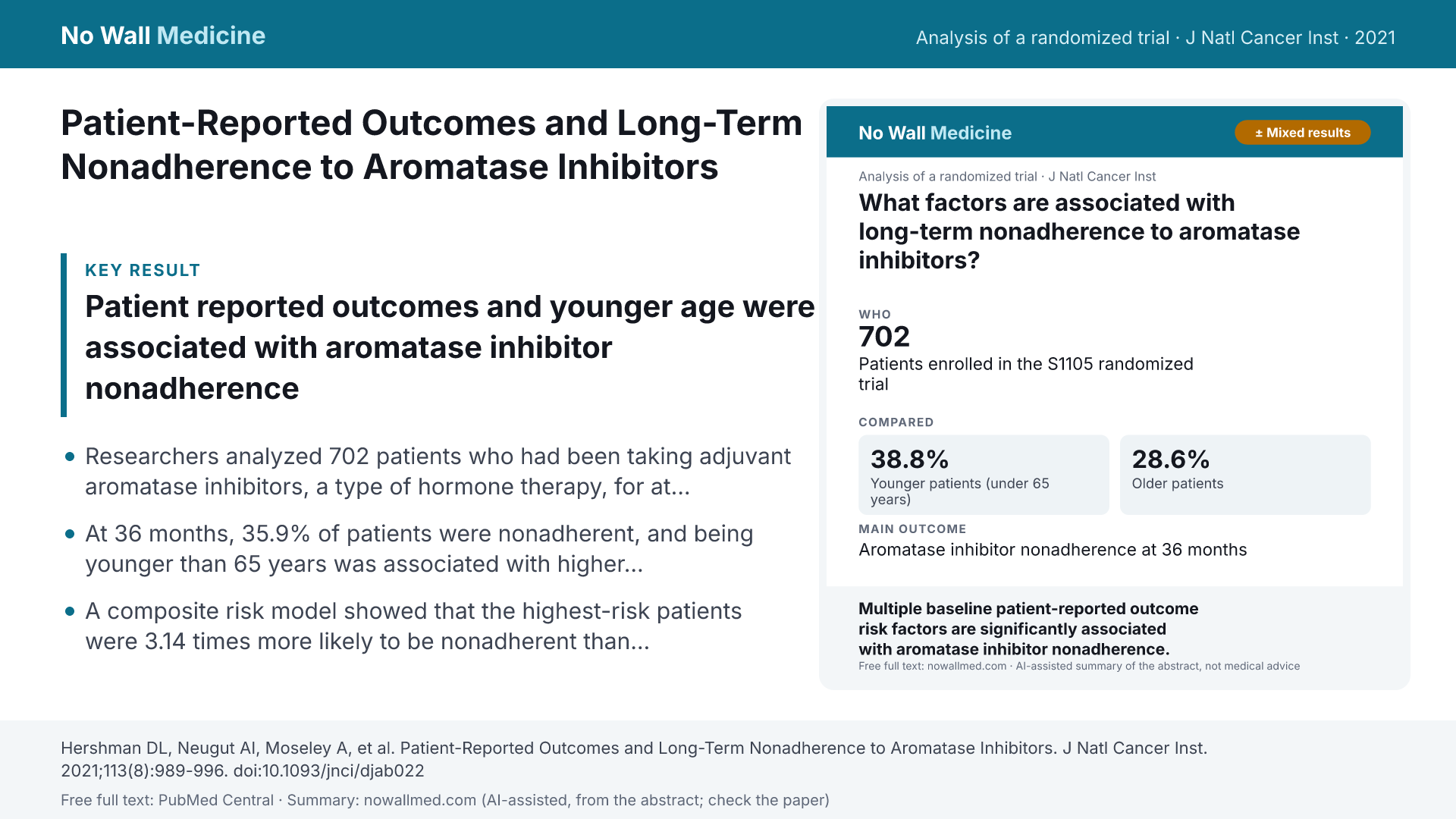
Key result: Patient reported outcomes and younger age were associated with aromatase inhibitor nonadherence
Analysis of a randomized trialMixed results
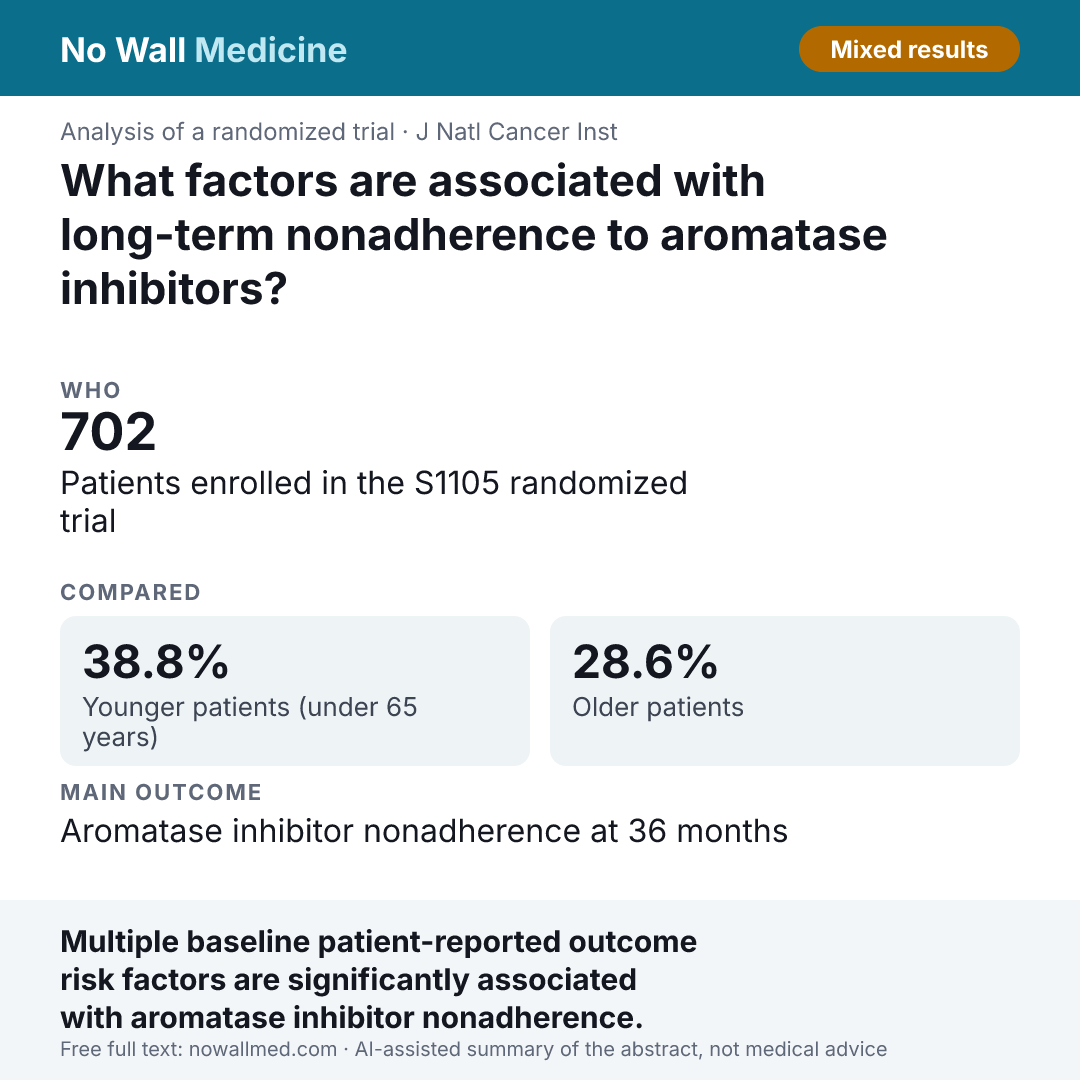
What factors are associated with long-term nonadherence to aromatase inhibitors?
Who
702
Patients enrolled in the S1105 randomized trial
Compared
38.8%Younger patients (under 65 years)
28.6%Older patients
Main outcome
Aromatase inhibitor nonadherence at 36 months
Result: odds ratio 1.51 (95% CI 1.05 to 2.16)
Bottom line: Multiple baseline patient-reported outcome risk factors are significantly associated with aromatase inhibitor nonadherence.
J Natl Cancer Inst · 2021-02-26 · Save PNG
Key points
- Researchers analyzed 702 patients who had been taking adjuvant aromatase inhibitors, a type of hormone therapy, for at least 30 days.
- At 36 months, 35.9% of patients were nonadherent, and being younger than 65 years was associated with higher nonadherence at 38.8% compared to 28.6%.
- A composite risk model showed that the highest-risk patients were 3.14 times more likely to be nonadherent than the lowest-risk patients.
Discussion prompts
- Would these patients look like yours? Who was left out?
- Is the main outcome one that matters to patients?
- Is the difference large enough to change what you do?
Cite: Hershman DL, Neugut AI, Moseley A, et al. Patient-Reported Outcomes and Long-Term Nonadherence to Aromatase Inhibitors. J Natl Cancer Inst. 2021;113(8):989-996. doi:10.1093/jnci/djab022
Free full text: PubMed Central · Summary and visual abstract: nowallmed.com/a/patient-reported-outcomes-and-long-term-nonadherence-to-aromatase-1yyo93o/ (AI-assisted from the abstract; check the paper before relying on it).