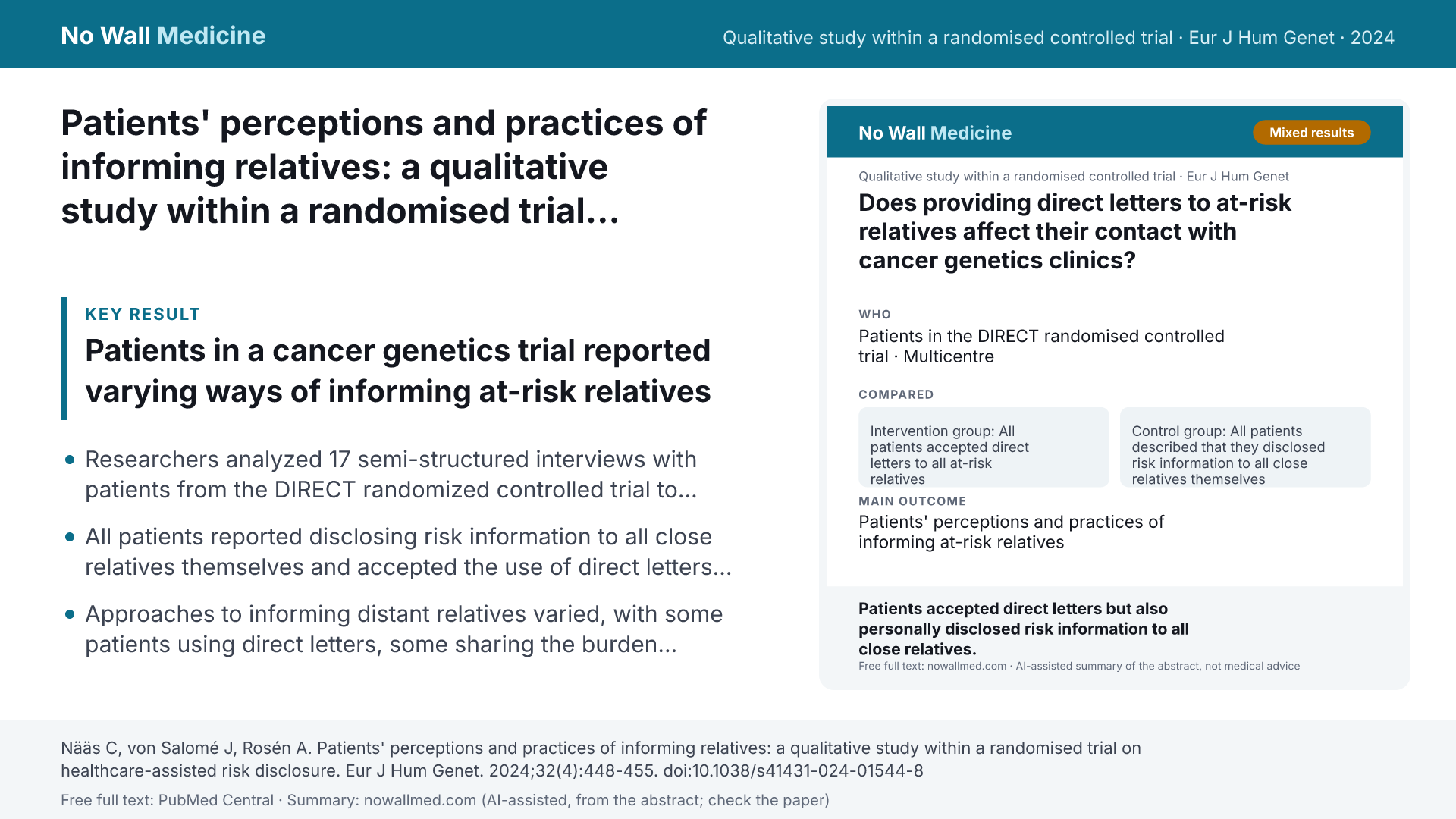
Patients in a cancer genetics trial reported varying ways of informing at-risk relatives
Patients' perceptions and practices of informing relatives: a qualitative study within a randomised trial on healthcare-assisted risk disclosure
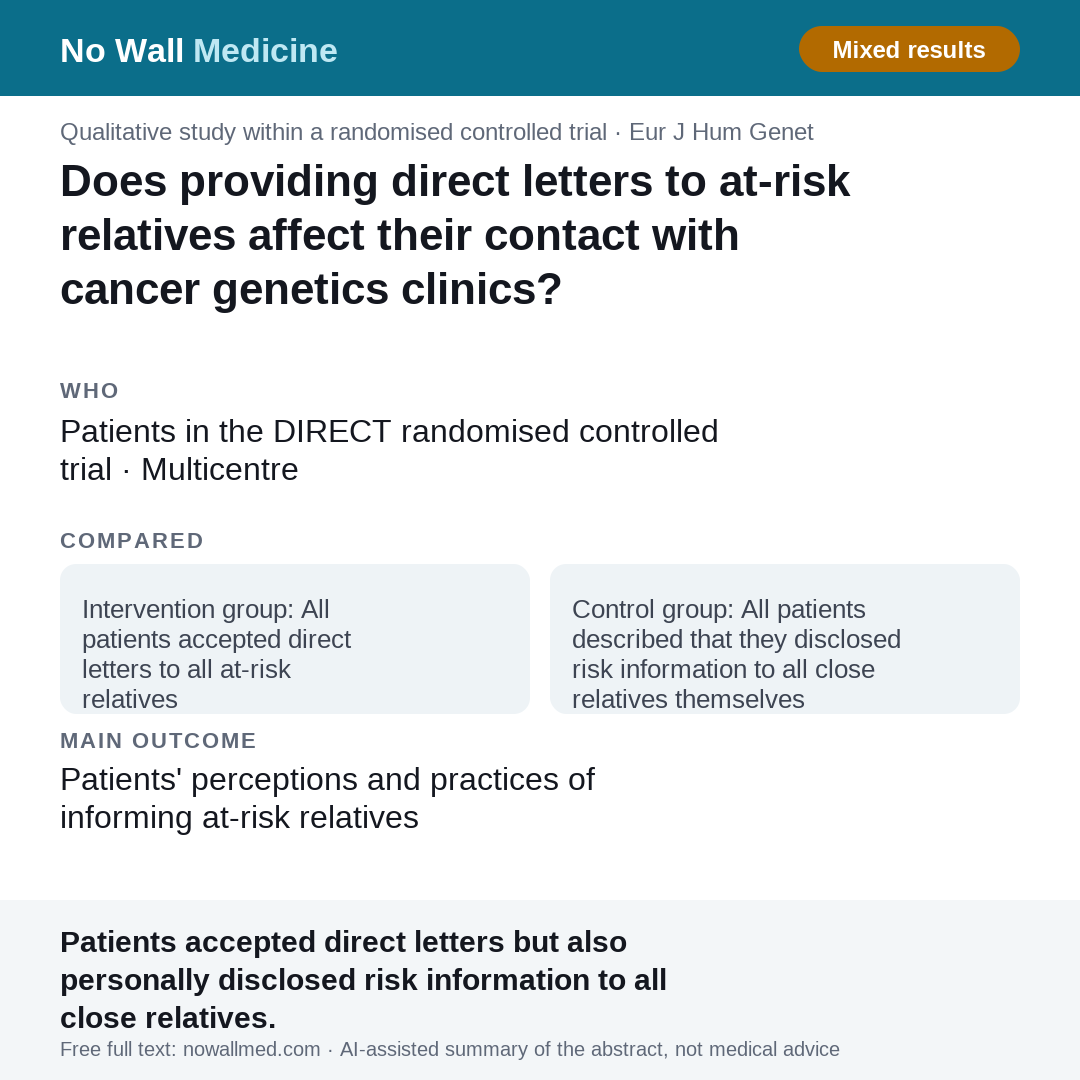
Qualitative study within a randomised controlled trialMixed results
Does providing direct letters to at-risk relatives affect their contact with cancer genetics clinics?
Who
Patients in the DIRECT randomised controlled trial · Multicentre
Compared
Intervention group: All patients accepted direct letters to all at-risk relatives
Control group: All patients described that they disclosed risk information to all close relatives themselves
Main outcome
Patients' perceptions and practices of informing at-risk relatives
Bottom line: Patients accepted direct letters but also personally disclosed risk information to all close relatives.
Limitation: The study is a qualitative analysis of 17 semi-structured interviews.
Eur J Hum Genet · 2024-02-02Download image
Clinical question: Does providing direct letters to at-risk relatives affect their contact with cancer genetics clinics?
Why it matters: It was unknown how patients perceived and performed the task of communicating genetic risk information to their relatives during a clinical trial.
Key points
- Researchers analyzed 17 semi-structured interviews with patients from the DIRECT randomized controlled trial to explore how they communicated genetic risk to relatives.
- All patients reported disclosing risk information to all close relatives themselves and accepted the use of direct letters to inform at-risk relatives.
- Approaches to informing distant relatives varied, with some patients using direct letters, some sharing the burden with family, and others postponing disclosure.
Headline and key points written with AI from the paper’s abstract, with every number checked against it. Read the paper before relying on them.
Was this summary helpful?
Subject terms
Cite this article
Nääs C, von Salomé J, Rosén A. Patients' perceptions and practices of informing relatives: a qualitative study within a randomised trial on healthcare-assisted risk disclosure. Eur J Hum Genet. 2024. doi:10.1038/s41431-024-01544-8
Spotted a mistake? Suggest a correction
Top studies every Monday
The week’s key trials and guidelines in your specialties, plus any topics you follow. By email, free.
Get the weekly digest