Patients' perceptions and practices of informing relatives: a qualitative study within a randomised trial on healthcare-assisted risk disclosure
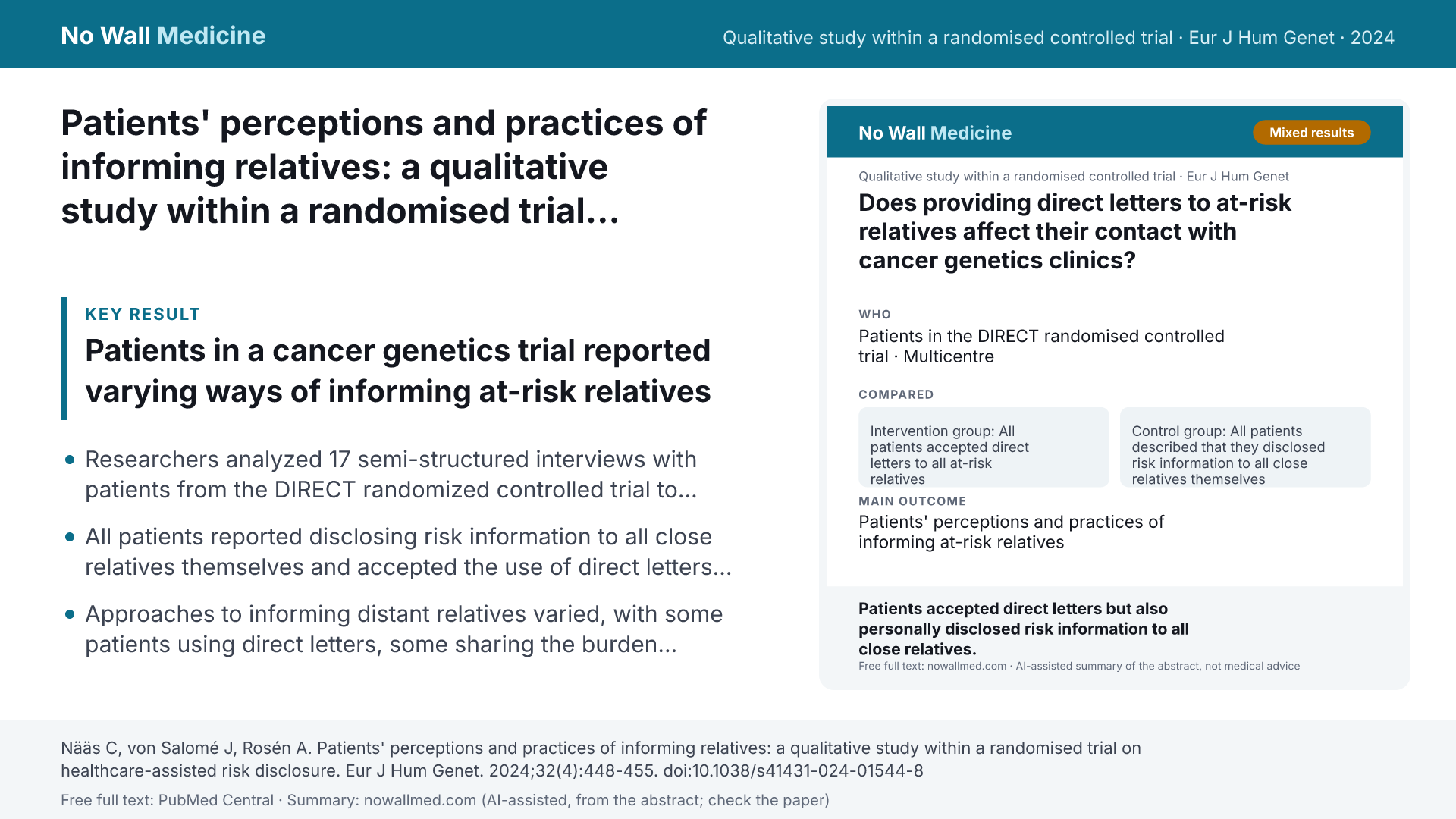
Key result: Patients in a cancer genetics trial reported varying ways of informing at-risk relatives
Qualitative study within a randomised controlled trialMixed results
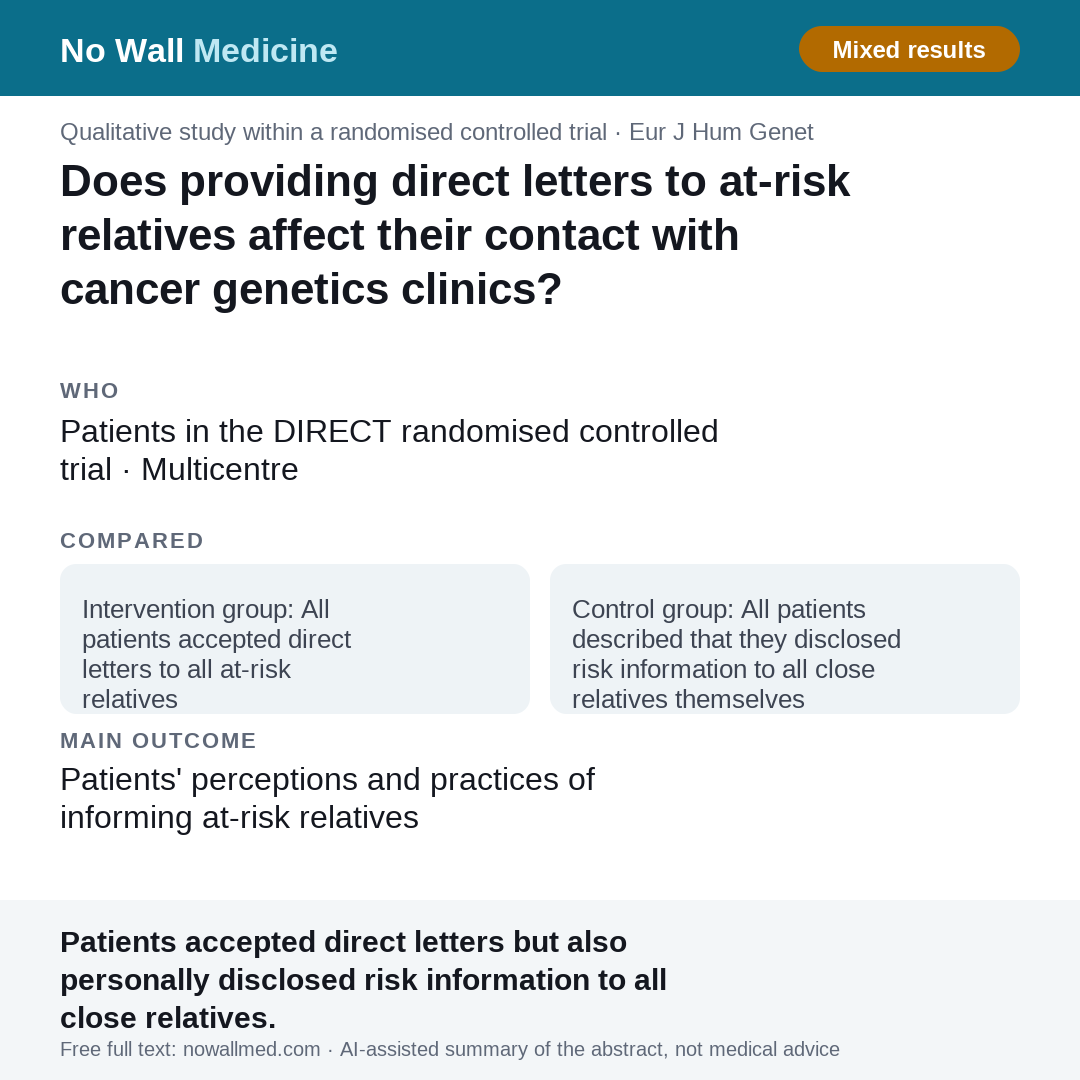
Does providing direct letters to at-risk relatives affect their contact with cancer genetics clinics?
Who
Patients in the DIRECT randomised controlled trial · Multicentre
Compared
Intervention group: All patients accepted direct letters to all at-risk relatives
Control group: All patients described that they disclosed risk information to all close relatives themselves
Main outcome
Patients' perceptions and practices of informing at-risk relatives
Bottom line: Patients accepted direct letters but also personally disclosed risk information to all close relatives.
Limitation: The study is a qualitative analysis of 17 semi-structured interviews.
Eur J Hum Genet · 2024-02-02Download image
Key points
- Researchers analyzed 17 semi-structured interviews with patients from the DIRECT randomized controlled trial to explore how they communicated genetic risk to relatives.
- All patients reported disclosing risk information to all close relatives themselves and accepted the use of direct letters to inform at-risk relatives.
- Approaches to informing distant relatives varied, with some patients using direct letters, some sharing the burden with family, and others postponing disclosure.
Why it matters: It was unknown how patients perceived and performed the task of communicating genetic risk information to their relatives during a clinical trial.
Discussion prompts
- Would these patients look like yours? Who was left out?
- Is the main outcome one that matters to patients?
- Is the difference large enough to change what you do?
Cite: Nääs C, von Salomé J, Rosén A. Patients' perceptions and practices of informing relatives: a qualitative study within a randomised trial on healthcare-assisted risk disclosure. Eur J Hum Genet. 2024. doi:10.1038/s41431-024-01544-8
Free full text: PubMed Central · Summary and visual abstract: nowallmed.com/a/patients-perceptions-and-practices-of-informing-relatives-a-13zasgm/ (AI-assisted from the abstract; check the paper before relying on it).