Teprotumumab treatment was associated with hearing loss and ear fullness in 41% of patients
Patterns of Teprotumumab-Induced Hearing Dysfunction: A Systematic Review
Systematic reviewHarm found
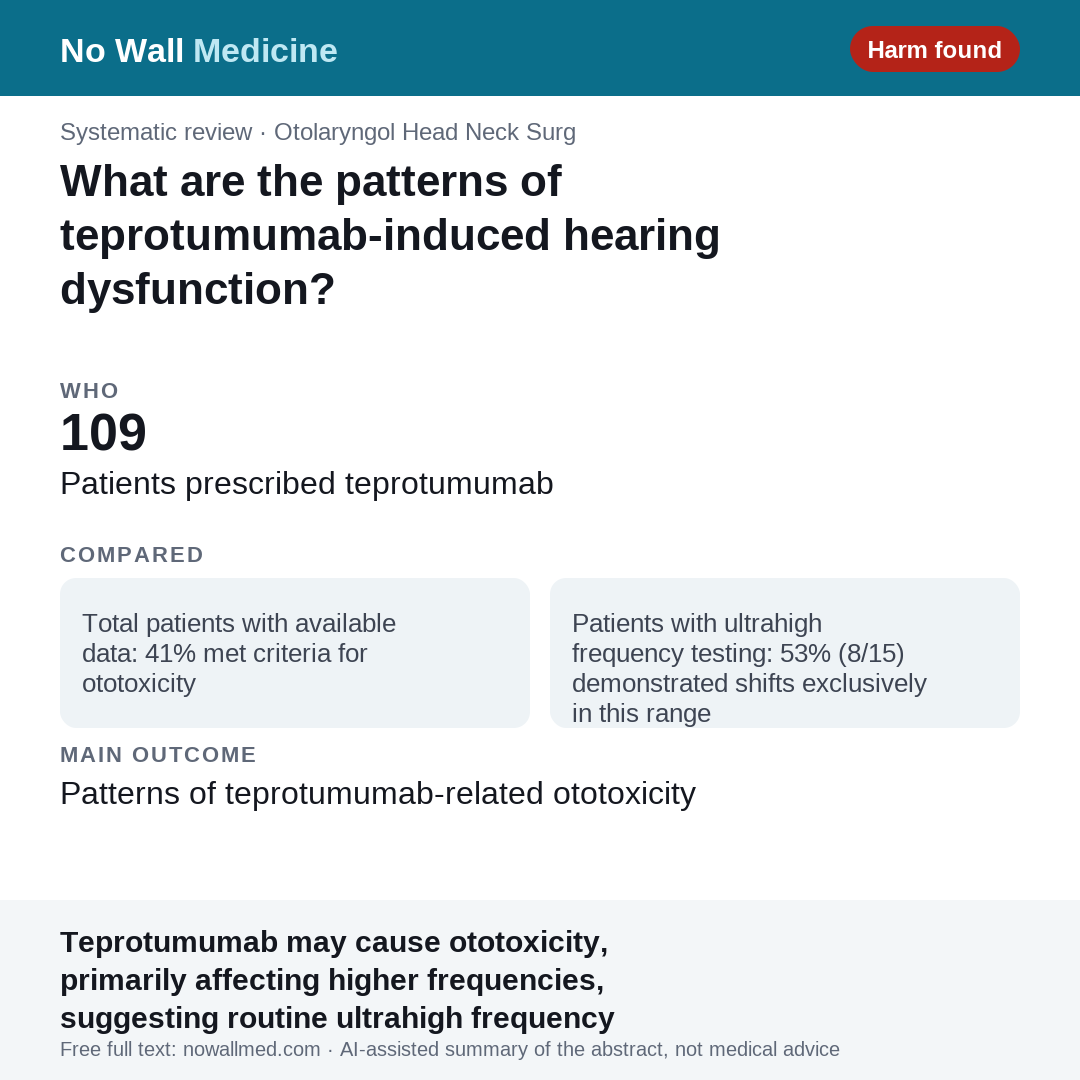
What are the patterns of teprotumumab-induced hearing dysfunction?
Who
109
Patients prescribed teprotumumab
Compared
Total patients with available data: 41% met criteria for ototoxicity
Patients with ultrahigh frequency testing: 53% (8/15) demonstrated shifts exclusively in this range
Main outcome
Patterns of teprotumumab-related ototoxicity
Bottom line: Teprotumumab may cause ototoxicity, primarily affecting higher frequencies, suggesting routine ultrahigh frequency hearing screening may be warranted.
Limitation: The true incidence of ototoxicity remains unknown and more data is needed.
Otolaryngol Head Neck Surg · 2024-08-28Download image
Clinical question: What are the patterns of teprotumumab-induced hearing dysfunction?
Why it matters: The specific patterns and frequency of hearing damage, known as ototoxicity, caused by the monoclonal antibody teprotumumab were not fully understood.
Key points
- Researchers reviewed 7 studies involving 109 unique patients with a mean age of 55 ± 14 years and 64% female predominance.
- The most common symptoms were hearing loss (22%), ear fullness (18%), and tinnitus (14%), with 41% of patients meeting criteria for ototoxicity.
- Among 15 patients who received ultrahigh frequency hearing tests, 8 (53%) showed changes exclusively in that high-frequency range.
Limitation the authors note: The true incidence of ototoxicity with teprotumumab remains unknown.
Headline and key points written with AI from the paper’s abstract, with every number checked against it. Read the paper before relying on them.
Topics
Cite this article
Wong K, Arya P, Salmeron Y, Bigelow DC, Ruckenstein MJ, Banerjee S. Patterns of Teprotumumab-Induced Hearing Dysfunction: A Systematic Review. Otolaryngol Head Neck Surg. 2024. doi:10.1002/ohn.955
Spotted a mistake? Suggest a correction
Top studies every Monday
The week’s key trials and guidelines in your specialties, plus any topics you follow. By email, free.
Get the weekly digest