Pentoxifylline was associated with slower progression of subclinical atherosclerosis in patients with diabetes and kidney disease
Pentoxifylline ameliorates subclinical atherosclerosis progression in patients with type 2 diabetes and chronic kidney disease: a randomized pilot trial
Open-label, randomized controlled, prospective single-center pilot studyBenefit found
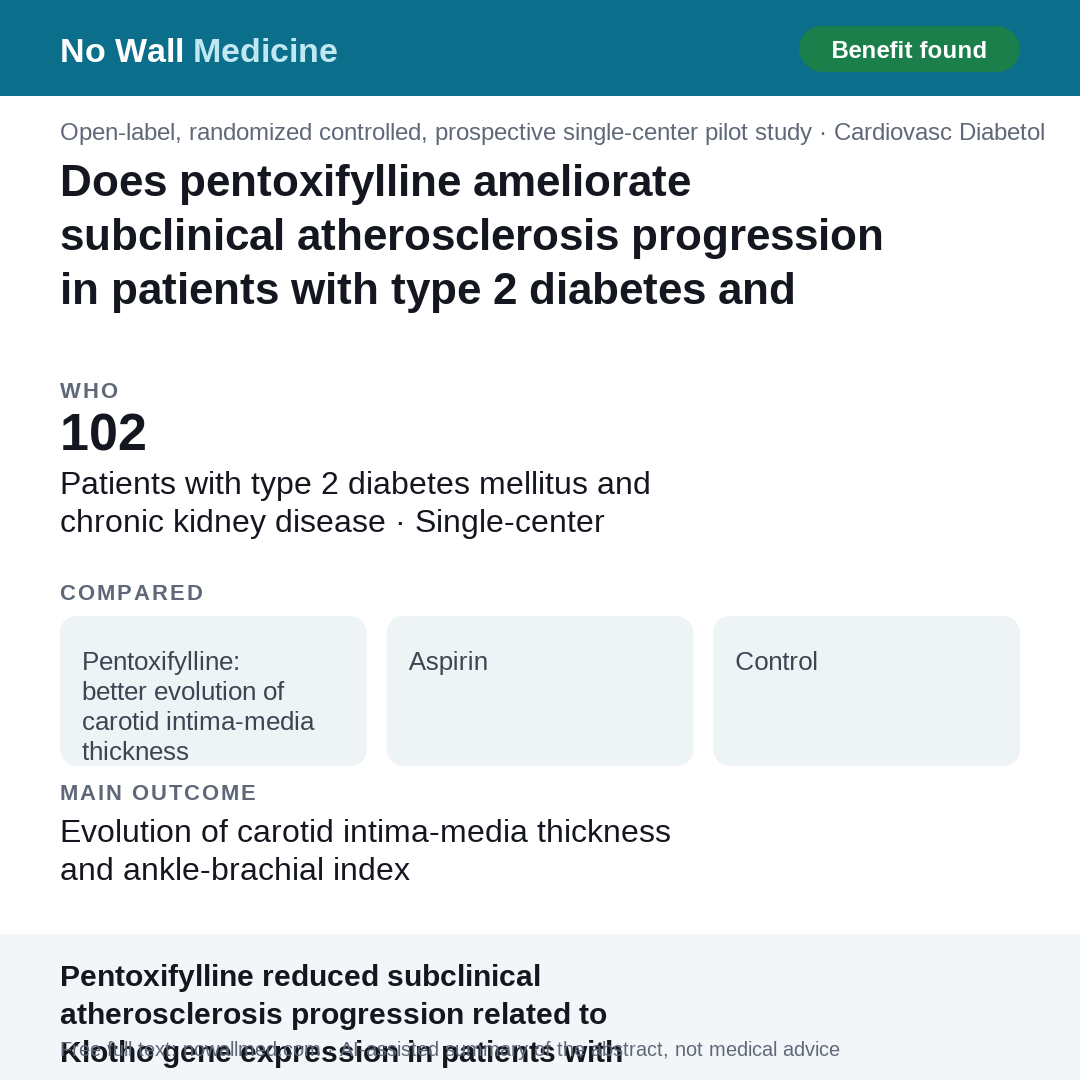
Does pentoxifylline ameliorate subclinical atherosclerosis progression in patients with type 2 diabetes and chronic kidney disease?
Who
102
Patients with type 2 diabetes mellitus and chronic kidney disease · Single-center
Compared
Pentoxifylline: better evolution of carotid intima-media thickness
Aspirin
Control
Main outcome
Evolution of carotid intima-media thickness and ankle-brachial index
Result: OR 0.103 (P=0.001)
Bottom line: Pentoxifylline reduced subclinical atherosclerosis progression related to Klotho gene expression in patients with diabetes and chronic kidney disease.
Cardiovasc Diabetol · 2024-08-24Download image
Clinical question: Does pentoxifylline ameliorate subclinical atherosclerosis progression in patients with type 2 diabetes and chronic kidney disease?
Why it matters: It was unknown if pentoxifylline could affect the progression of subclinical atherosclerosis in patients living with both type 2 diabetes and chronic kidney disease.
Key points
- The study followed 102 patients with type 2 diabetes and moderate to severe chronic kidney disease assigned to pentoxifylline, aspirin, or a control group for 18 months.
- Pentoxifylline treatment was associated with better evolution of carotid intima-media thickness, which is a measure of artery wall thickening, and increased Klotho protein messenger RNA levels.
- Pentoxifylline treatment and variations in Klotho messenger RNA expression in peripheral blood cells were significant determinants for the progression of carotid intima-media thickness.
Headline and key points written with AI from the paper’s abstract, with every number checked against it. Read the paper before relying on them.
Topics
Cite this article
Donate-Correa J, Ferri CM, Mora-Fernández C, Pérez-Delgado N, González-Luis A, Navarro-González JF. Pentoxifylline ameliorates subclinical atherosclerosis progression in patients with type 2 diabetes and chronic kidney disease: a randomized pilot trial. Cardiovasc Diabetol. 2024. doi:10.1186/s12933-024-02393-x
Spotted a mistake? Suggest a correction
Top studies every Monday
The week’s key trials and guidelines in your specialties, plus any topics you follow. By email, free.
Get the weekly digest