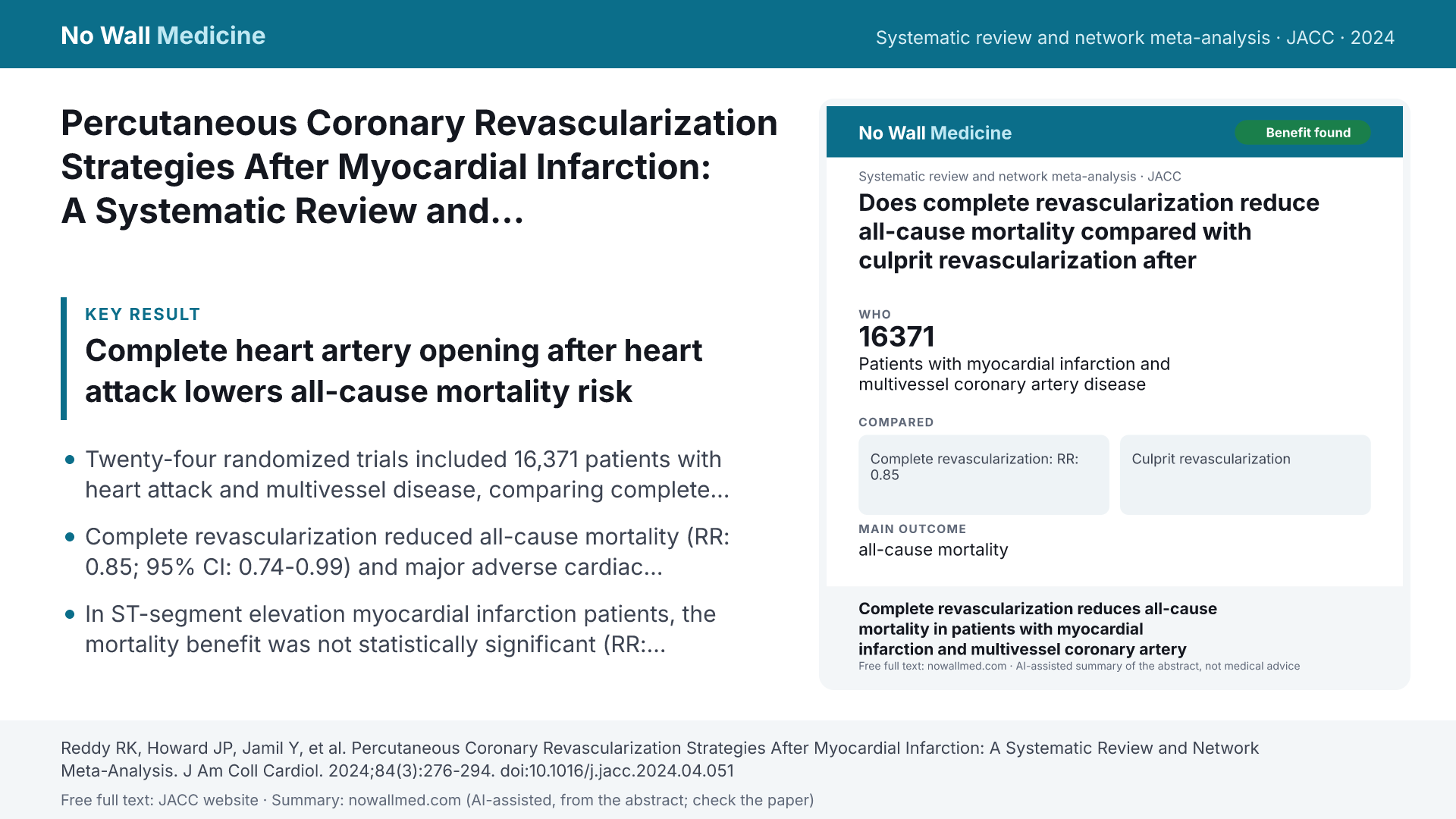
Complete heart artery opening after heart attack lowers all-cause mortality risk
Percutaneous Coronary Revascularization Strategies After Myocardial Infarction: A Systematic Review and Network Meta-Analysis
Systematic review and network meta-analysisBenefit found
Does complete revascularization reduce all-cause mortality compared with culprit revascularization after myocardial infarction?
Who
16371
Patients with myocardial infarction and multivessel coronary artery disease
Compared
Complete revascularization: RR: 0.85
Culprit revascularization
Main outcome
all-cause mortality
Result: RR: 0.85 (95% CI: 0.74-0.99)
Bottom line: Complete revascularization reduces all-cause mortality in patients with myocardial infarction and multivessel coronary artery disease.
JACC · 2024-07-11Download image
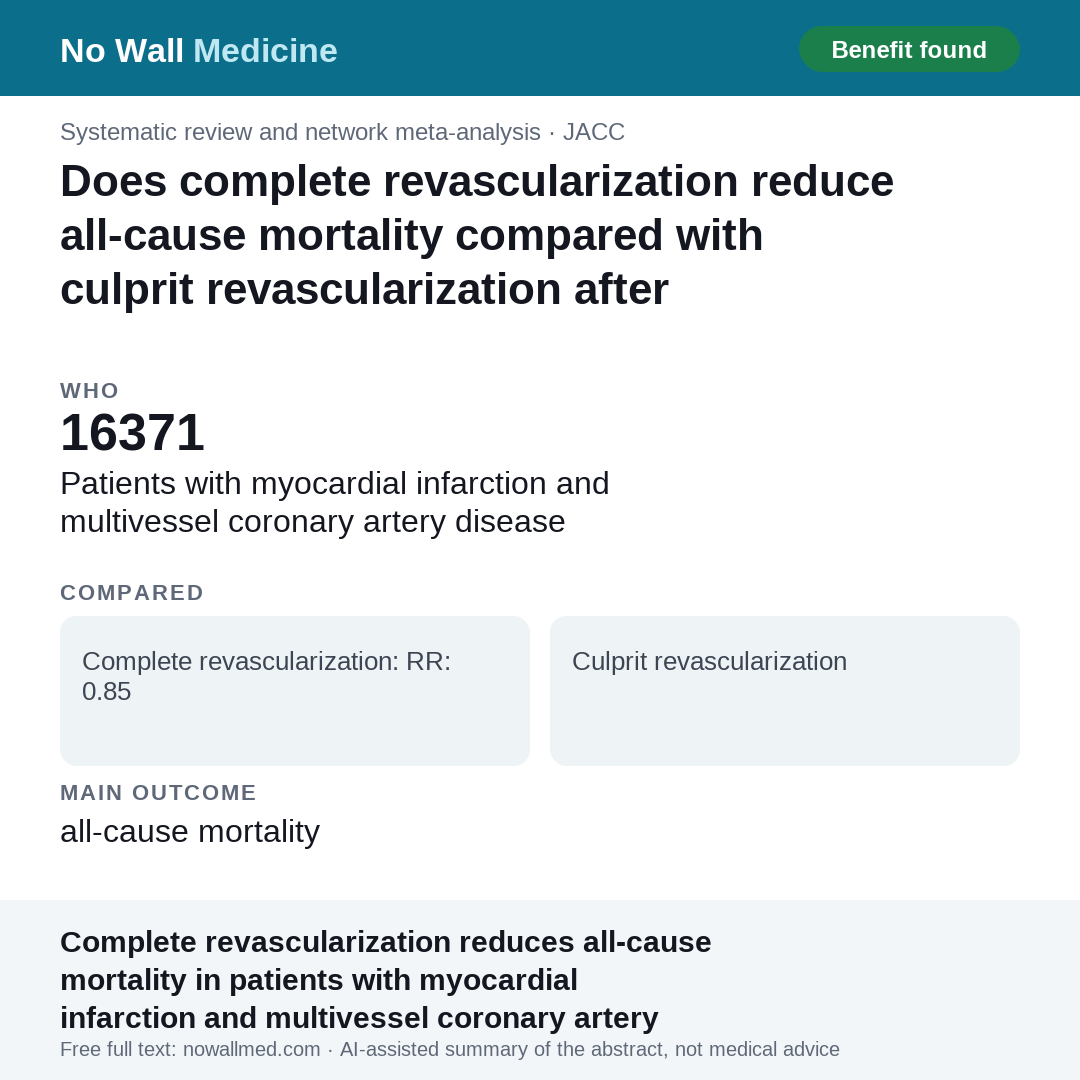
Clinical question: Does complete revascularization reduce all-cause mortality compared with culprit revascularization after myocardial infarction?
Why it matters: Previous data had not demonstrated an all-cause mortality reduction, and debate remained regarding the optimal timing and method for complete revascularization.
Key points
- Twenty-four randomized trials included 16,371 patients with heart attack and multivessel disease, comparing complete versus culprit-only revascularization.
- Complete revascularization reduced all-cause mortality (RR: 0.85; 95% CI: 0.74-0.99) and major adverse cardiac events compared to culprit-only treatment.
- In ST-segment elevation myocardial infarction patients, the mortality benefit was not statistically significant (RR: 0.91; 95% CI: 0.78-1.05).
Headline and key points written with AI from the paper’s abstract, with every number checked against it. Read the paper before relying on them.
Was this summary helpful?
Subject terms
Cite this article
Reddy RK, Howard JP, Jamil Y, et al. Percutaneous Coronary Revascularization Strategies After Myocardial Infarction: A Systematic Review and Network Meta-Analysis. JACC. 2024. doi:10.1016/j.jacc.2024.04.051
Spotted a mistake? Suggest a correction