Performance and safety of the PRICO closed-loop oxygen saturation targeting system in neonates: pragmatic multicentre cross-over study (TarOx Study)
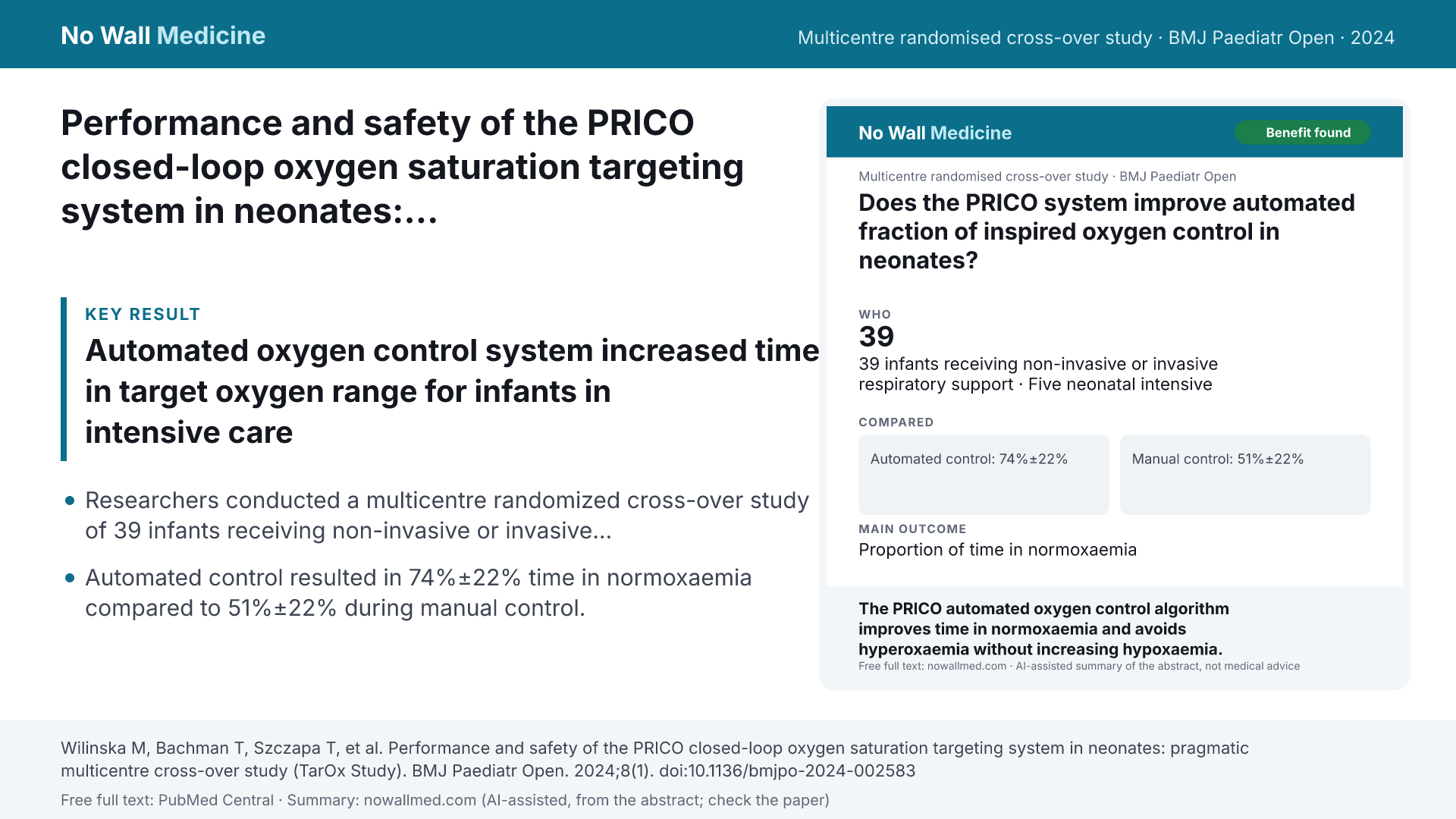
Key result: Automated oxygen control system increased time in target oxygen range for infants in intensive care
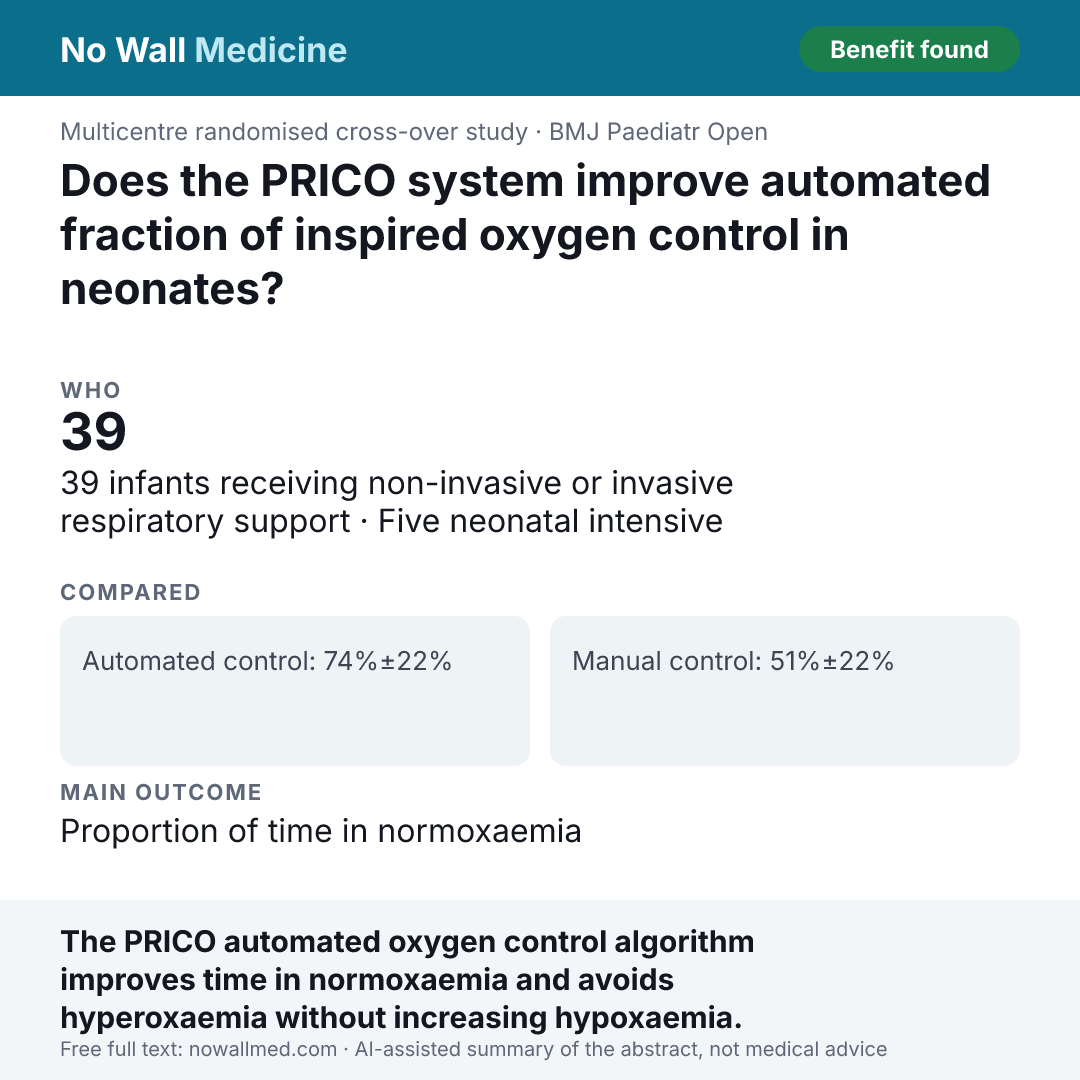
Multicentre randomised cross-over studyBenefit found
Does the PRICO system improve automated fraction of inspired oxygen control in neonates?
Who
39
39 infants receiving non-invasive or invasive respiratory support · Five neonatal intensive care units
Compared
Automated control: 74%±22%
Manual control: 51%±22%
Main outcome
Proportion of time in normoxaemia
Bottom line: The PRICO automated oxygen control algorithm improves time in normoxaemia and avoids hyperoxaemia without increasing hypoxaemia.
BMJ Paediatr Open · 2024-07-16 · Save PNG
Key points
- Researchers conducted a multicentre randomized cross-over study of 39 infants receiving non-invasive or invasive respiratory support.
- Automated control resulted in 74%±22% time in normoxaemia compared to 51%±22% during manual control.
- The automated system was associated with less time spent in severe hyperoxaemia, which is oxygen levels above 98%.
Discussion prompts
- Would these patients look like yours? Who was left out?
- Is the main outcome one that matters to patients?
- Is the difference large enough to change what you do?
Cite: Wilinska M, Bachman T, Szczapa T, et al. Performance and safety of the PRICO closed-loop oxygen saturation targeting system in neonates: pragmatic multicentre cross-over study (TarOx Study). BMJ Paediatr Open. 2024;8(1). doi:10.1136/bmjpo-2024-002583
Free full text: PubMed Central · Summary and visual abstract: nowallmed.com/a/performance-and-safety-of-the-prico-closed-loop-oxygen-saturation-ahij6w/ (AI-assisted from the abstract; check the paper before relying on it).