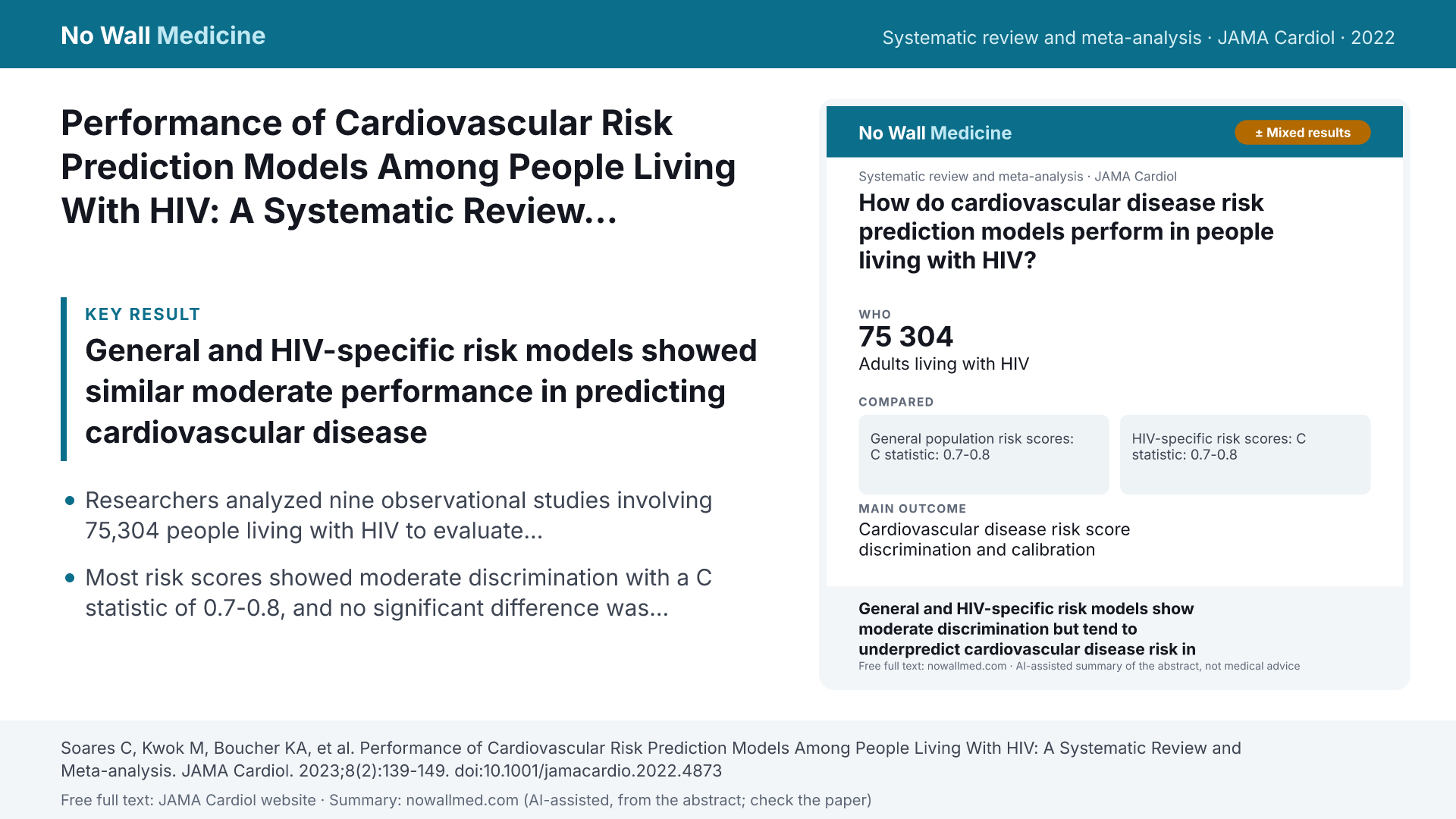
Performance of Cardiovascular Risk Prediction Models Among People Living With HIV: A Systematic Review and Meta-analysis
Key result: General and HIV-specific risk models showed similar moderate performance in predicting cardiovascular disease
Systematic review and meta-analysisMixed results
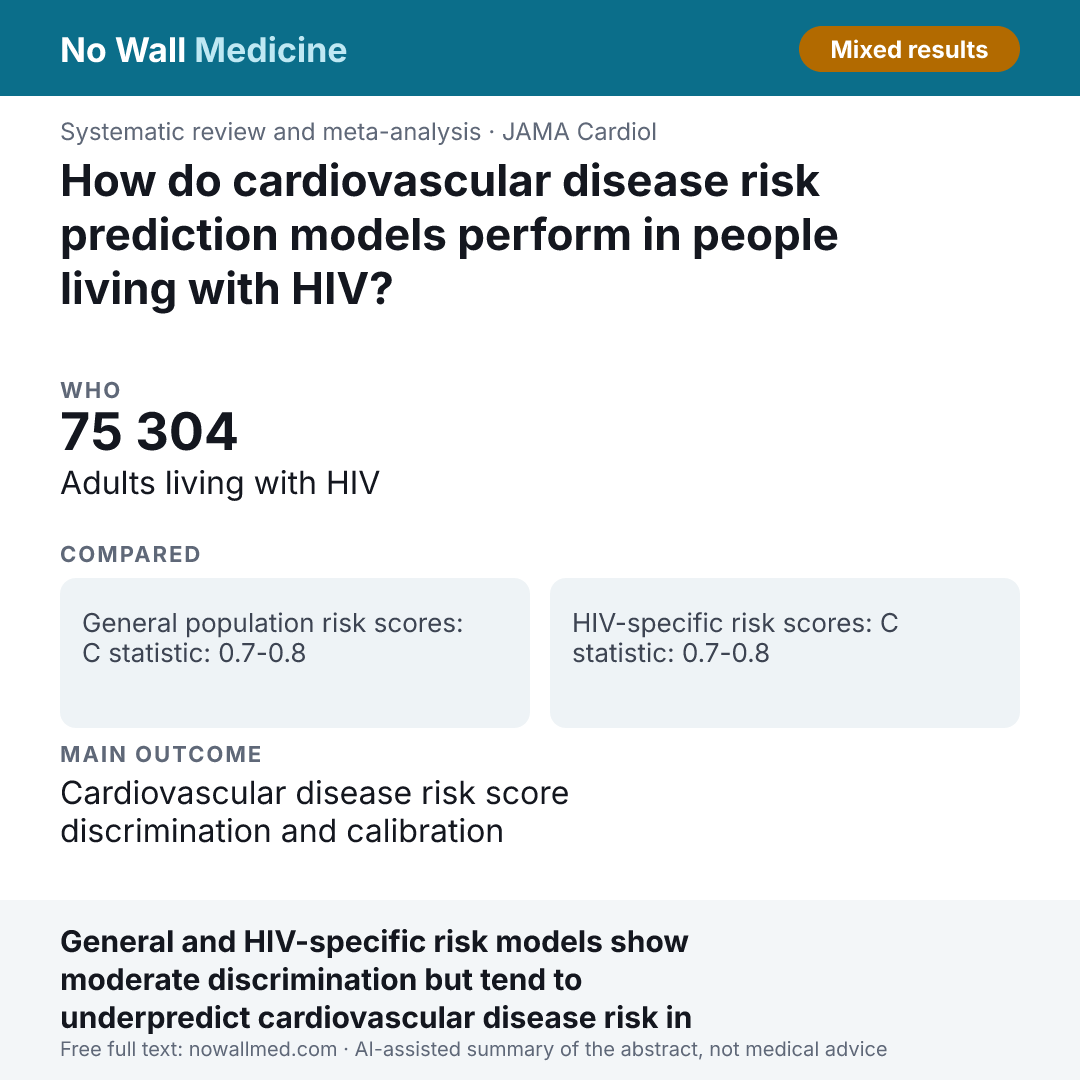
How do cardiovascular disease risk prediction models perform in people living with HIV?
Who
75 304
Adults living with HIV
Compared
General population risk scores: C statistic: 0.7-0.8
HIV-specific risk scores: C statistic: 0.7-0.8
Main outcome
Cardiovascular disease risk score discrimination and calibration
Bottom line: General and HIV-specific risk models show moderate discrimination but tend to underpredict cardiovascular disease risk in people living with HIV.
JAMA Cardiol · 2022-12-29 · Save PNG
Key points
- Researchers analyzed nine observational studies involving 75,304 people living with HIV to evaluate cardiovascular disease risk prediction scores.
- Most risk scores showed moderate discrimination with a C statistic of 0.7-0.8, and no significant difference was found between general and HIV-specific models.
- Most models tended to underpredict cardiovascular disease risk, though the Framingham Risk Score and Pooled Cohort Equation 10-year scores were better calibrated.
Limitation the authors note: There was substantial heterogeneity across the studies, and only a few studies contributed data for each risk score.
Discussion prompts
- Would these patients look like yours? Who was left out?
- Is the main outcome one that matters to patients?
- Is the difference large enough to change what you do?
Cite: Soares C, Kwok M, Boucher KA, et al. Performance of Cardiovascular Risk Prediction Models Among People Living With HIV: A Systematic Review and Meta-analysis. JAMA Cardiol. 2023;8(2):139-149. doi:10.1001/jamacardio.2022.4873
Free full text: JAMA Cardiol website · Summary and visual abstract: nowallmed.com/a/performance-of-cardiovascular-risk-prediction-models-among-people-58g2nk/ (AI-assisted from the abstract; check the paper before relying on it).