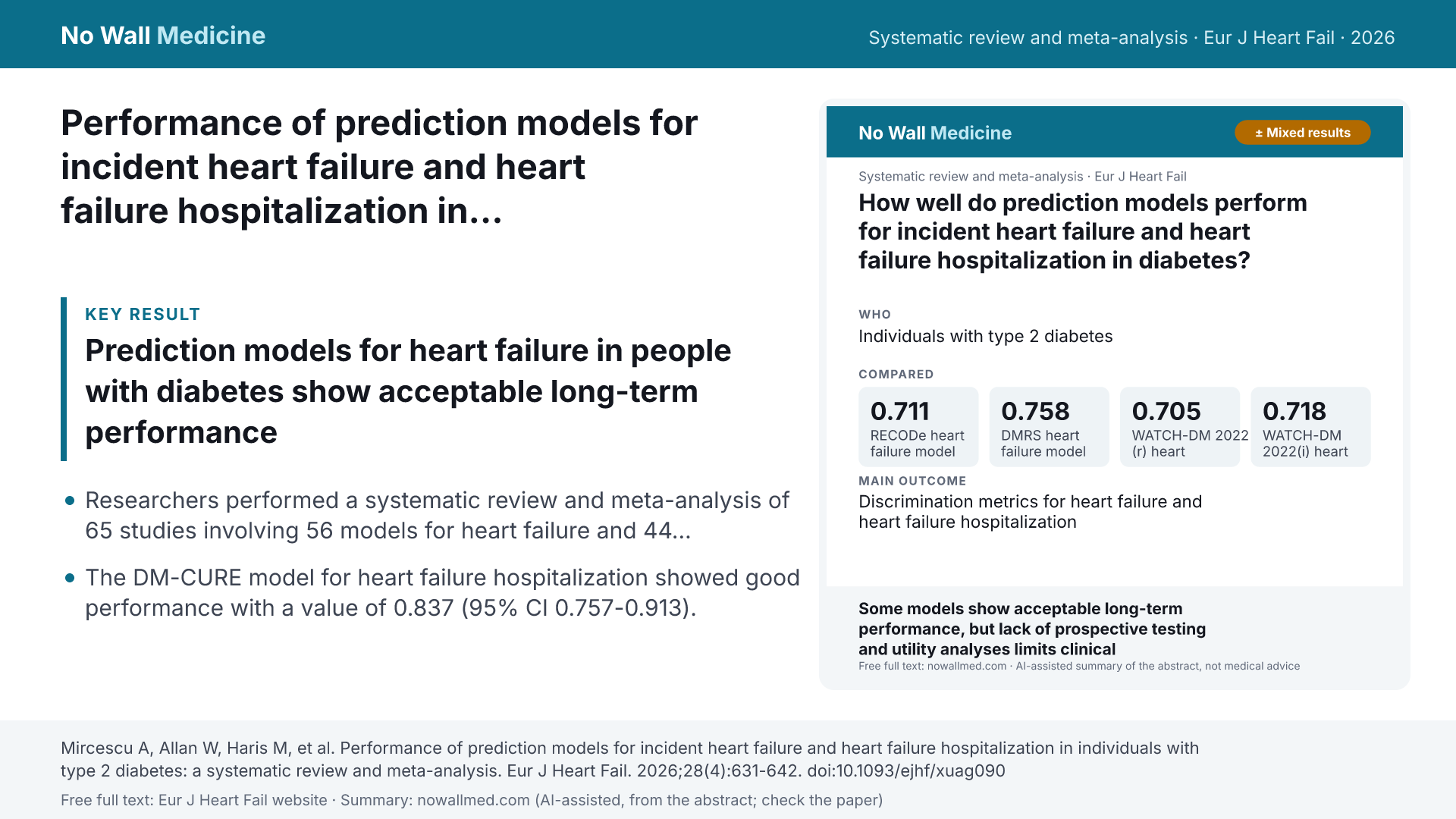
Prediction models for heart failure in people with diabetes show acceptable long-term performance
Performance of prediction models for incident heart failure and heart failure hospitalization in individuals with type 2 diabetes: a systematic review and meta-analysis
Systematic review and meta-analysisMixed results
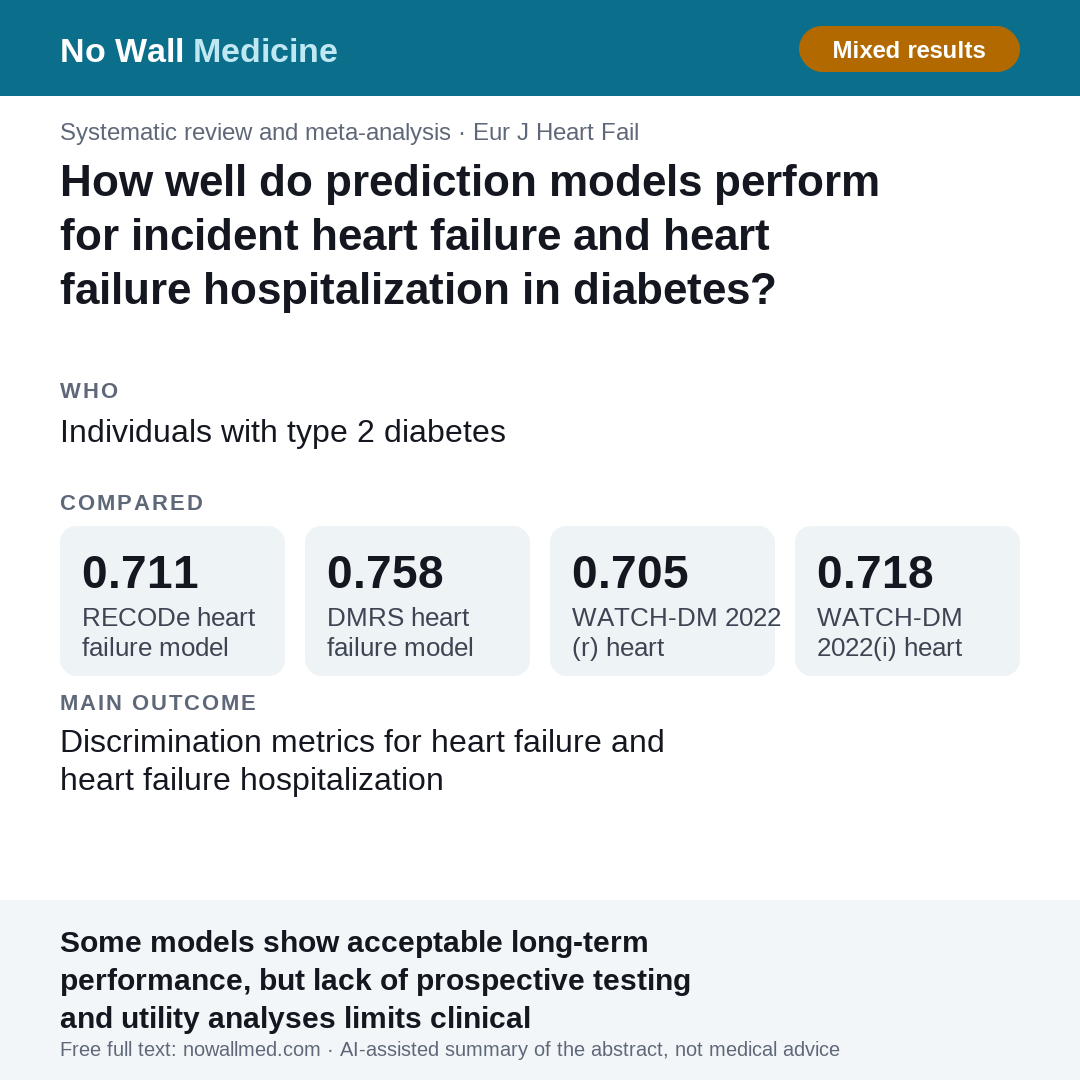
How well do prediction models perform for incident heart failure and heart failure hospitalization in diabetes?
Who
Individuals with type 2 diabetes
Compared
0.711RECODe heart failure model (95% CI 0.651-0.767)
0.758DMRS heart failure model (95% CI 0.684-0.827)
0.705WATCH-DM 2022 (r) heart failure hospitalization model (95% CI, 0.624-0.795)
0.718WATCH-DM 2022(i) heart failure hospitalization model (95% CI 0.587-0.850)
Main outcome
Discrimination metrics for heart failure and heart failure hospitalization
Bottom line: Some models show acceptable long-term performance, but lack of prospective testing and utility analyses limits clinical translation.
Limitation: None of the models were prospectively tested and only three underwent clinical utility analysis.
Eur J Heart Fail · 2026-05-10Download image
Clinical question: How well do prediction models perform for incident heart failure and heart failure hospitalization in diabetes?
Why it matters: Doctors need reliable tools to predict which individuals with type 2 diabetes will develop heart failure or require hospitalization for the condition.
Key points
- Researchers performed a systematic review and meta-analysis of 65 studies involving 56 models for heart failure and 44 models for heart failure hospitalization.
- The DM-CURE model for heart failure hospitalization showed good performance with a value of 0.837 (95% CI 0.757-0.913).
- Other models like RECODe and DMRS showed acceptable performance, but none reported a prediction horizon of less than ten years.
Limitation the authors note: None of the included models were prospectively tested and only three underwent clinical utility analysis.
Headline and key points written with AI from the paper’s abstract, with every number checked against it. Read the paper before relying on them.
Was this summary helpful?
Subject terms
Cite this article
Mircescu A, Allan W, Haris M, et al. Performance of prediction models for incident heart failure and heart failure hospitalization in individuals with type 2 diabetes: a systematic review and meta-analysis. Eur J Heart Fail. 2026. doi:10.1093/ejhf/xuag090
Spotted a mistake? Suggest a correction