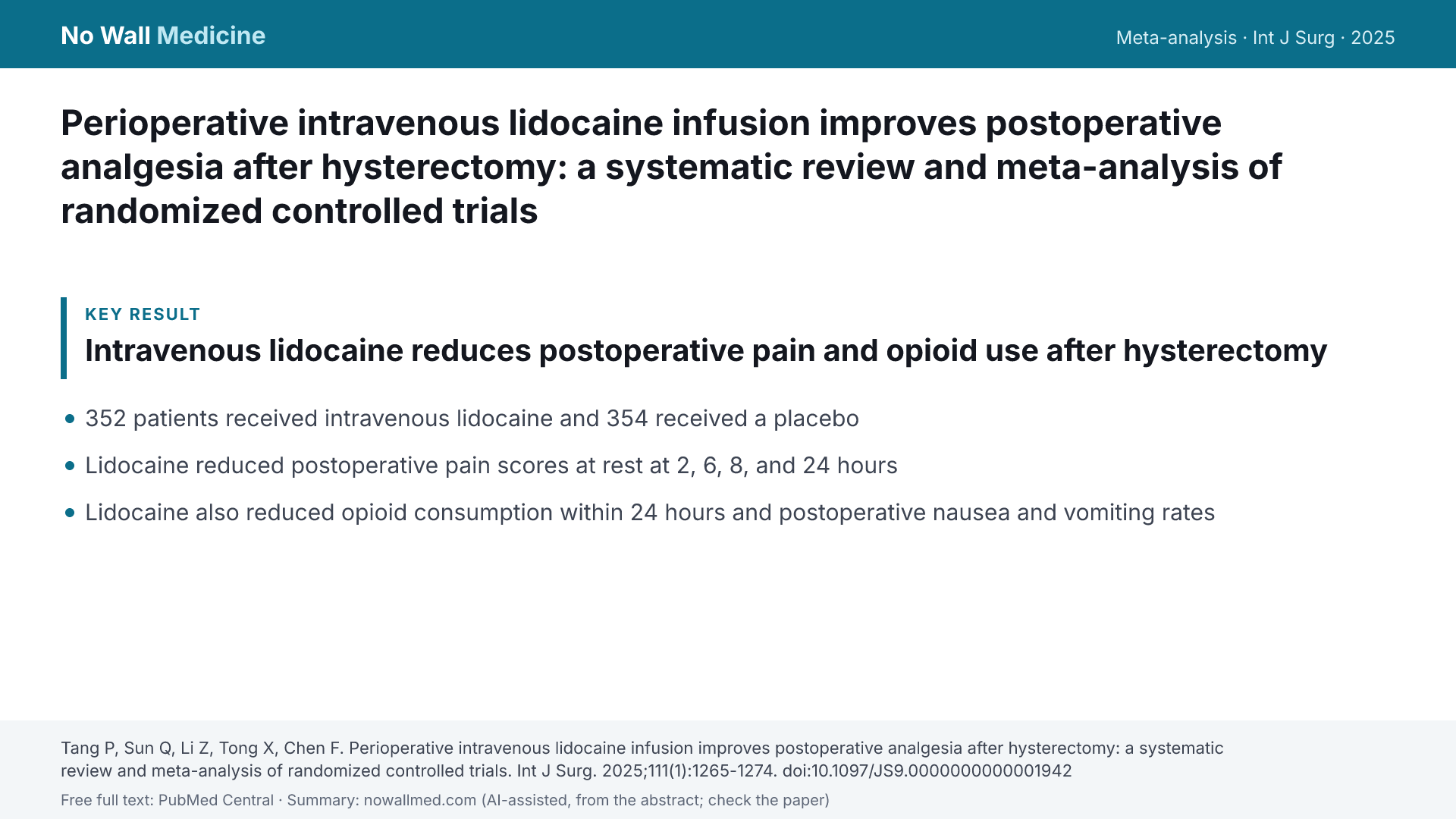
Intravenous lidocaine reduces postoperative pain and opioid use after hysterectomy
Perioperative intravenous lidocaine infusion improves postoperative analgesia after hysterectomy: a systematic review and meta-analysis of randomized controlled trials
Why it matters: Effectiveness of intravenous lidocaine in reducing acute pain after hysterectomy remains uncertain
Key points
- 352 patients received intravenous lidocaine and 354 received a placebo.
- Lidocaine reduced postoperative pain scores at rest at 2, 6, 8, and 24 hours.
- Lidocaine also reduced opioid consumption within 24 hours and postoperative nausea and vomiting rates.
Headline and key points written with AI from the paper’s abstract, with every number checked against it. Read the paper before relying on them.
Was this summary helpful?
Subject terms
Cite this article
Tang P, Sun Q, Li Z, Tong X, Chen F. Perioperative intravenous lidocaine infusion improves postoperative analgesia after hysterectomy: a systematic review and meta-analysis of randomized controlled trials. Int J Surg. 2025. doi:10.1097/JS9.0000000000001942
Spotted a mistake? Suggest a correction