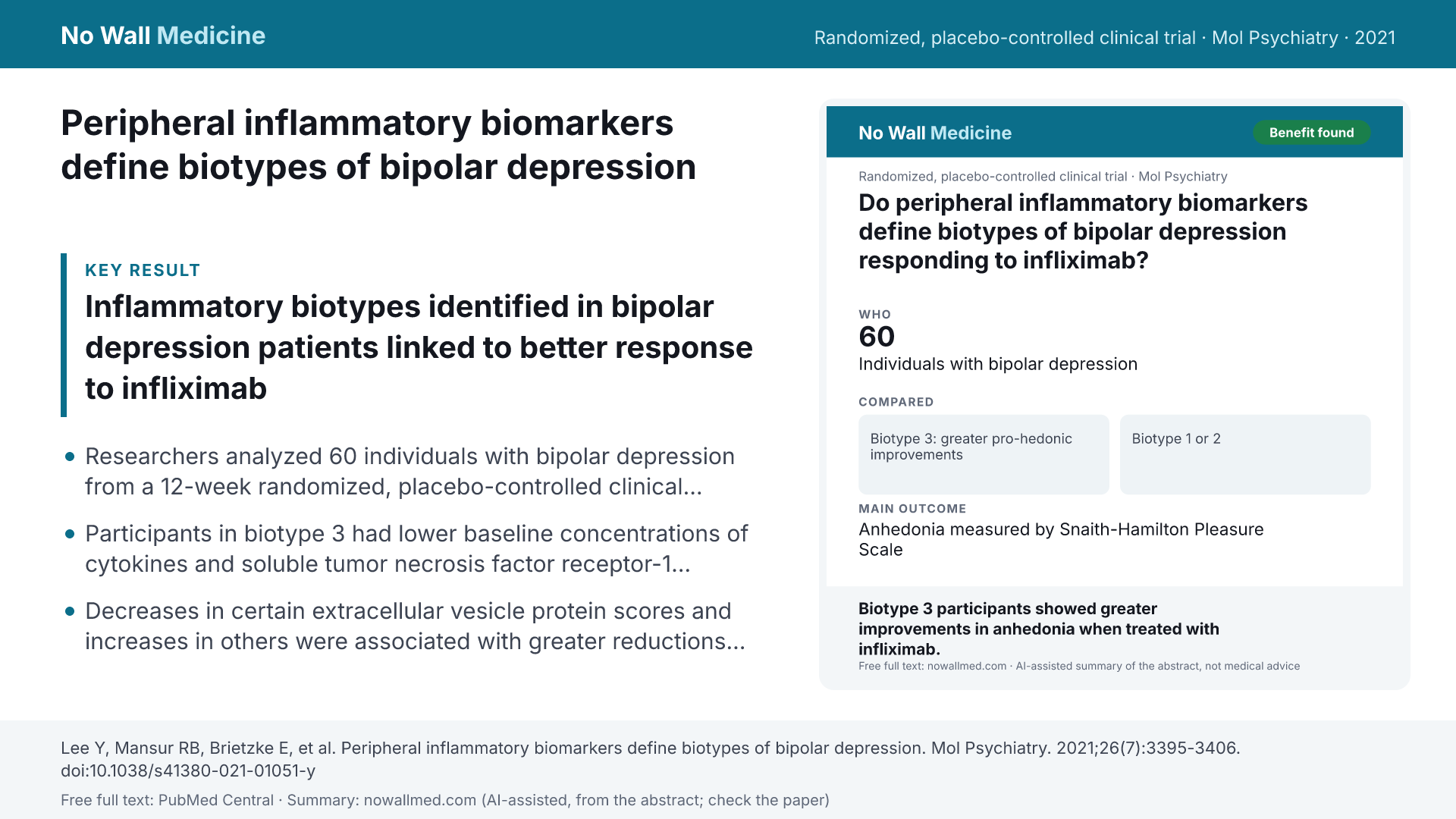
Inflammatory biotypes identified in bipolar depression patients linked to better response to infliximab
Peripheral inflammatory biomarkers define biotypes of bipolar depression
Randomized, placebo-controlled clinical trialBenefit found
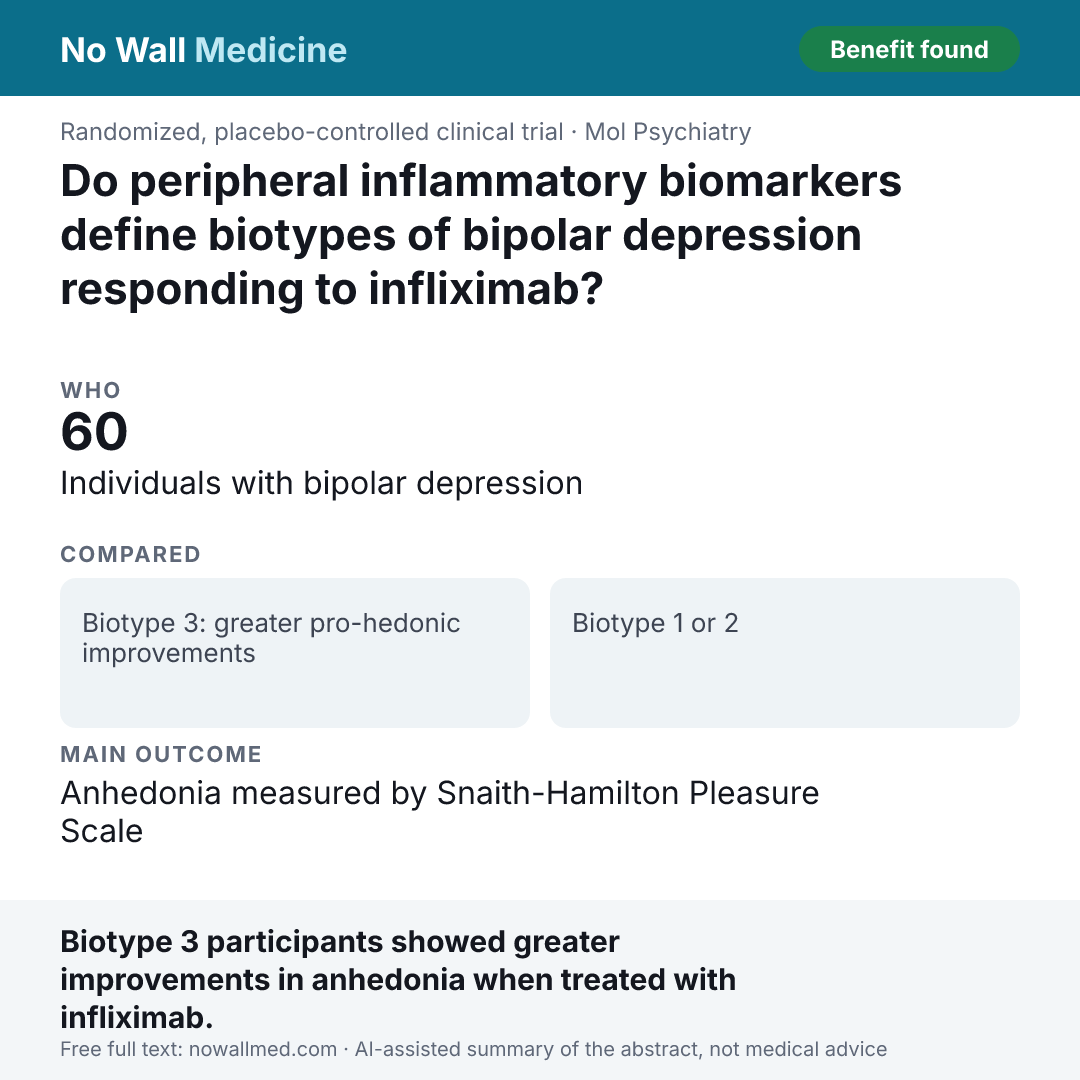
Do peripheral inflammatory biomarkers define biotypes of bipolar depression responding to infliximab?
Who
60
Individuals with bipolar depression
Compared
Biotype 3: greater pro-hedonic improvements
Biotype 1 or 2
Main outcome
Anhedonia measured by Snaith-Hamilton Pleasure Scale
Bottom line: Biotype 3 participants showed greater improvements in anhedonia when treated with infliximab.
Mol Psychiatry · 2021-03-03 · Save PNG
Clinical question: Do peripheral inflammatory biomarkers define biotypes of bipolar depression responding to infliximab?
Key points
- Researchers analyzed 60 individuals with bipolar depression from a 12-week randomized, placebo-controlled clinical trial evaluating the drug infliximab.
- Participants in biotype 3 had lower baseline concentrations of cytokines and soluble tumor necrosis factor receptor-1 and reported greater improvements in anhedonia, or the inability to feel pleasure.
- Decreases in certain extracellular vesicle protein scores and increases in others were associated with greater reductions in anhedonic symptoms (r2 = 0.22, RMSE = 0.08).
Headline and key points written with AI from the paper’s abstract, with every number checked against it. Read the paper before relying on them.
Was this summary helpful?
Subject terms
Headline, design, result, key points, caveat and citation as plain text.
Cite this article
Lee Y, Mansur RB, Brietzke E, et al. Peripheral inflammatory biomarkers define biotypes of bipolar depression. Mol Psychiatry. 2021. doi:10.1038/s41380-021-01051-y
Spotted a mistake? Suggest a correction