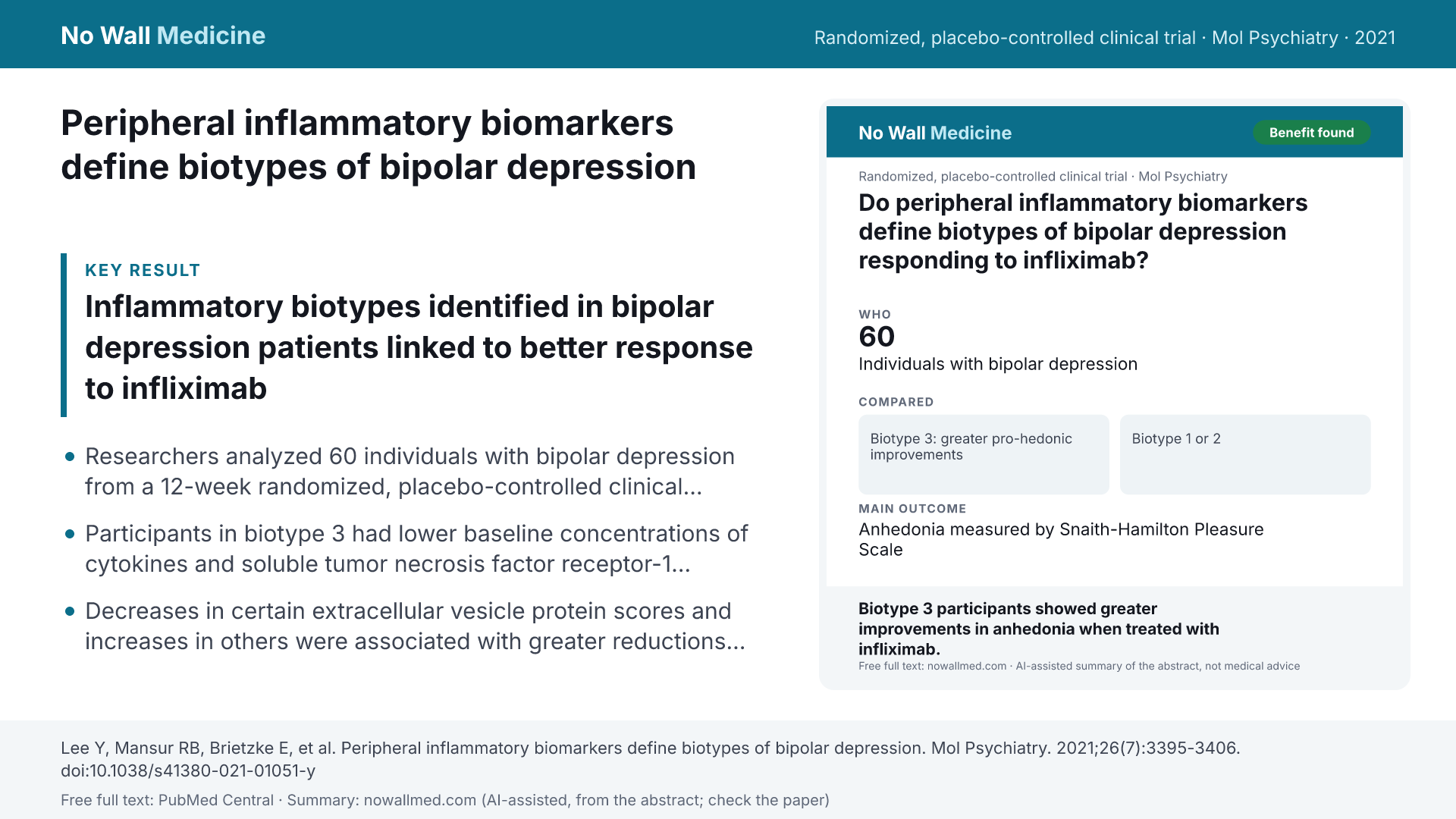
Peripheral inflammatory biomarkers define biotypes of bipolar depression
Key result: Inflammatory biotypes identified in bipolar depression patients linked to better response to infliximab
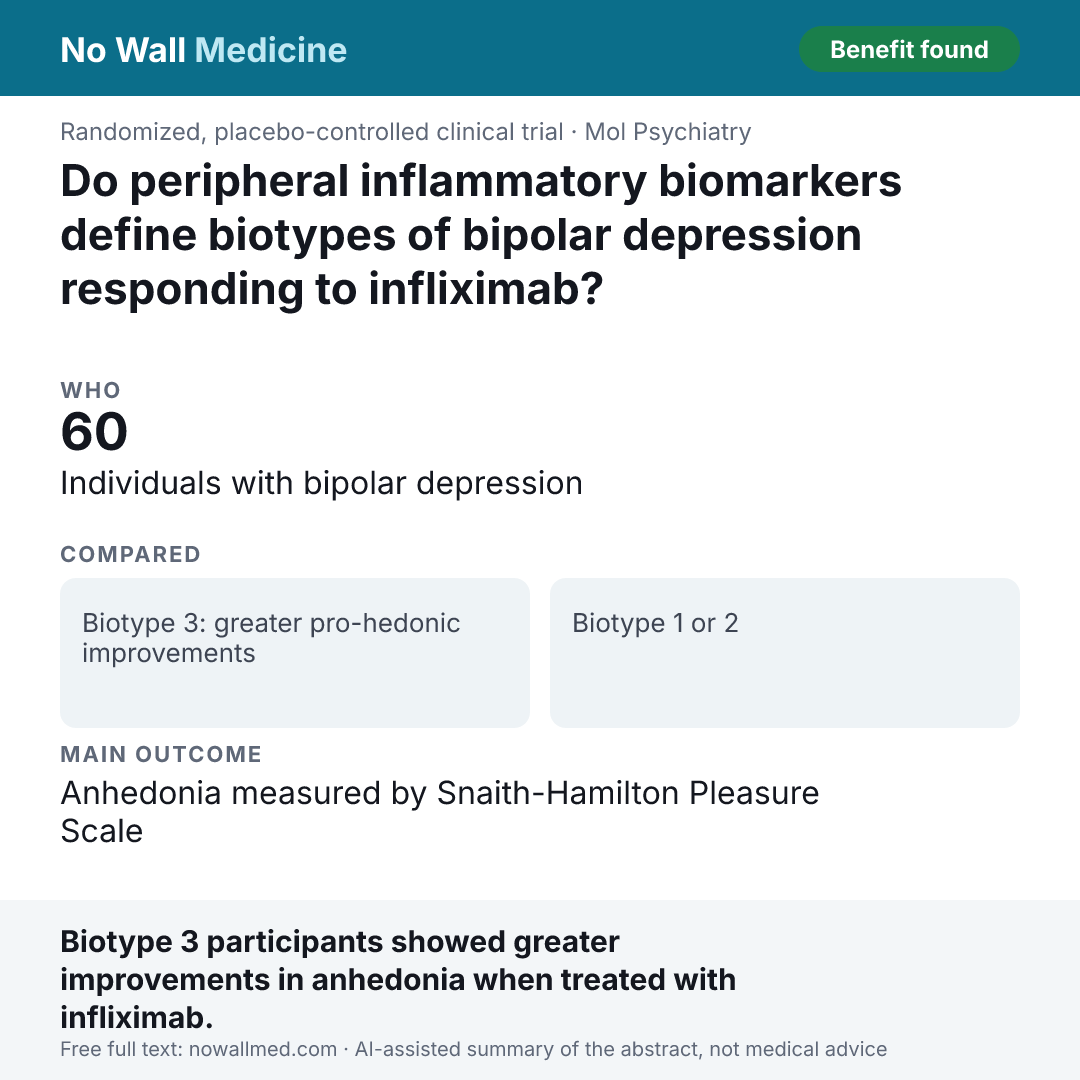
Randomized, placebo-controlled clinical trialBenefit found
Do peripheral inflammatory biomarkers define biotypes of bipolar depression responding to infliximab?
Who
60
Individuals with bipolar depression
Compared
Biotype 3: greater pro-hedonic improvements
Biotype 1 or 2
Main outcome
Anhedonia measured by Snaith-Hamilton Pleasure Scale
Bottom line: Biotype 3 participants showed greater improvements in anhedonia when treated with infliximab.
Mol Psychiatry · 2021-03-03 · Save PNG
Key points
- Researchers analyzed 60 individuals with bipolar depression from a 12-week randomized, placebo-controlled clinical trial evaluating the drug infliximab.
- Participants in biotype 3 had lower baseline concentrations of cytokines and soluble tumor necrosis factor receptor-1 and reported greater improvements in anhedonia, or the inability to feel pleasure.
- Decreases in certain extracellular vesicle protein scores and increases in others were associated with greater reductions in anhedonic symptoms (r2 = 0.22, RMSE = 0.08).
Discussion prompts
- Would these patients look like yours? Who was left out?
- Is the main outcome one that matters to patients?
- Is the difference large enough to change what you do?
Cite: Lee Y, Mansur RB, Brietzke E, et al. Peripheral inflammatory biomarkers define biotypes of bipolar depression. Mol Psychiatry. 2021. doi:10.1038/s41380-021-01051-y
Free full text: PubMed Central · Summary and visual abstract: nowallmed.com/a/peripheral-inflammatory-biomarkers-define-biotypes-of-bipolar-1ygnoh6/ (AI-assisted from the abstract; check the paper before relying on it).