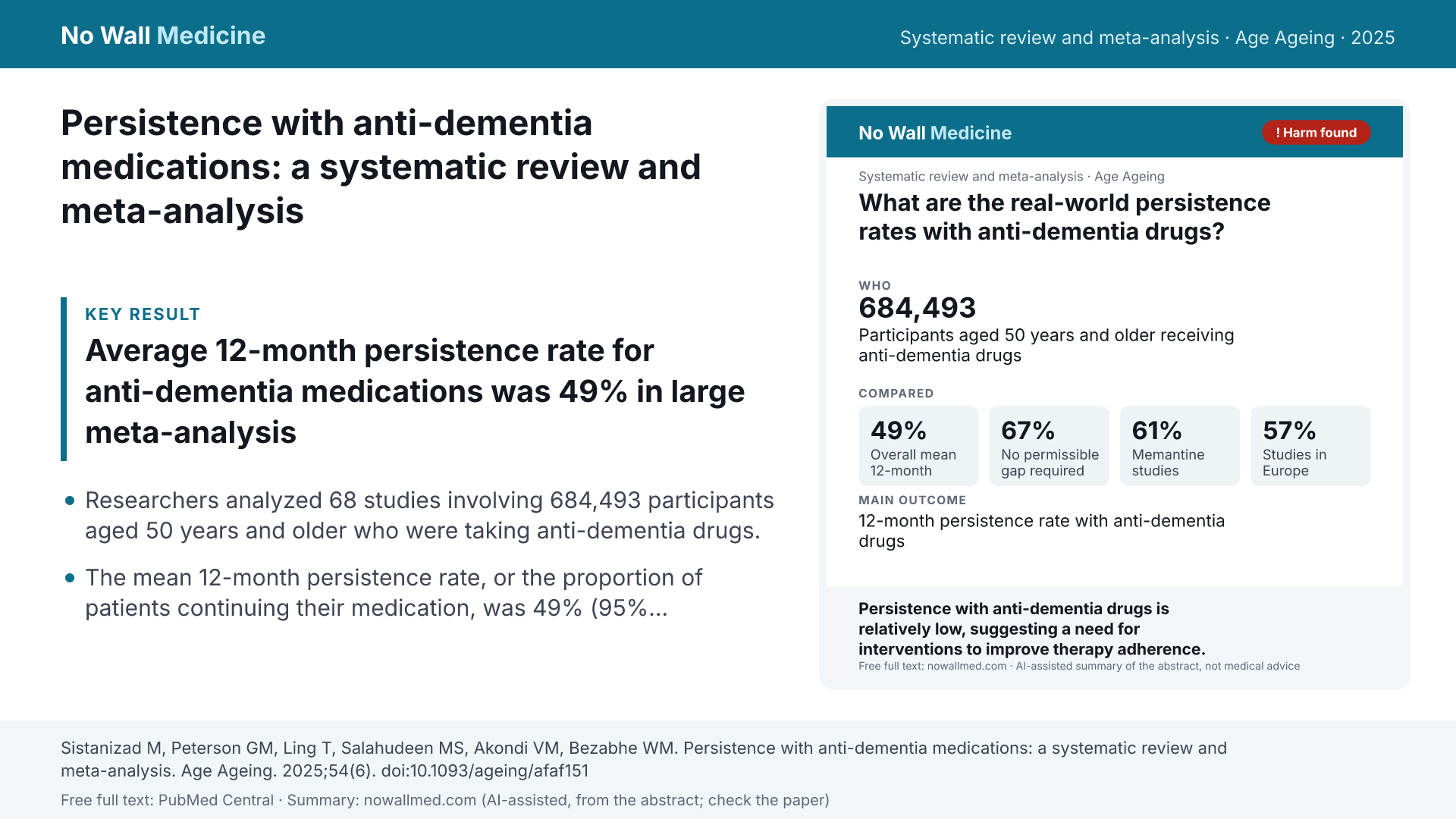
Average 12-month persistence rate for anti-dementia medications was 49% in large meta-analysis
Persistence with anti-dementia medications: a systematic review and meta-analysis
Systematic review and meta-analysisHarm found
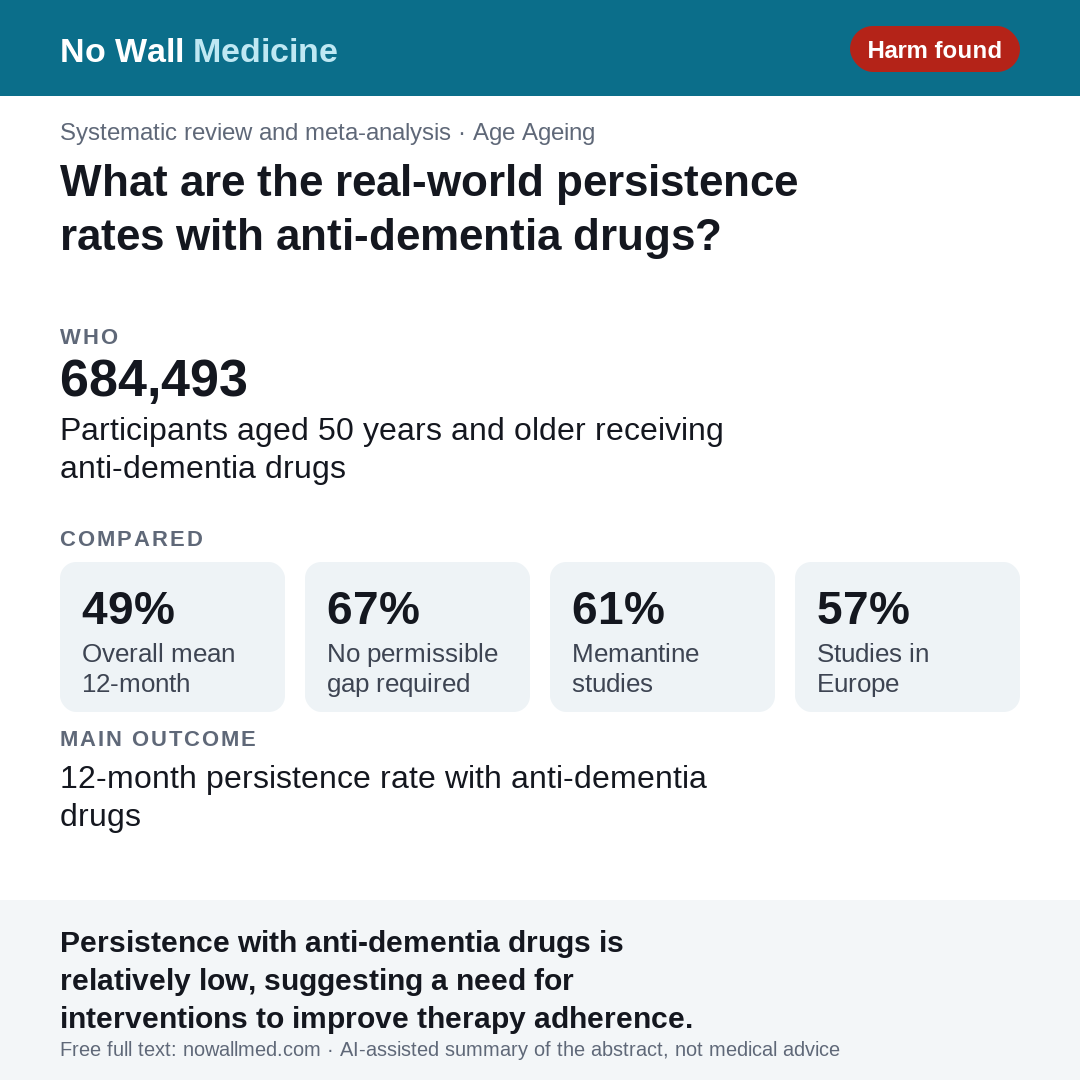
What are the real-world persistence rates with anti-dementia drugs?
Who
684,493
Participants aged 50 years and older receiving anti-dementia drugs
Compared
49%Overall mean 12-month persistence (95% CI: 42%-56%)
67%No permissible gap required (95% CI: 38%-90%)
61%Memantine studies (95% CI: 38%-82%)
57%Studies in Europe (95% CI: 43%-71%)
Main outcome
12-month persistence rate with anti-dementia drugs
Bottom line: Persistence with anti-dementia drugs is relatively low, suggesting a need for interventions to improve therapy adherence.
Limitation: Persistence rates varied according to the evaluation criteria used.
Age Ageing · 2025-06-03Download image
Clinical question: What are the real-world persistence rates with anti-dementia drugs?
Why it matters: Suboptimal persistence with anti-dementia drugs is associated with accelerated disease progression, cognitive decline, and increased healthcare use.
Key points
- Researchers analyzed 68 studies involving 684,493 participants aged 50 years and older who were taking anti-dementia drugs.
- The mean 12-month persistence rate, or the proportion of patients continuing their medication, was 49% (95% CI: 42%-56%).
- Higher persistence rates were observed in studies examining memantine at 61% (95% CI: 38%-82%) and studies conducted in Europe at 57% (95% CI: 43%-71%).
Headline and key points written with AI from the paper’s abstract, with every number checked against it. Read the paper before relying on them.
Was this summary helpful?
Subject terms
Cite this article
Sistanizad M, Peterson GM, Ling T, Salahudeen MS, Akondi VM, Bezabhe WM. Persistence with anti-dementia medications: a systematic review and meta-analysis. Age Ageing. 2025. doi:10.1093/ageing/afaf151
Spotted a mistake? Suggest a correction