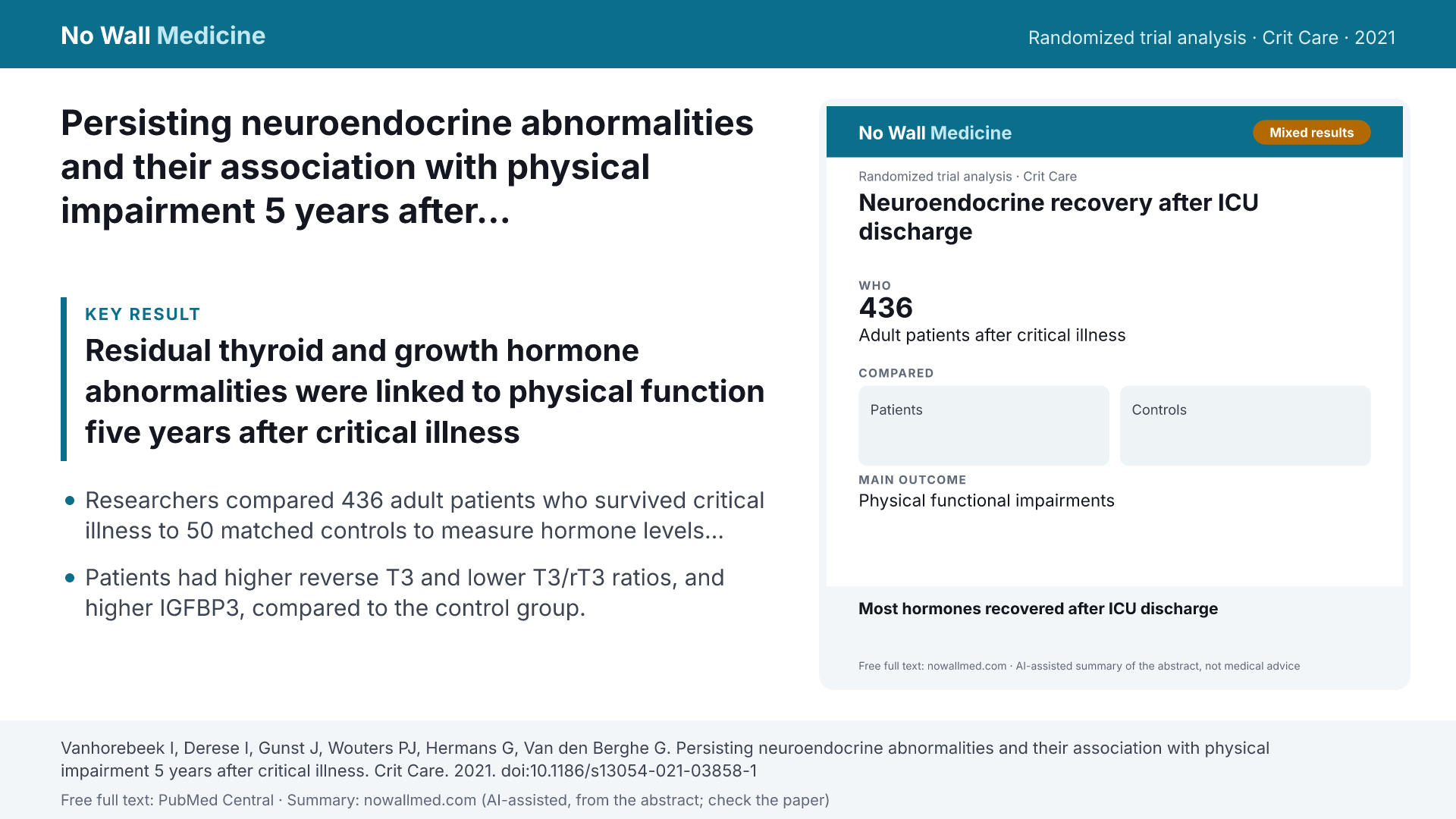
Residual thyroid and growth hormone abnormalities were linked to physical function five years after critical illness
Persisting neuroendocrine abnormalities and their association with physical impairment 5 years after critical illness
Randomized trial analysisMixed results
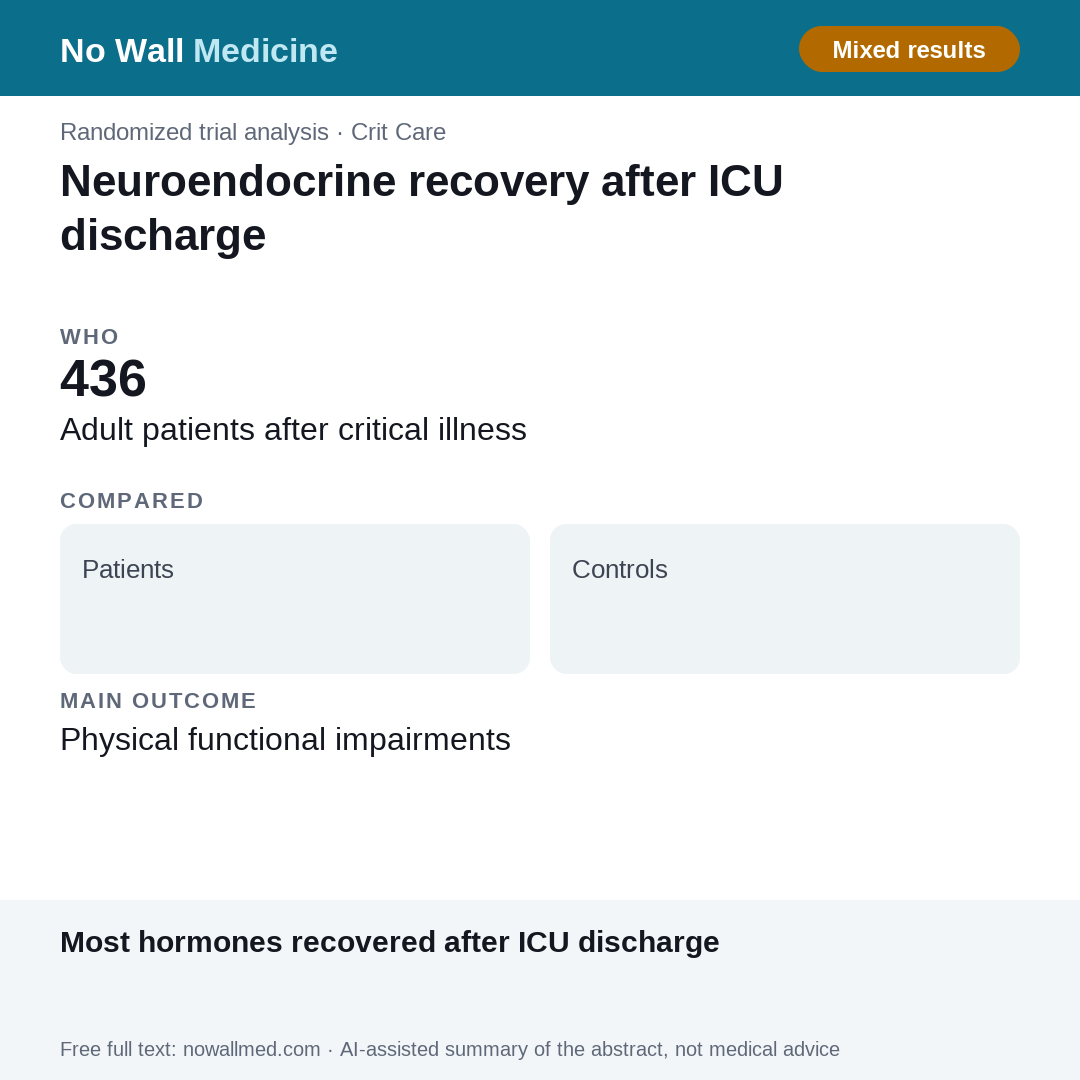
Neuroendocrine recovery after ICU discharge
Who
436
Adult patients after critical illness
Compared
Patients
Controls
Main outcome
Physical functional impairments
Bottom line: Most hormones recovered after ICU discharge
Crit Care · 2021-12-16Download image
Why it matters: It was unknown if hormone systems recover after intensive care or if remaining hormonal abnormalities are linked to long-term physical impairments.
Key points
- Researchers compared 436 adult patients who survived critical illness to 50 matched controls to measure hormone levels and physical function five years later.
- Patients had higher reverse T3 and lower T3/rT3 ratios, and higher IGFBP3, compared to the control group.
- A lower T3/rT3 ratio was associated with lower handgrip strength and shorter 6-min walk distance, while higher IGFBP3 was associated with higher handgrip strength.
Headline and key points written with AI from the paper’s abstract, with every number checked against it. Read the paper before relying on them.
Was this summary helpful?
Subject terms
Cite this article
Vanhorebeek I, Derese I, Gunst J, Wouters PJ, Hermans G, Van den Berghe G. Persisting neuroendocrine abnormalities and their association with physical impairment 5 years after critical illness. Crit Care. 2021. doi:10.1186/s13054-021-03858-1
Spotted a mistake? Suggest a correction
Top studies every Monday
The week’s key trials and guidelines in your specialties, plus any topics you follow. By email, free.
Get the weekly digest