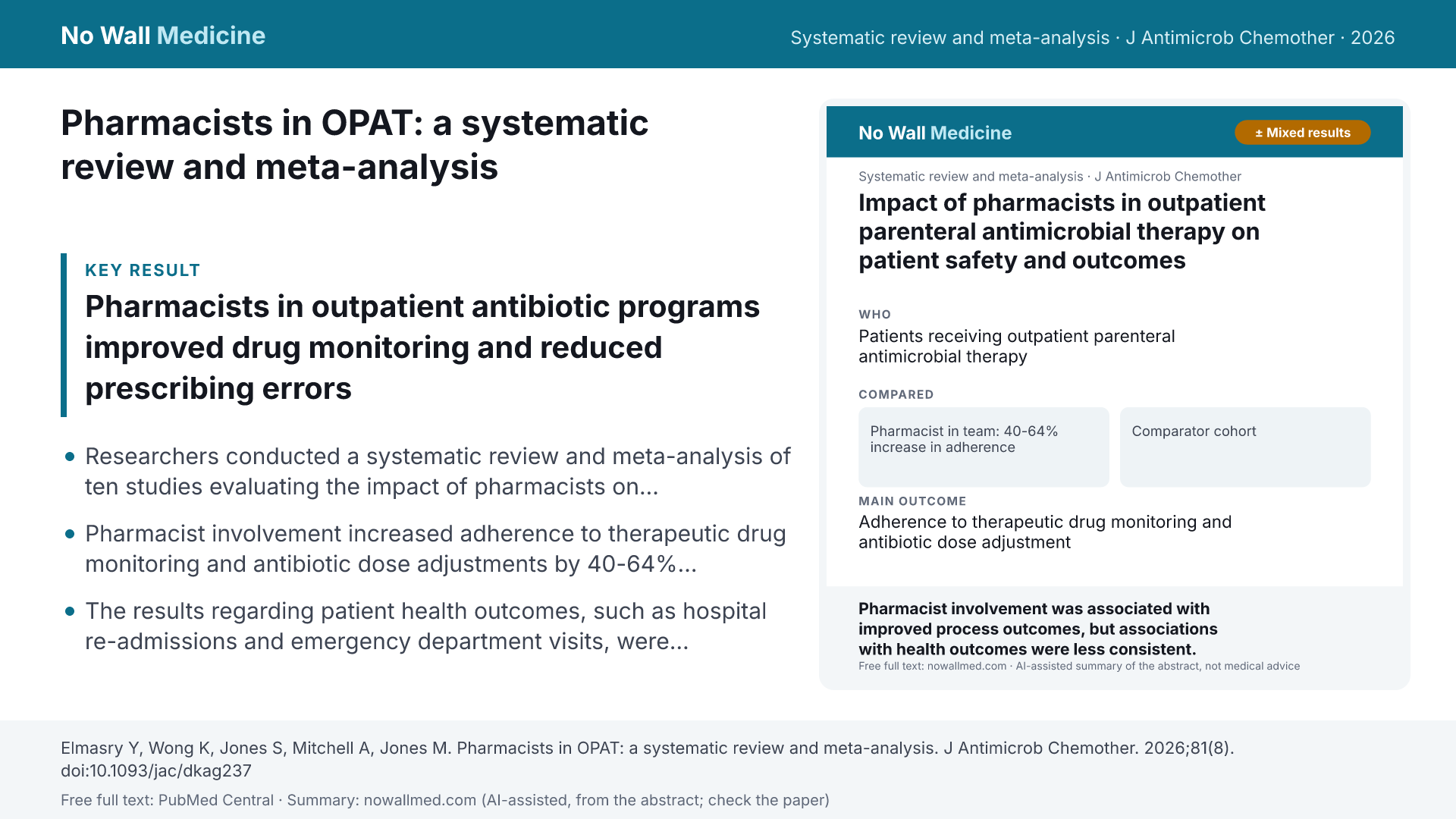
Pharmacists in outpatient antibiotic programs improved drug monitoring and reduced prescribing errors
Pharmacists in OPAT: a systematic review and meta-analysis
Systematic review and meta-analysisMixed results
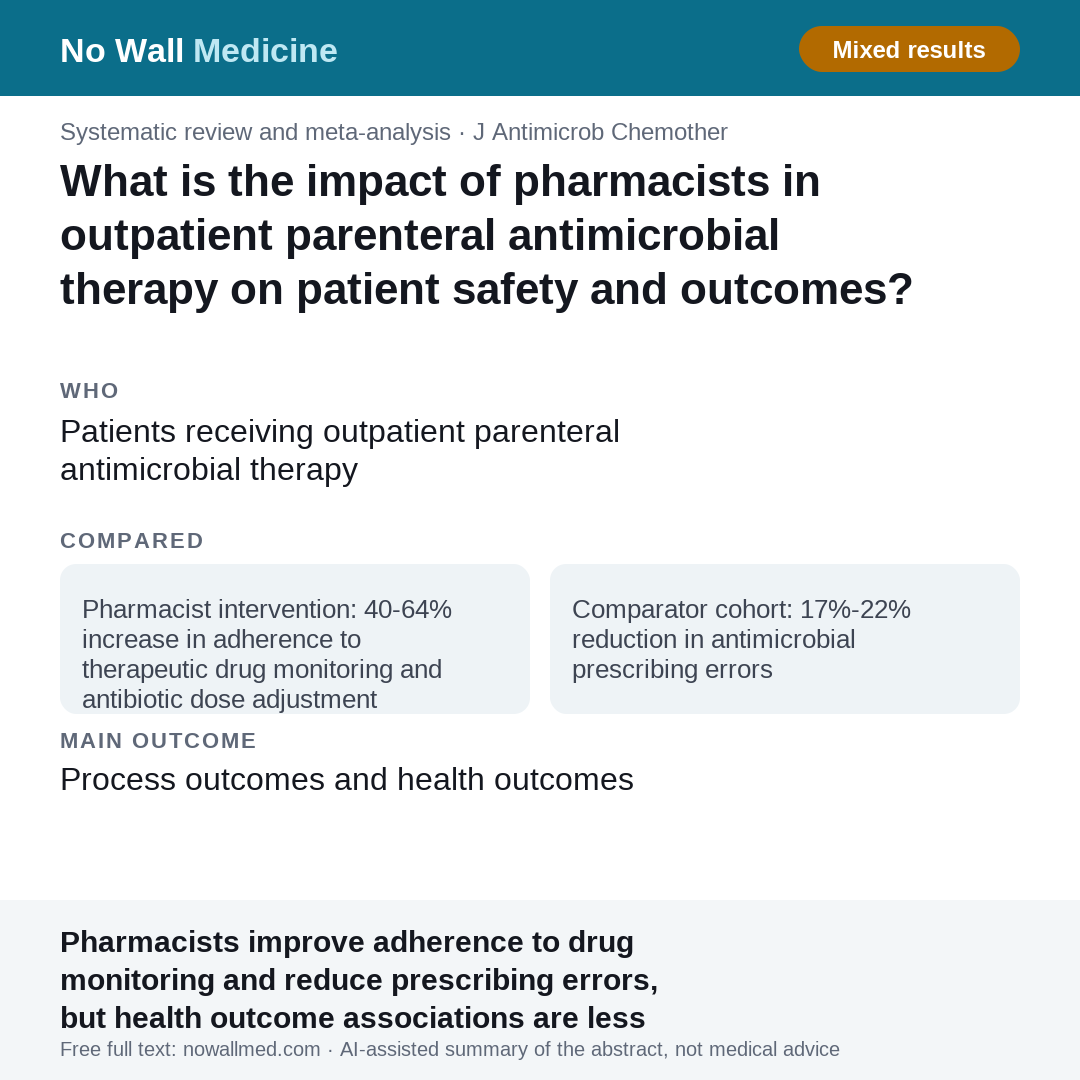
Impact of pharmacists in outpatient parenteral antimicrobial therapy on patient safety and outcomes
Who
Patients receiving outpatient parenteral antimicrobial therapy
Compared
Pharmacist in team: 40-64% increase in adherence
Comparator cohort
Main outcome
Adherence to therapeutic drug monitoring and antibiotic dose adjustment
Result: increase adherence to therapeutic drug monitoring and antibiotic dose adjustment by 40-64%
Bottom line: Pharmacist involvement was associated with improved process outcomes, but associations with health outcomes were less consistent.
Limitation: All ten included studies demonstrated a high risk of bias
J Antimicrob Chemother · 2026-07-15Download image
Why it matters: Many outpatient antibiotic services do not include a pharmacist in their core team, and there is little evidence evaluating their effectiveness.
Key points
- Researchers conducted a systematic review and meta-analysis of ten studies evaluating the impact of pharmacists on outpatient parenteral antimicrobial therapy, which is intravenous antibiotic treatment provided outside the hospital.
- Pharmacist involvement increased adherence to therapeutic drug monitoring and antibiotic dose adjustments by 40-64% and reduced antimicrobial prescribing errors by 17%-22%.
- The results regarding patient health outcomes, such as hospital re-admissions and emergency department visits, were less consistent across the included studies.
Limitation the authors note: All ten studies included in the review demonstrated a high risk of bias.
Headline and key points written with AI from the paper’s abstract, with every number checked against it. Read the paper before relying on them.
Was this summary helpful?
Subject terms
Cite this article
Elmasry Y, Wong K, Jones S, Mitchell A, Jones M. Pharmacists in OPAT: a systematic review and meta-analysis. J Antimicrob Chemother. 2026. doi:10.1093/jac/dkag237
Spotted a mistake? Suggest a correction