Evidence for pharmacokinetic-guided prophylaxis in hemophilia remains inconclusive based on randomized clinical trials
Pharmacokinetic-guided versus standard prophylaxis in hemophilia: a systematic review and meta-analysis
Meta-analysis of 2 randomized clinical trialsUnclear result
Is pharmacokinetic-guided prophylaxis more effective than non-pharmacokinetic-guided prophylaxis in hemophilia?
Who
Patients with hemophilia
Compared
Pharmacokinetic-guided prophylaxis
Standard prophylaxis
Main outcome
Bleeding outcomes and factor consumption
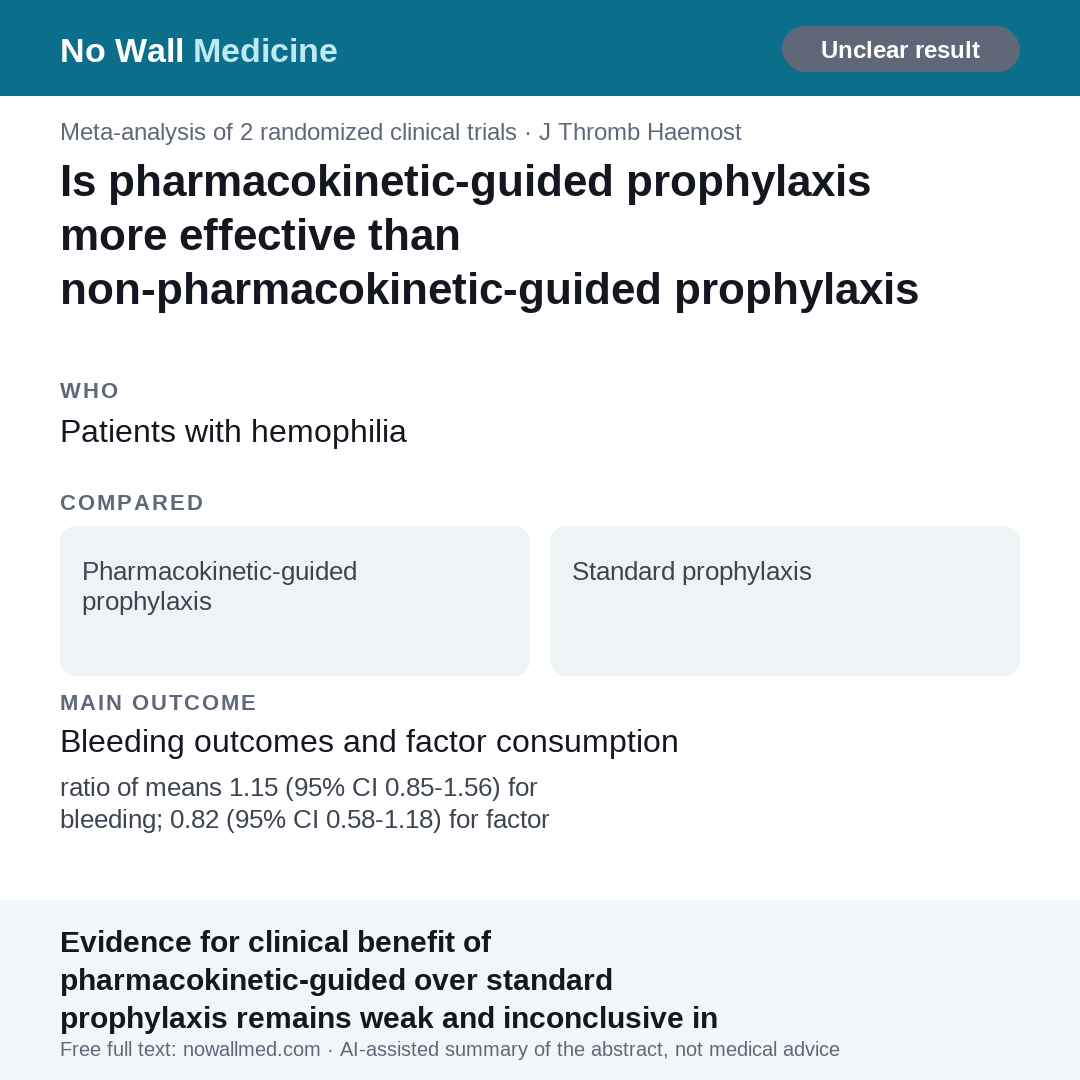
Result: ratio of means 1.15 (95% CI 0.85-1.56) for bleeding; 0.82 (95% CI 0.58-1.18) for factor consumption
Bottom line: Evidence for clinical benefit of pharmacokinetic-guided over standard prophylaxis remains weak and inconclusive in randomized trials.
Limitation: Nonrandomized studies had high risk of bias, small sample sizes, and heterogeneity in outcome reporting.
J Thromb Haemost · 2023-09-20Download image
Clinical question: Is pharmacokinetic-guided prophylaxis more effective than non-pharmacokinetic-guided prophylaxis in hemophilia?
Why it matters: It is unclear whether using pharmacokinetic modeling to guide medication dosing provides clinical benefits over standard fixed-dose prophylaxis in patients with hemophilia.
Key points
- Researchers reviewed 25 studies, including 2 randomized clinical trials and 17 nonrandomized studies, comparing pharmacokinetic-guided prophylaxis to standard prophylaxis.
- A meta-analysis of the 2 randomized clinical trials showed no significant difference in bleeding outcomes (ratio of means, 1.15; 95% CI, 0.85-1.56) or factor consumption (ratio of means, 0.82; 95% CI, 0.58-1.18).
- Nonrandomized studies suggesting benefits were limited by high risk of bias, small sample sizes, and a lack of concurrent control groups.
Limitation the authors note: The nonrandomized studies were limited by a lack of concurrent controls, heterogeneity in outcome reporting, small sample sizes, and high risk of bias.
Headline and key points written with AI from the paper’s abstract, with every number checked against it. Read the paper before relying on them.
Was this summary helpful?
Subject terms
Cite this article
Kraemmer D, Königsbrügge O, Moik F, Wildner B, Ay C, Pabinger I. Pharmacokinetic-guided versus standard prophylaxis in hemophilia: a systematic review and meta-analysis. J Thromb Haemost. 2023. doi:10.1016/j.jtha.2023.08.031
Spotted a mistake? Suggest a correction
Top studies every Monday
The week’s key trials and guidelines in your specialties, plus any topics you follow. By email, free.
Get the weekly digest