Low-molecular-weight heparin reduces symptomatic blood clot risk in medical inpatients compared to no treatment
Pharmacologic Thromboprophylaxis in Medical Inpatients: A Systematic Review and Network Meta-Analysis
Systematic review and network meta-analysisMixed results
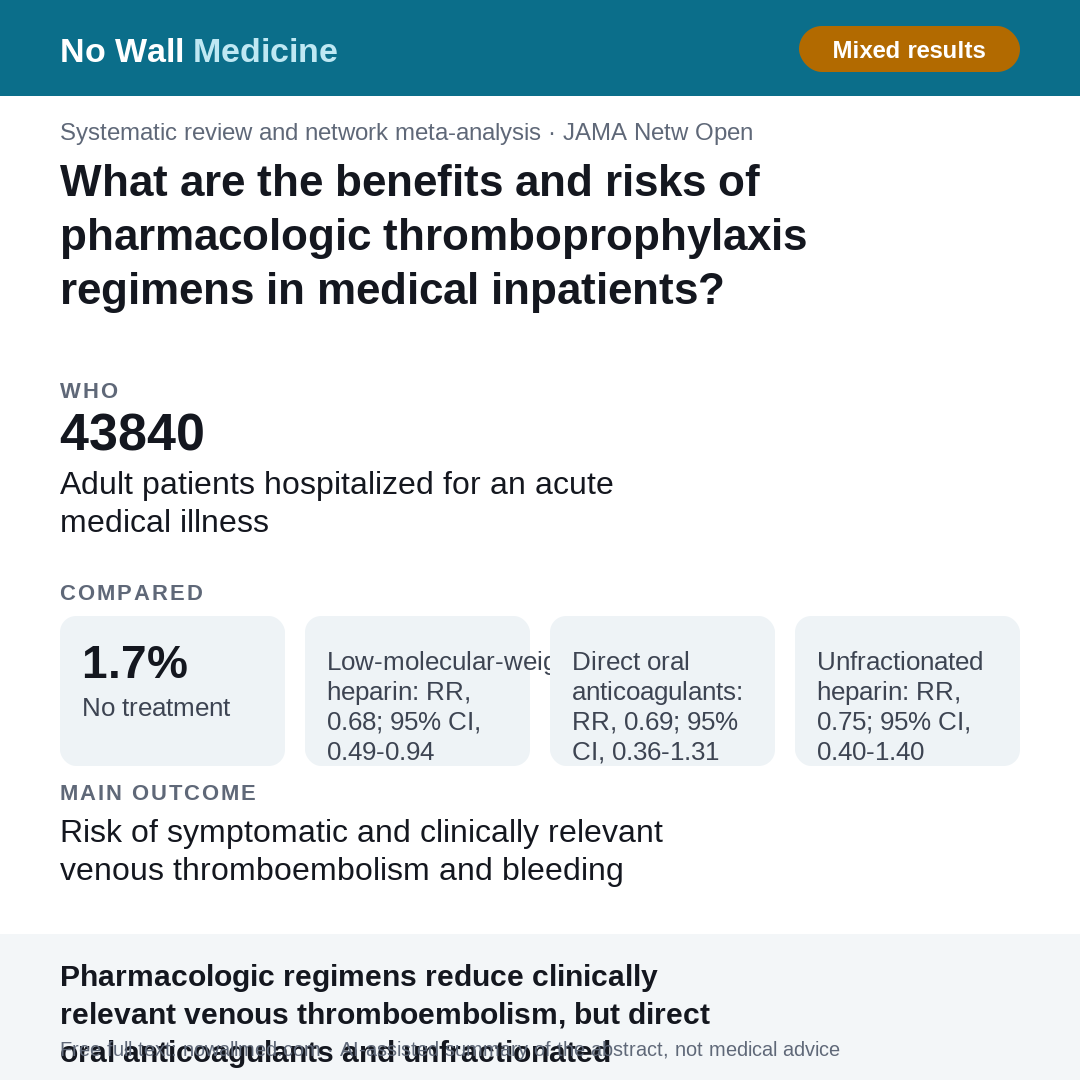
What are the benefits and risks of pharmacologic thromboprophylaxis regimens in medical inpatients?
Who
43840
Adult patients hospitalized for an acute medical illness
Compared
1.7%No treatment (95% CI, 0.6%-4.4%)
Low-molecular-weight heparin: RR, 0.68; 95% CI, 0.49-0.94
Direct oral anticoagulants: RR, 0.69; 95% CI, 0.36-1.31
Unfractionated heparin: RR, 0.75; 95% CI, 0.40-1.40
Main outcome
Risk of symptomatic and clinically relevant venous thromboembolism and bleeding
Result: RR, 0.68; 95% CI, 0.49-0.94
Bottom line: Pharmacologic regimens reduce clinically relevant venous thromboembolism, but direct oral anticoagulants and unfractionated heparin increase major bleeding risk.
Limitation: Proper selection of patients is critical given the overall low absolute risk of venous thromboembolism.
JAMA Netw Open · 2026-05-01Download image
Clinical question: What are the benefits and risks of pharmacologic thromboprophylaxis regimens in medical inpatients?
Why it matters: The contemporary benefits of different blood-thinning regimens for preventing venous thromboembolism in medical inpatients remain uncertain.
Key points
- Researchers analyzed 22 randomized clinical trials involving 43,840 adult patients hospitalized for acute medical illnesses.
- Low-molecular-weight heparin reduced the risk of symptomatic venous thromboembolism, while direct oral anticoagulants and unfractionated heparin results were not statistically significant.
- Direct oral anticoagulants and unfractionated heparin were associated with an increased risk of major bleeding compared to no treatment.
Headline and key points written with AI from the paper’s abstract, with every number checked against it. Read the paper before relying on them.
Topics
Cite this article
Marti C, Righini M, Le Gal G, Girardi L, Robert-Ebadi H, Combescure C. Pharmacologic Thromboprophylaxis in Medical Inpatients: A Systematic Review and Network Meta-Analysis. JAMA Netw Open. 2026. doi:10.1001/jamanetworkopen.2026.11449
Spotted a mistake? Suggest a correction