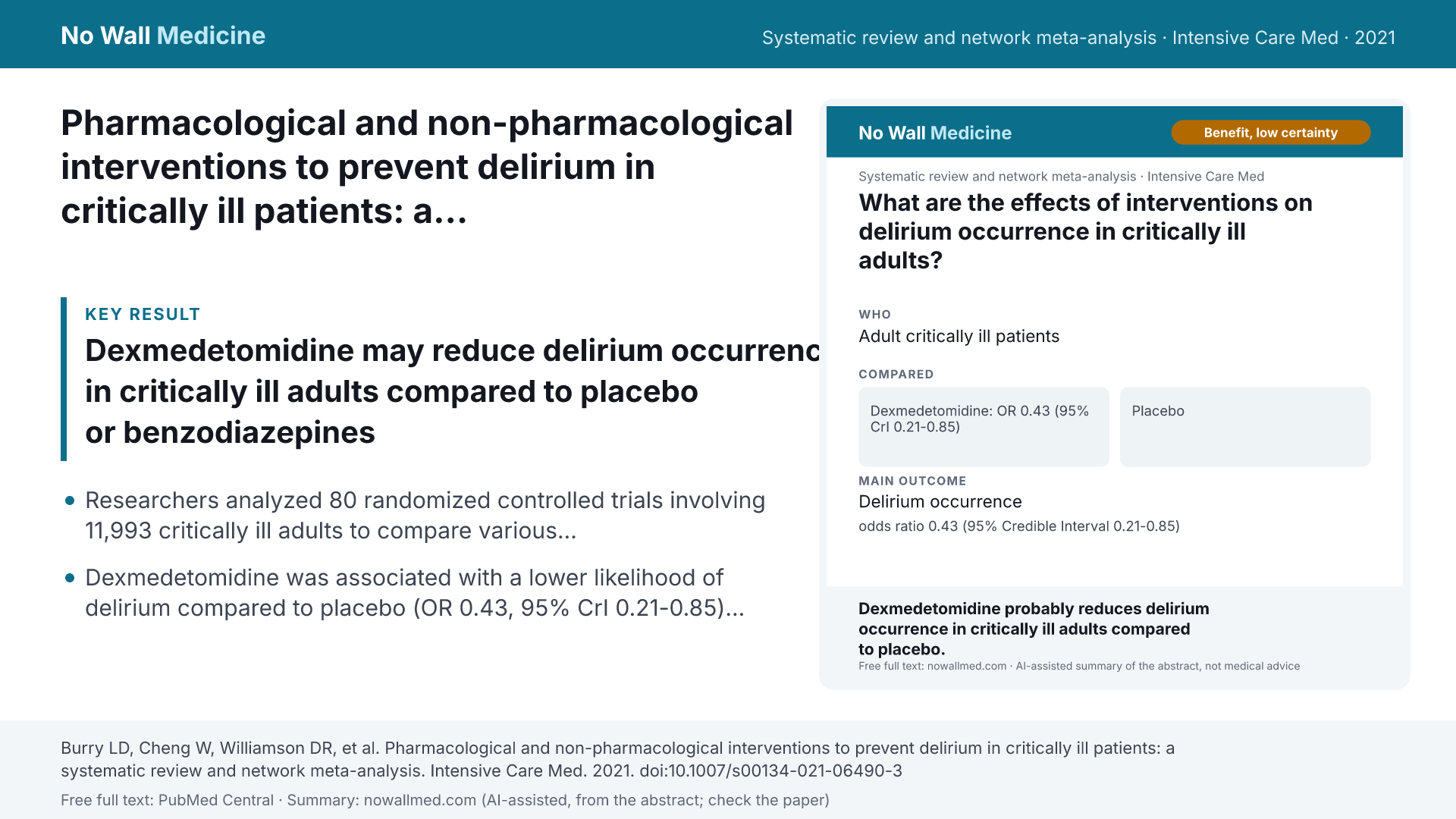
Pharmacological and non-pharmacological interventions to prevent delirium in critically ill patients: a systematic review and network meta-analysis
Key result: Dexmedetomidine may reduce delirium occurrence in critically ill adults compared to placebo or benzodiazepines
Key points
- Researchers analyzed 80 randomized controlled trials involving 11,993 critically ill adults to compare various delirium prevention methods.
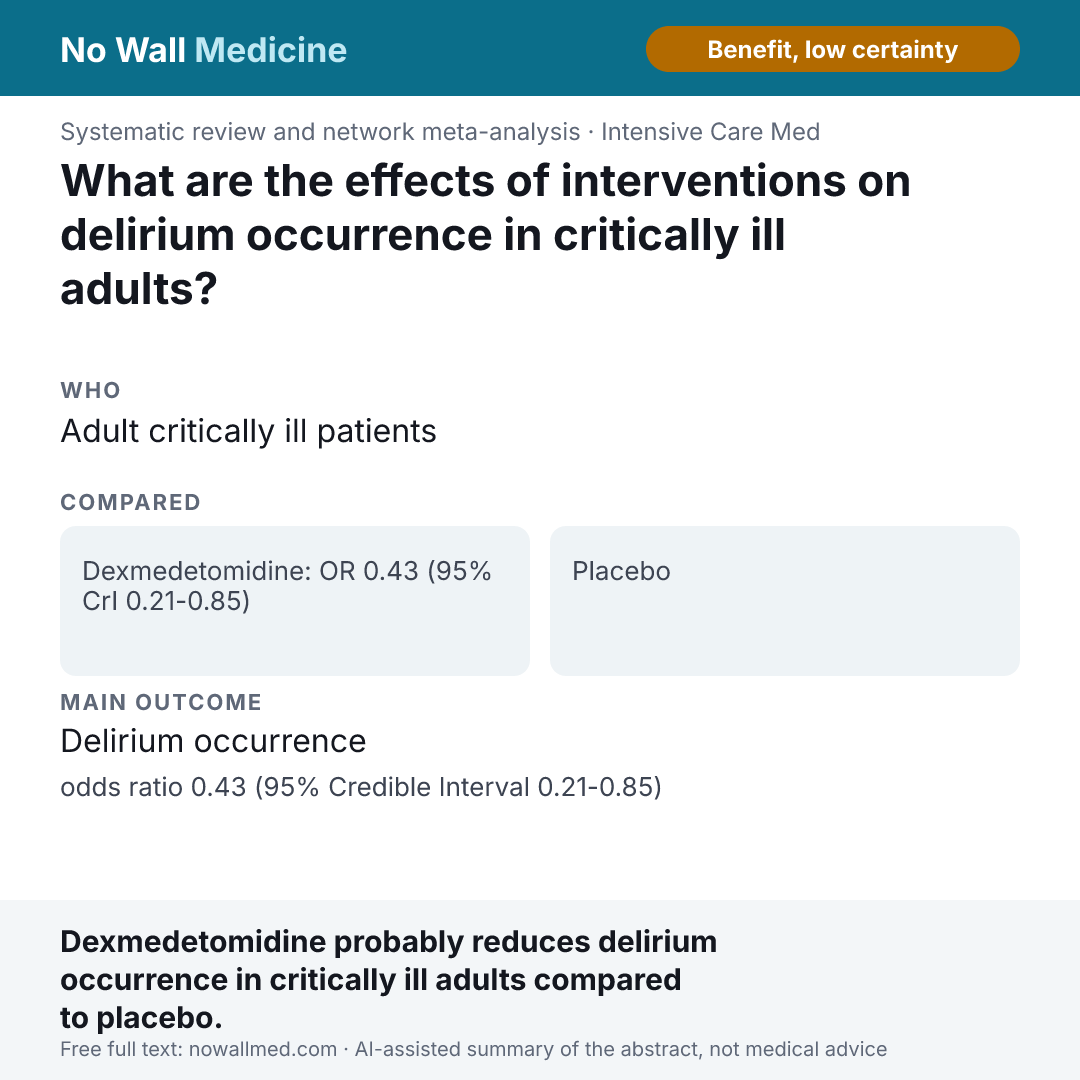
- Dexmedetomidine was associated with a lower likelihood of delirium compared to placebo (OR 0.43, 95% CrI 0.21-0.85) and benzodiazepines (OR 0.21, 95% CrI 0.08-0.51).
- Dexmedetomidine was associated with a shorter intensive care unit stay compared to placebo (RoM 0.78, CrI 0.64-0.95) and antipsychotics (RoM 0.76, CrI 0.61-0.98).
Limitation the authors note: Single and multi-component non-pharmacological interventions did not connect to any evidence networks to allow for ranking and comparisons as planned.
Discussion prompts
- Would these patients look like yours? Who was left out?
- Is the main outcome one that matters to patients?
- Is the difference large enough to change what you do?
Cite: Burry LD, Cheng W, Williamson DR, et al. Pharmacological and non-pharmacological interventions to prevent delirium in critically ill patients: a systematic review and network meta-analysis. Intensive Care Med. 2021. doi:10.1007/s00134-021-06490-3
Free full text: PubMed Central · Summary and visual abstract: nowallmed.com/a/pharmacological-and-non-pharmacological-interventions-to-prevent-1vsf1me/ (AI-assisted from the abstract; check the paper before relying on it).