Phase 3 Randomized Controlled Trial of Androgen Deprivation Therapy with or Without Docetaxel in High-risk Biochemically Recurrent Prostate Cancer After Surgery (TAX3503)
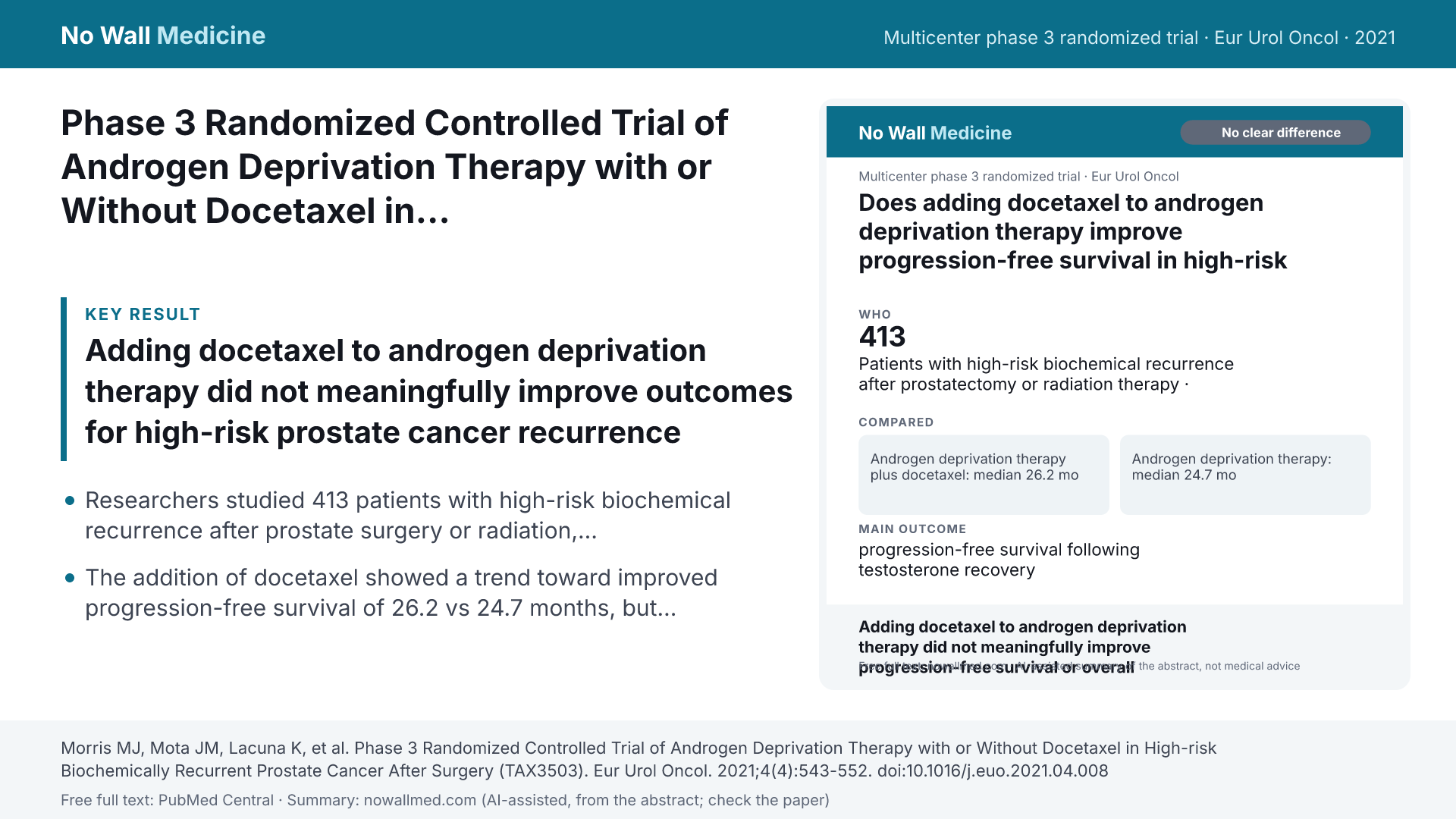
Key result: Adding docetaxel to androgen deprivation therapy did not meaningfully improve outcomes for high-risk prostate cancer recurrence
Key points
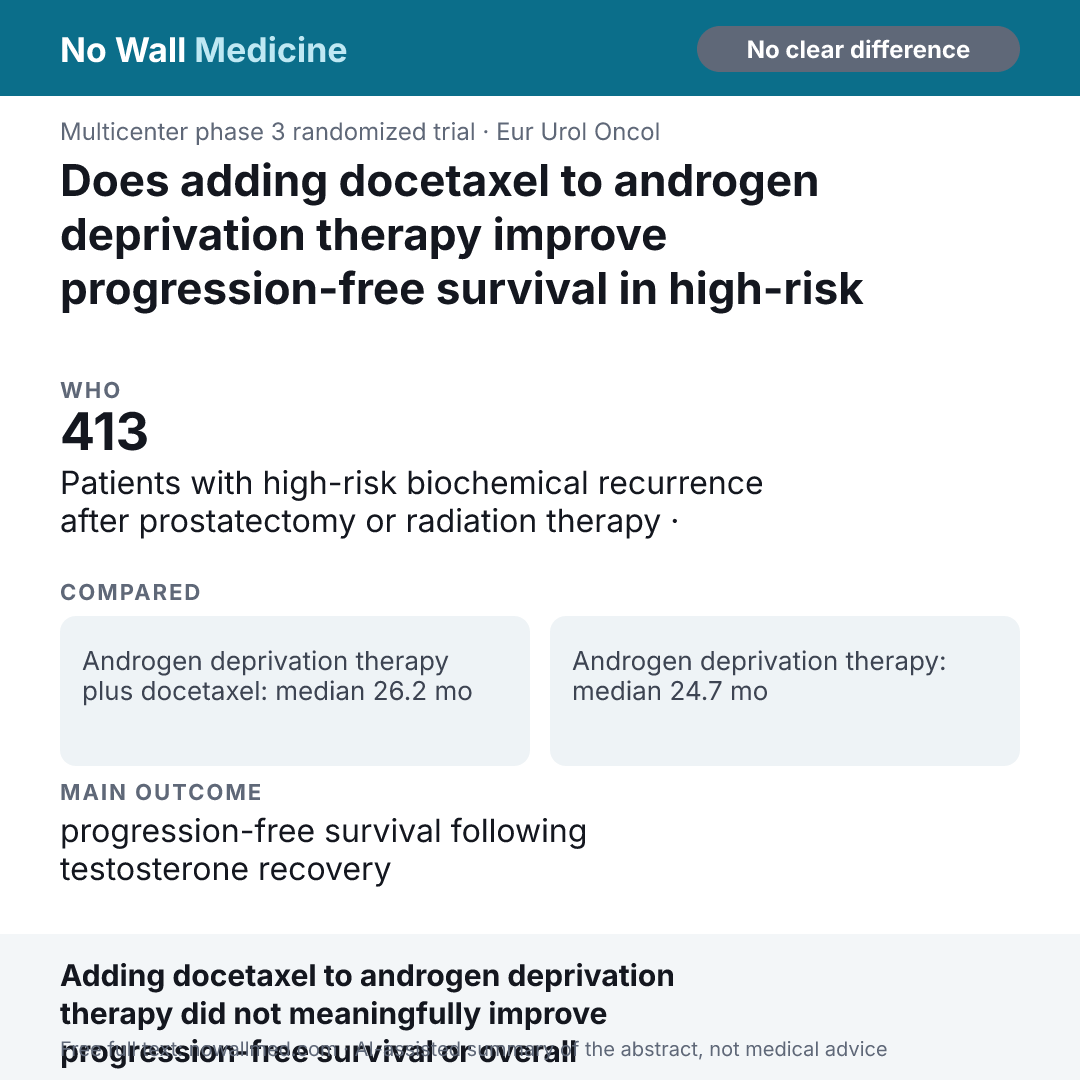
- Researchers studied 413 patients with high-risk biochemical recurrence after prostate surgery or radiation, comparing androgen deprivation therapy alone to androgen deprivation therapy plus docetaxel chemotherapy.
- The addition of docetaxel showed a trend toward improved progression-free survival of 26.2 vs 24.7 months, but the results were not statistically significant (hazard ratio 0.80, 95% CI 0.61-1.04).
- Severe adverse events of grade 3 or higher were more frequent in the group receiving docetaxel (48.0% vs 10.8%).
Why it matters: A standard of care does not exist for patients experiencing high-risk biochemical recurrence, which is the rising of prostate-specific antigen levels, after prostatectomy.
Discussion prompts
- Would these patients look like yours? Who was left out?
- Is the main outcome one that matters to patients?
- Is the difference large enough to change what you do?
Cite: Morris MJ, Mota JM, Lacuna K, et al. Phase 3 Randomized Controlled Trial of Androgen Deprivation Therapy with or Without Docetaxel in High-risk Biochemically Recurrent Prostate Cancer After Surgery (TAX3503). Eur Urol Oncol. 2021;4(4):543-552. doi:10.1016/j.euo.2021.04.008
Free full text: PubMed Central · Summary and visual abstract: nowallmed.com/a/phase-3-randomized-controlled-trial-of-androgen-deprivation-therapy-1tdd1h7/ (AI-assisted from the abstract; check the paper before relying on it).