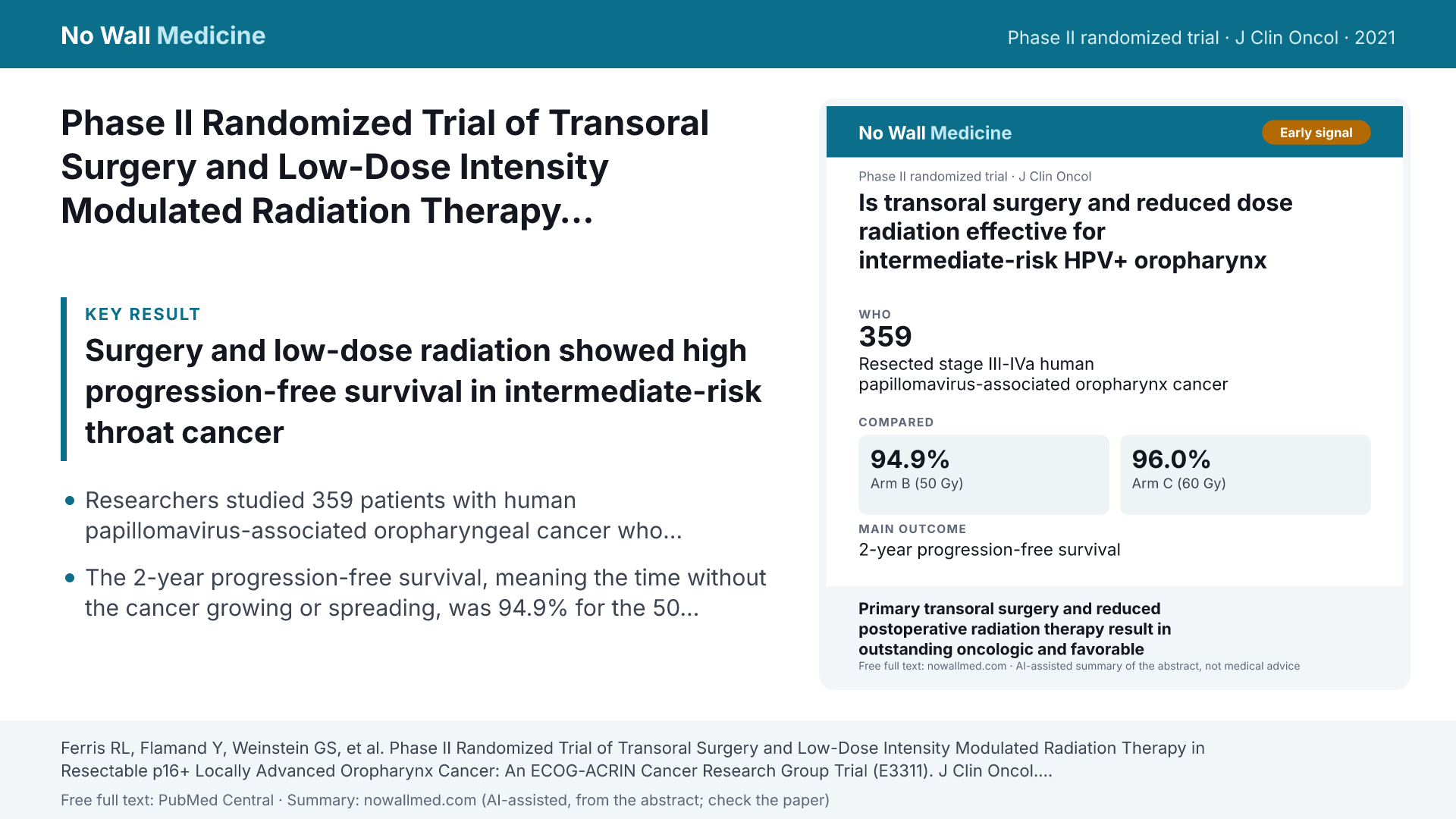
Phase II Randomized Trial of Transoral Surgery and Low-Dose Intensity Modulated Radiation Therapy in Resectable p16+ Locally Advanced Oropharynx Cancer: An ECOG-ACRIN Cancer Research Group Trial (E3311)
Key result: Surgery and low-dose radiation showed high progression-free survival in intermediate-risk throat cancer
Key points
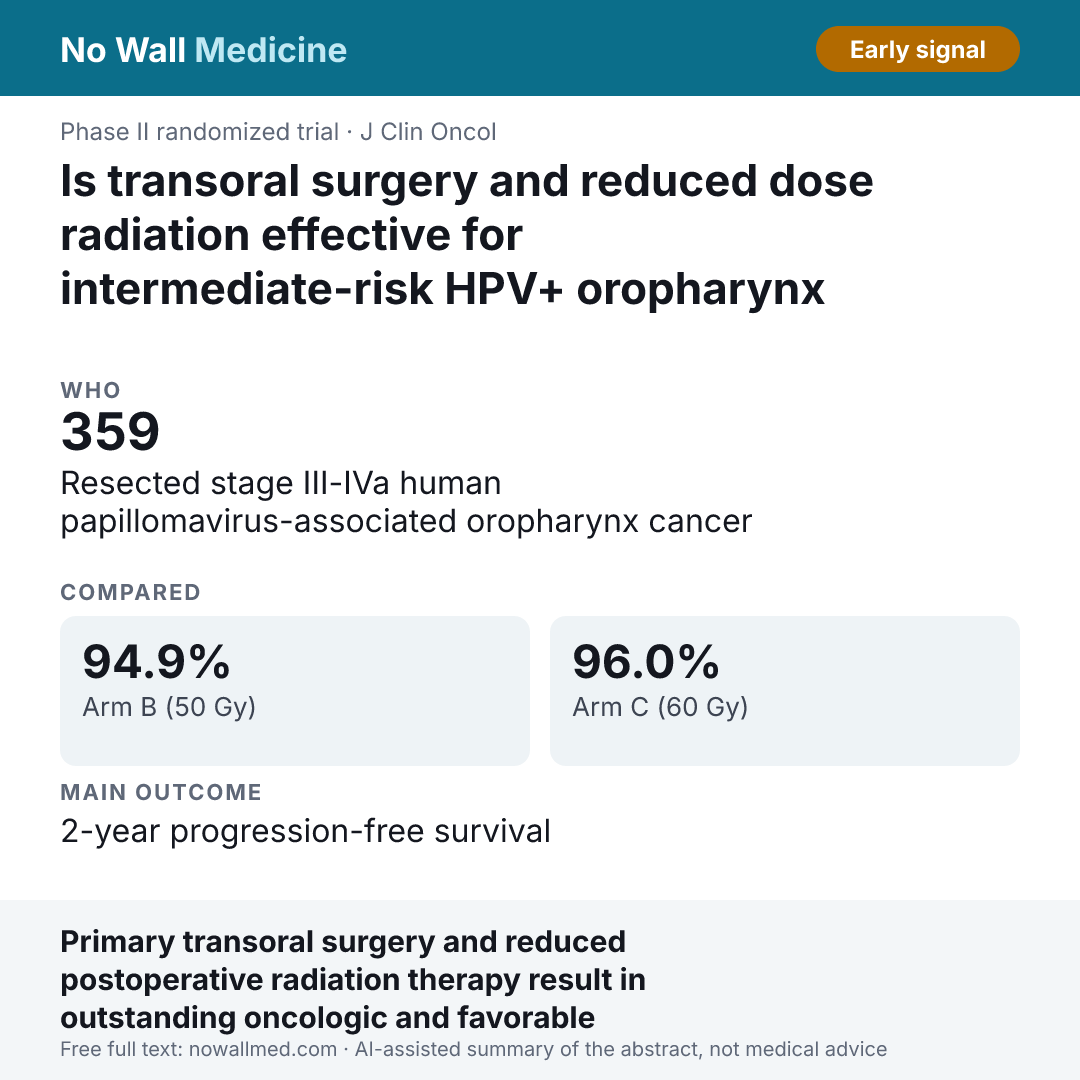
- Researchers studied 359 patients with human papillomavirus-associated oropharyngeal cancer who underwent transoral surgery followed by different radiation doses.
- The 2-year progression-free survival, meaning the time without the cancer growing or spreading, was 94.9% for the 50 Gy radiation group and 96.0% for the 60 Gy group.
- The study also included a low-risk group receiving observation with 96.9% survival and a high-risk group receiving 66 Gy plus weekly cisplatin with 90.7% survival.
Why it matters: Standard chemoradiation for human papillomavirus-associated oropharyngeal cancer is curative but causes significant toxicity, leaving it unknown if surgery and reduced radiation doses are effective.
Discussion prompts
- Would these patients look like yours? Who was left out?
- Is the main outcome one that matters to patients?
- Is the difference large enough to change what you do?
Cite: Ferris RL, Flamand Y, Weinstein GS, et al. Phase II Randomized Trial of Transoral Surgery and Low-Dose Intensity Modulated Radiation Therapy in Resectable p16+ Locally Advanced Oropharynx Cancer: An ECOG-ACRIN Cancer Research Group Trial (E3311). J Clin Oncol. 2022;40(2):138-149. doi:10.1200/JCO.21.01752
Free full text: PubMed Central · Summary and visual abstract: nowallmed.com/a/phase-ii-randomized-trial-of-transoral-surgery-and-low-dose-intensity-guispk/ (AI-assisted from the abstract; check the paper before relying on it).