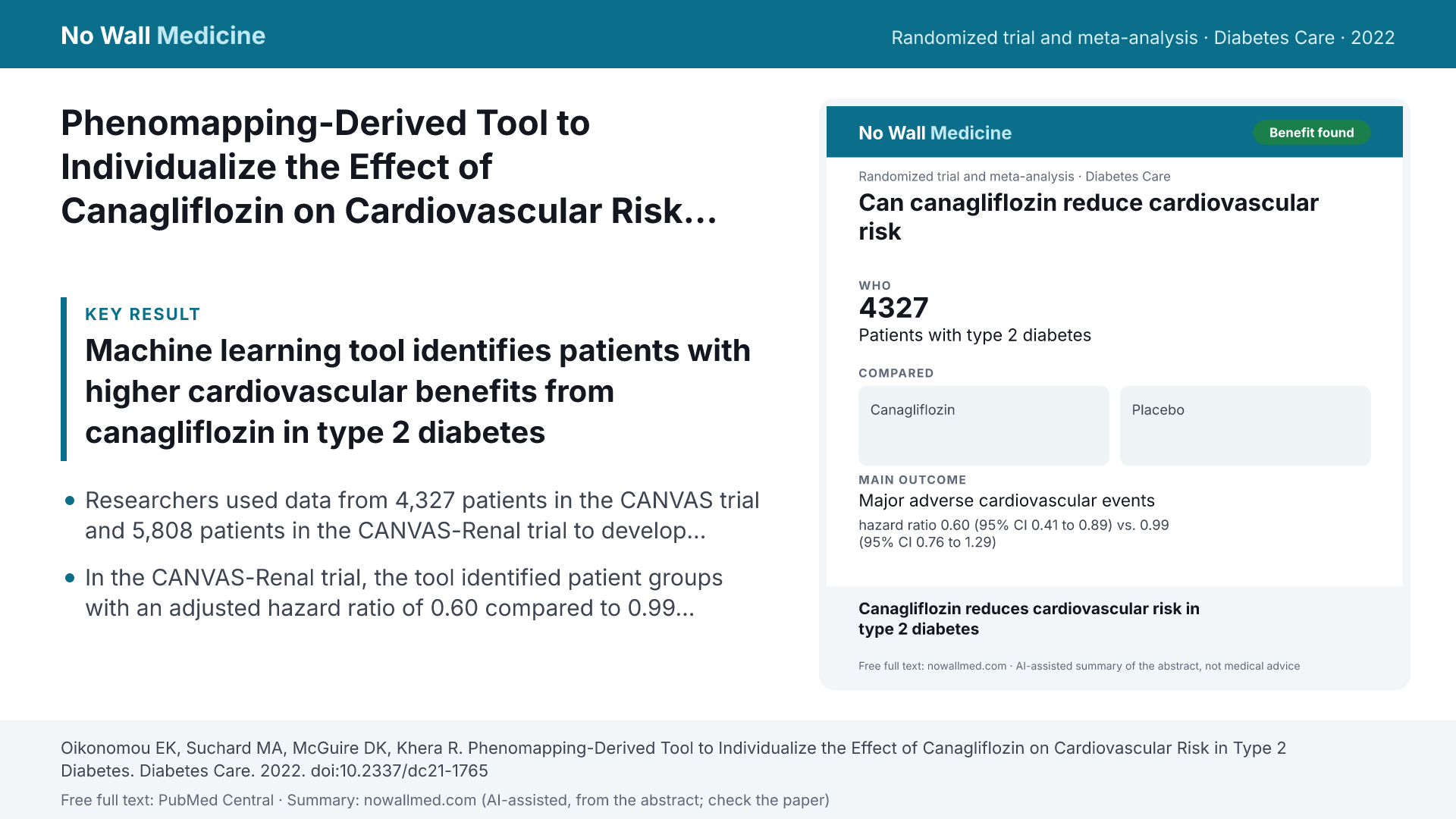
Phenomapping-Derived Tool to Individualize the Effect of Canagliflozin on Cardiovascular Risk in Type 2 Diabetes
Key result: Machine learning tool identifies patients with higher cardiovascular benefits from canagliflozin in type 2 diabetes
Randomized trial and meta-analysisBenefit found
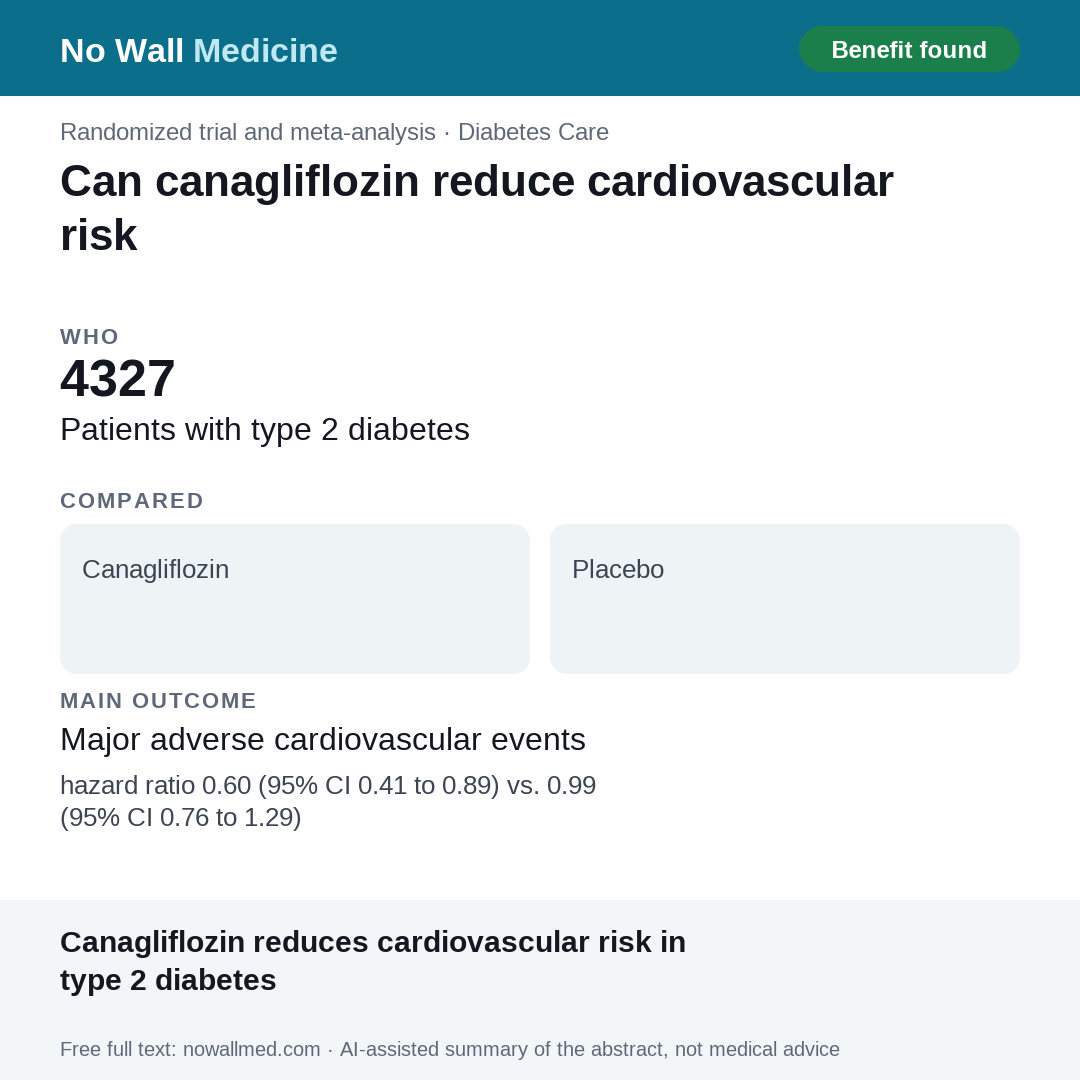
Can canagliflozin reduce cardiovascular risk
Who
4327
Patients with type 2 diabetes
Compared
Canagliflozin
Placebo
Main outcome
Major adverse cardiovascular events
Result: hazard ratio 0.60 (95% CI 0.41 to 0.89) vs. 0.99 (95% CI 0.76 to 1.29)
Bottom line: Canagliflozin reduces cardiovascular risk in type 2 diabetes
Diabetes Care · 2022-02-05Download image
Key points
- Researchers used data from 4,327 patients in the CANVAS trial and 5,808 patients in the CANVAS-Renal trial to develop a personalized prediction tool.
- In the CANVAS-Renal trial, the tool identified patient groups with an adjusted hazard ratio of 0.60 compared to 0.99 for those not identified.
- In the original CANVAS trial, 1,605 patients, or 37.1%, showed a more protective effect than the overall trial estimate of 0.86 for major adverse cardiovascular events.
Why it matters: It is unknown how to individualize the cardiovascular benefits of sodium-glucose cotransporter 2 inhibitors for specific patients with type 2 diabetes.
Discussion prompts
- Would these patients look like yours? Who was left out?
- Is the main outcome one that matters to patients?
- Is the difference large enough to change what you do?
Cite: Oikonomou EK, Suchard MA, McGuire DK, Khera R. Phenomapping-Derived Tool to Individualize the Effect of Canagliflozin on Cardiovascular Risk in Type 2 Diabetes. Diabetes Care. 2022. doi:10.2337/dc21-1765
Free full text: PubMed Central · Summary and visual abstract: nowallmed.com/a/phenomapping-derived-tool-to-individualize-the-effect-of-1oab9na/ (AI-assisted from the abstract; check the paper before relying on it).